
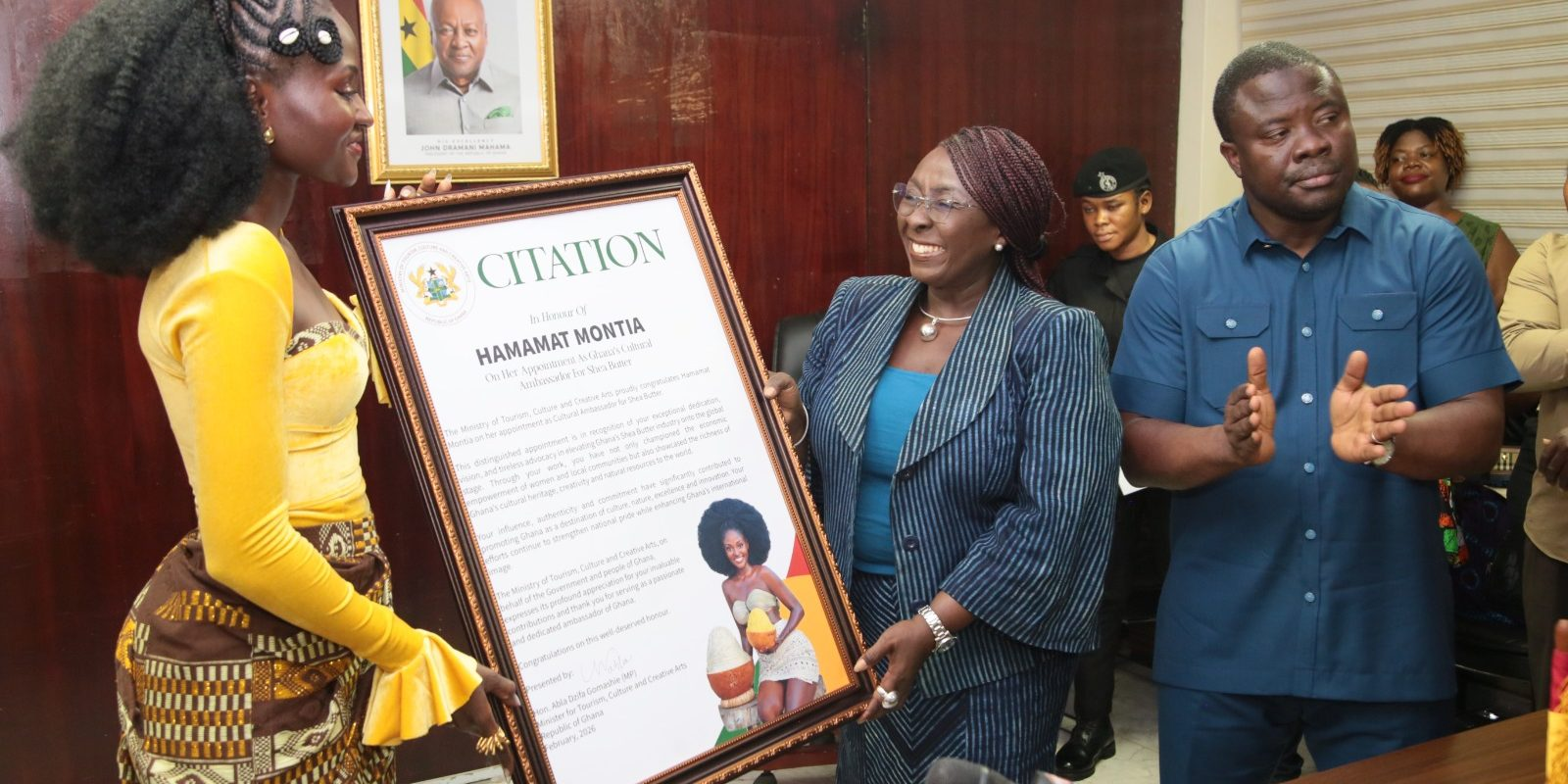
Ghana has officially appointed entrepreneur and cultural preservationist Hamamat Montia as its first Ambassador of Shea, a role that recognises her years of work promoting shea butter as both a cultural treasure and a valuable economic resource.
The announcement, made by the Ministry of Tourism, Culture and Creative Arts, marks a historic moment: it is the first time a national government has tied an ambassadorial position directly to a heritage product like shea.
Hamamat Montia has spent more than a decade building a career that connects beauty, business, and culture. Born in Bolgatanga in northern Ghana, she first gained national attention after winning Miss Malaika Ghana.
From there, she grew her influence on a global scale, building a business and educational platform centered on traditional African ingredients, especially shea butter. Yesterday, February 10th, 2026, an appointment ceremony at the Ministry of Tourism, Culture & Creative Arts in Accra officially confirmed her as the nation’s representative for shea.
Read: Ghana’s Fugu, The Traditional Smock Making a Comeback
Hamamat Montia’s Journey: From Beauty Queen to Cultural Entrepreneur
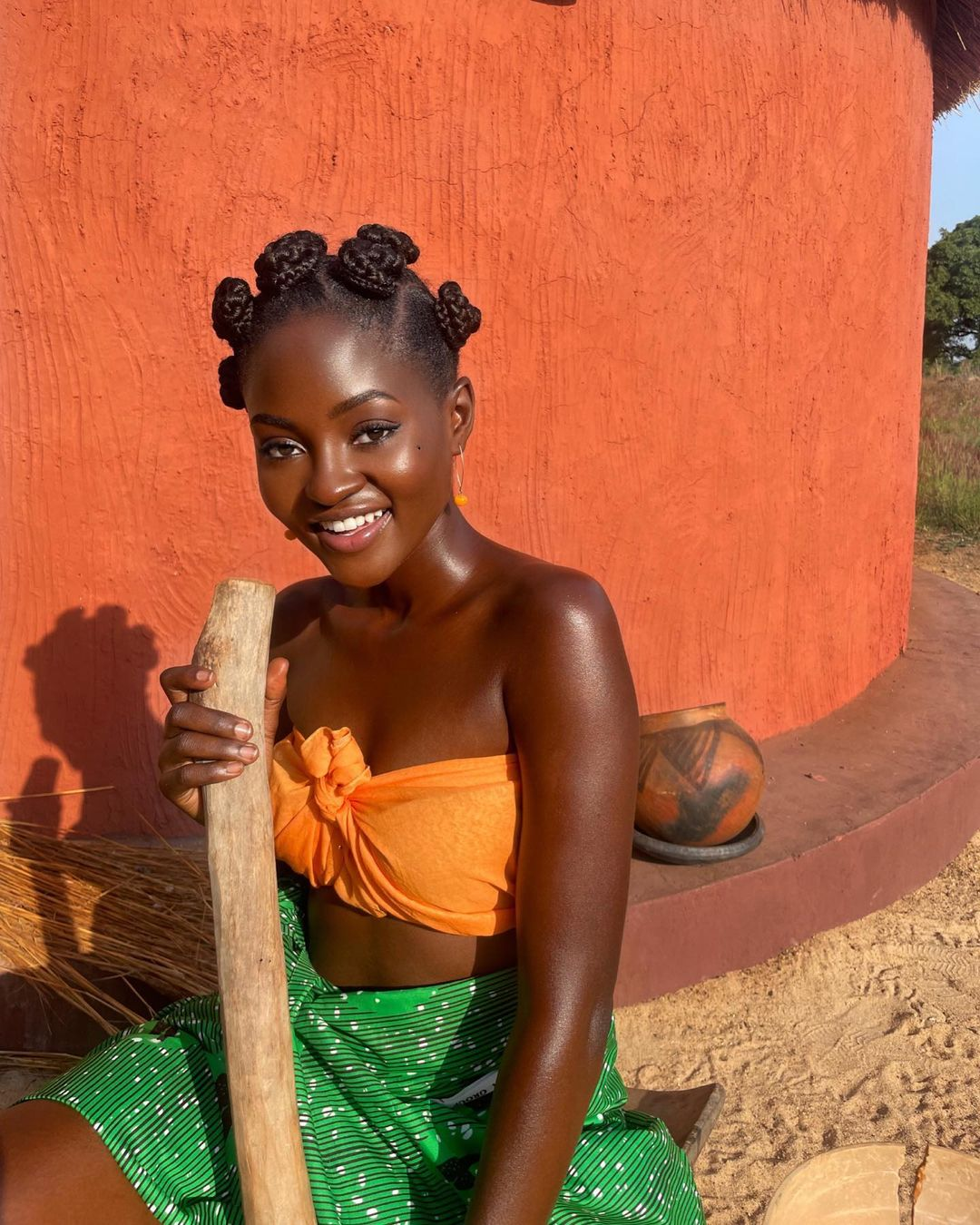
Hamamat Montia’s journey began in northern Ghana, where she grew up learning traditional shea-making practices from her grandmother. After gaining public attention as Miss Malaika, she parlayed that visibility into a platform for cultural and business initiatives. Over the years, she has built an international enterprise that spans shea farming, processing, and education.
Her most visible achievement is the Shea Butter Museum in Accra, which she founded to document and preserve the history of shea across West Africa. Montia has also built a vertically integrated shea business that produces handcrafted beauty and wellness products.
Her work has combined entrepreneurship with cultural preservation, showing that traditional African ingredients can have both local and global significance. This appointment confirms the impact of her career and positions her to represent Ghana and its shea industry on the world stage.
Shea Butter: A Cultural and Economic Lifeline
Shea butter is more than a cosmetic ingredient. Nearly two billion shea trees grow naturally across 21 African countries, providing income for roughly 16 million women involved in harvesting, processing, and trading. The global shea butter market was worth about $2.41 billion in 2024, with demand steadily rising across the beauty, food, and pharmaceutical industries.
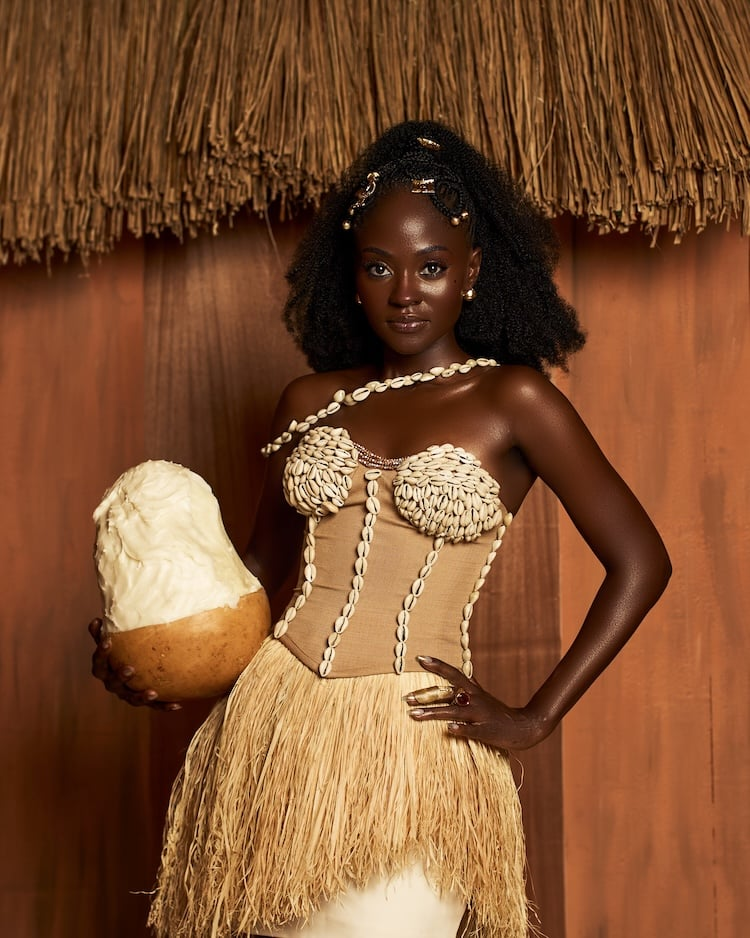
Despite this scale, much of the economic benefit leaves Africa. Countries like Nigeria and Ghana supply raw shea but capture only a small share of downstream profits. Ghana’s creation of an ambassadorial role signals a deliberate effort to shift this pattern.
By investing in education, storytelling, and value-added production, the government hopes to strengthen the local industry. Hamamat Montia, with her experience in production, education, and cultural advocacy, is seen as uniquely positioned to lead this effort.
The Shea Butter Museum: Preserving Tradition, Inspiring Innovation
The Shea Butter Museum in Accra opened in 2019 and is the first institution dedicated entirely to shea. It records traditional harvesting techniques, highlights regional variations, and documents the intergenerational knowledge that has sustained the use of shea for centuries.
Montia’s personal connection to shea began in childhood, learning directly from her grandmother. That knowledge now guides a business model that includes farming, handcrafted products, and educational programs.
The museum also emphasises the role of women in the shea value chain, showing how traditional practices can be preserved while supporting economic empowerment. The space has become a hub for visitors, students, and international guests to learn about shea as a cultural and economic resource.
Read: Through New Eyes: My First Time in Ghana
What the Appointment Means for Ghana and African Heritage
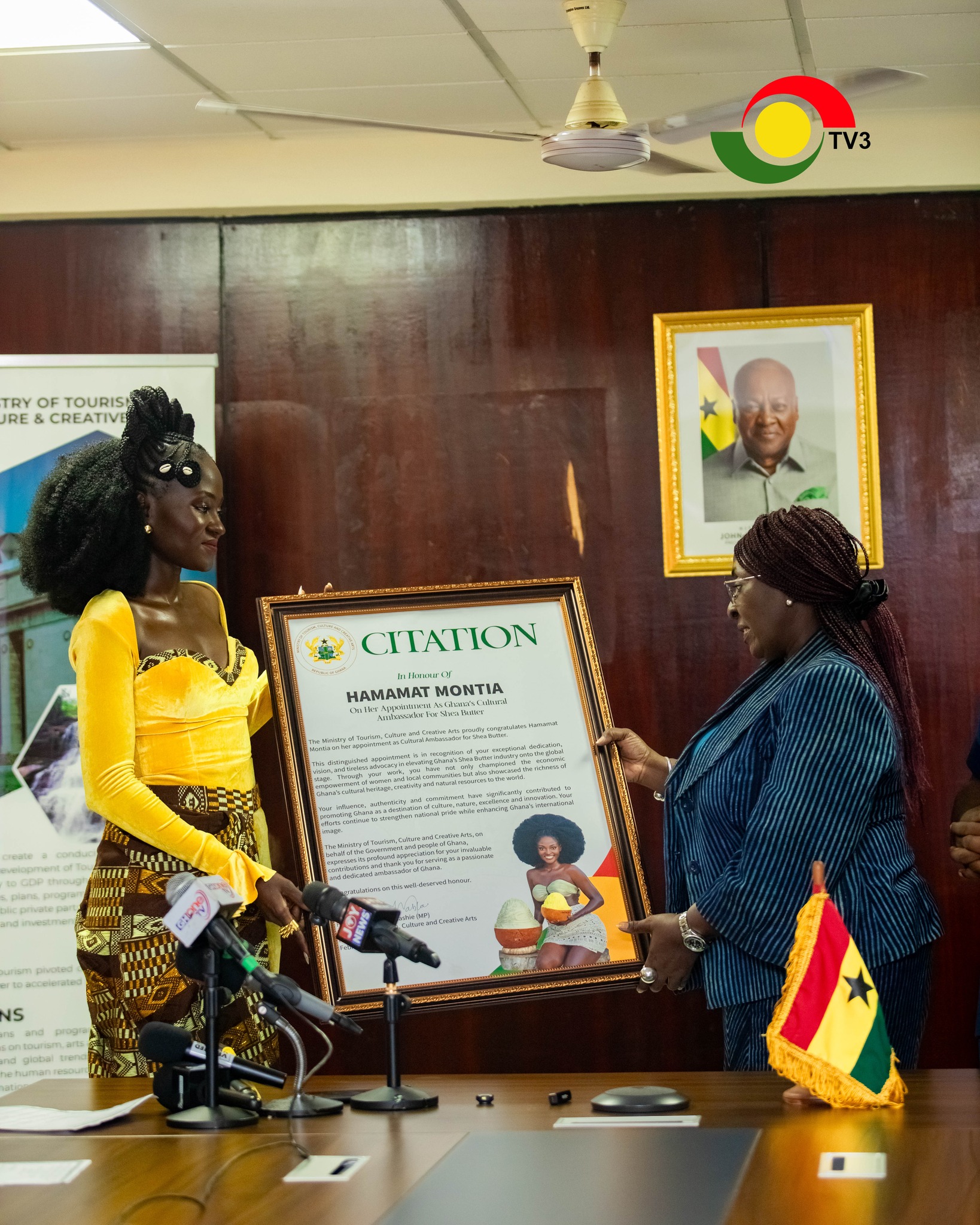
The appointment of Hamamat Montia is a first for Ghana and represents a new approach to cultural preservation. By anchoring an ambassadorial role to a heritage product, the government is reinforcing shea butter as a symbol of identity, history, and economic opportunity.
In her new role, Montia will work with government agencies and industry stakeholders to promote sustainable harvesting, expand education about shea, and strengthen Ghana’s presence in global markets.
The appointment also aligns with broader national goals: supporting women-led enterprises, promoting indigenous products, and creating new opportunities for trade and tourism. For Ghana, it positions shea as a source of pride, economic value, and cultural heritage that can be shared around the world.
A New Chapter for Ghana’s Shea Heritage
Hamamat Montia’s appointment as Ghana’s Ambassador of Shea brings together culture, business, and heritage in one role. Her career has shown that shea butter can be more than an ingredient. It carries the tradition of a long line of people, it is a source of livelihood, and a cultural marker.
With her leadership, Ghana aims to tell its shea story to the world, support women-led businesses, and protect a key part of its heritage.
For readers interested in exploring more African culture, entrepreneurship, and heritage stories, follow RefinedNG for updates, features, and in-depth reports from across the continent.