Walking into an interview can be nerve-wracking. Your first words carry weight, and how you introduce yourself can set the tone for the entire conversation. A strong self-introduction shows confidence, clarity, and focus. It tells your interviewer who you are, what you do, and why they should pay attention to you. Getting this right doesn’t require rehearsed speeches or fancy vocabulary, just preparation, awareness, and authenticity.
Why Your First Words Matter
The way you start an interview can make a lasting impression. People form opinions within seconds, and those first impressions often stick. A clear, confident introduction tells the interviewer that you are organized and professional. At the same time, a touch of personality can make you memorable.
Even simple elements, your tone, pace, and posture, carry meaning. A calm, steady voice signals confidence, while leaning slightly forward shows engagement. Smiling naturally and maintaining eye contact communicates friendliness and openness. These small cues combine with your words to create a first impression that works in your favor.
Read: 10 Tips for Professionals to Improve Small Talk Skills
Structuring Your Self-Introduction
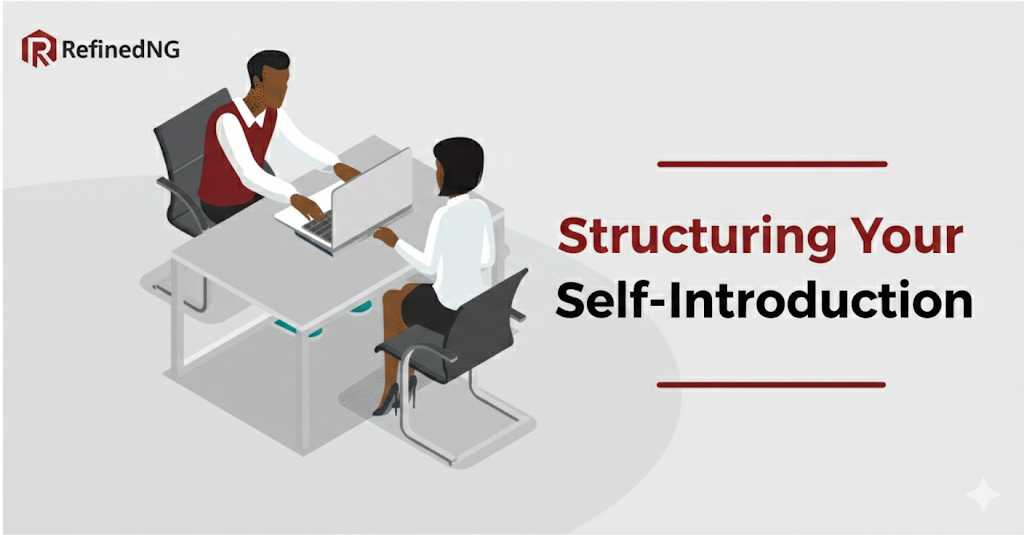
A simple framework can help you organize your introduction: who you are, what you do, and the value you bring.
- Who you are: Start with your full name and professional identity. For example, “I’m Ada Okeke, a digital marketing specialist.” Keep it clear, avoid nicknames or overly casual phrases.
- What you do: Highlight your experience, education, or key skills relevant to the job. Mention one or two accomplishments that show competence. For instance, “I’ve spent the last three years managing social media campaigns that grew engagement by 60% for tech startups.”
- The value you bring: End by linking your skills to the company or role. This helps the interviewer see why you are a good fit. Example: “I’m excited to bring my digital strategy experience to help your team increase brand visibility.”
Keep your introduction concise, aiming for 30 to 60 seconds. This is enough time to make an impression without overwhelming the interviewer. Transition naturally into the conversation by leading into a discussion about your experience or interest in the role.
Strategies to Stand Out
You want your introduction to be memorable, not generic. Highlight experiences or traits that set you apart. Mention a specific project, achievement, or challenge you handled well. For example, “I led a team to launch a mobile app on a tight deadline, which taught me how to balance speed with quality.”
Show problem-solving skills through short examples. These don’t need to be long stories, just a quick snapshot of how you tackled a challenge. Align your career goals with the company’s mission to demonstrate that you share their vision.
Be careful not to rely on clichés. Statements like “I’m a hard worker” or “I’m passionate about learning” only carry weight if you provide evidence. Instead, show what you’ve done and how it relates to the position you’re applying for.
Nonverbal Communication: Your Silent Partner

Your words matter, but your body language speaks even louder. Stand or sit straight, make steady eye contact, and offer a firm handshake when in person. In virtual interviews, look at the camera to simulate eye contact, keep your background tidy, and check lighting so your face is visible.
Facial expressions, gestures, and energy reinforce confidence. Avoid fidgeting or crossing your arms repeatedly. Practising in front of a mirror or recording yourself can help you see what others will notice and adjust accordingly. Nonverbal cues create trust and credibility before you even finish your introduction.
Read: Avoiding Common Mistakes in Job Interviews As An Introvert
Common Mistakes and How to Avoid Them
Even a strong introduction can be undone by simple errors. Avoid rambling or repeating points. Focus on the most relevant experiences and achievements. Speaking too fast, mumbling, or sounding overly rehearsed can confuse the interviewer and reduce your impact.
Stay professional without being too casual. Avoid slang, unnecessary personal stories, or negative comments about past jobs or employers. Each sentence should add value to your introduction. If you stick to clear, specific examples, you will maintain the interviewer’s attention and leave a positive impression.
Go Prepared, Ace Your Interview
Preparing a solid self-introduction takes practice, but it pays off in confidence and impression. Draft your introduction, rehearse it aloud, and adjust until it feels natural. Record yourself or practice with a friend to get feedback.
Your first words in an interview can set the stage for your success. Make them count.
For more career guidance, interview strategies, and practical tips to stand out professionally, visit RefinedNG and start building your next career win today.