
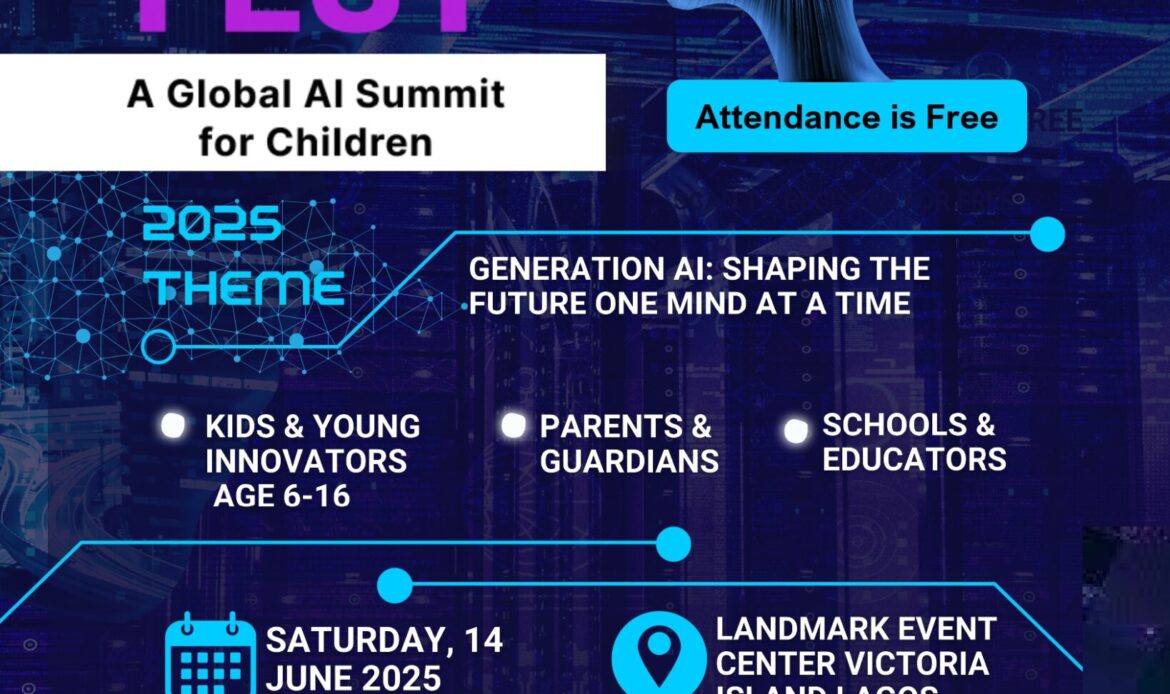
LAGOS — A first-of-its-kind artificial intelligence (AI) summit focused on children is scheduled to take place in Lagos on June 14, 2025, marking a significant step in Nigeria’s tech education landscape. The summit, organized by Digital Equity Africa, is expected to draw children aged 6 to 16 from across the country to the Landmark Event Centre.
Billed as Africa’s first AI summit tailored specifically for children, the event aims to expose young Nigerians to emerging technologies and foster early engagement with AI in a hands-on, age-appropriate format.
According to the organizers, the initiative is part of a broader plan to prepare Nigerian children for a future increasingly shaped by artificial intelligence and related technologies.
Hands-On Learning at the Centre of the Event
The Lagos summit will feature curated sessions, interactive exhibitions, and practical activities designed to introduce children to AI concepts in simple terms. Organizers say that the sessions will explore areas such as machine learning, robotics, and data literacy through engaging demonstrations and storytelling formats.
While the event targets children as primary participants, parents, teachers, and stakeholders in the education sector are also expected to attend. Separate sessions will address parenting in the digital age, online safety, AI-driven career opportunities, and recommendations for integrating AI education into school curricula.
Read: Nigeria Edge Ghana 2–1 to Reach Unity Cup Final
Nationwide Rollout Planned After Lagos
Following the Lagos summit, the conference will extend to other regions, with Abuja, Kano, and Enugu confirmed as future host cities. The organizers say this multi-city rollout is aimed at ensuring that the initiative reaches children across various geopolitical zones.
“This is the beginning of a broader national effort to democratize access to tech education,” said Justina Nnam Oha, convener of the summit and founder of Kids Tech Fest. “Our objective is to make sure every Nigerian child, regardless of background, has the opportunity to understand and shape the technologies that will define their future.”
AI Learning Community to Launch After Event
In addition to the summit, Digital Equity Africa plans to launch an AI Learning Community aimed at reaching 100,000 children within its first year. The platform is expected to serve as a digital extension of the summit, offering mentorship, tech challenges, learning tools, and access to a network of AI educators.
This ongoing initiative is designed to ensure that children continue to engage with AI education beyond the event itself, while also addressing gaps in the national education system’s ability to teach emerging technologies.
New Book to Introduce AI Through Storytelling
A children’s book titled “Zina and the Thinking Machines” will be launched at the summit as part of efforts to make AI more relatable. The story follows a Nigerian girl named Zina, her inventor grandfather, and a mysterious “thinking machine” as they explore concepts like algorithms, automation, and ethical use of technology.
The book targets children aged 6 to 12 and is intended to encourage early digital curiosity while promoting African identity in tech-related storytelling. Plans are in place to distribute the book across the Global South to improve access to localized digital learning materials.
A Growing Conversation Around AI Education
The summit comes amid a growing global conversation about the need to introduce AI education early in school systems. In more advanced economies, coding and digital literacy have become embedded in primary school curricula, while many African countries still lack structured programs for tech education at the basic level.
Education policy experts have repeatedly called for reforms to reflect the changing nature of work and learning, especially as artificial intelligence increasingly shapes sectors from healthcare to agriculture.
“Children today are growing up with AI, whether through smart assistants or algorithm-driven platforms,” said Dr. Amina Adesina, an education consultant based in Abuja. “It is not enough for them to be passive users. Early exposure helps build critical thinking and gives them a stake in future innovation.”
Support and Registration
Though the summit is being spearheaded by a nonprofit, the scale of the initiative has prompted the organizers to seek partnerships from corporate sponsors, development agencies, and education stakeholders.
Registration has been opened for schools, parents, NGOs, volunteers, and media partners via the summit’s official website. Details on how individuals and institutions can participate or support the event are available at kidstechfest.com.