
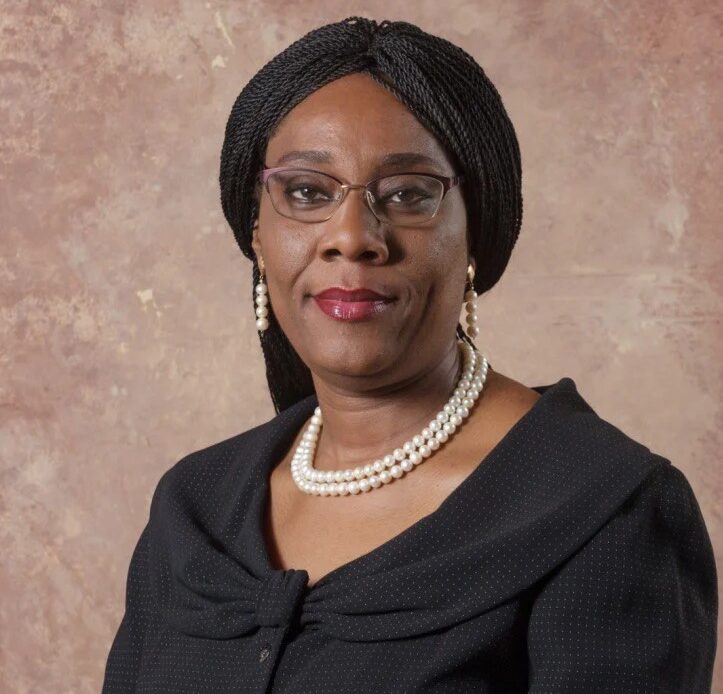
Nigeria’s legal education system entered a new chapter on January 10, 2026, as President Bola Ahmed Tinubu approved the appointment of Dr Olugbemisola Titilayo Odusote as the Director-General of the Nigerian Law School. With this decision, Odusote becomes the first woman to lead the institution since its establishment in 1962, marking a historic shift in one of the country’s most influential professional training bodies.
Her appointment, which runs for a four-year term, comes at a time when conversations around institutional reform, gender inclusion, and the future of professional education are gaining renewed urgency in Nigeria. Odusote succeeds Professor Isa Hayatu Chiroma, whose tenure ends on January 9, 2026, after eight years at the helm.
More than a symbolic breakthrough, this appointment places a seasoned academic and administrator in charge of shaping the next generation of Nigerian lawyers.
Read: Flutterwave Acquires Mono to Expand Payments and Open Banking in Africa
A Career Built Inside the System
Dr Odusote’s rise to the top of the Nigerian Law School is the result of more than two decades of institutional experience. She joined the Law School in 2001 as a lecturer and steadily rose through the ranks, holding several strategic roles that placed her at the centre of academic planning and policy execution.
Before her appointment, she served as Deputy Director-General and Head of the Lagos Campus, one of the largest and most complex campuses in the Law School system. Earlier roles included Head of the Academic Department and Director of Academics, positions that gave her oversight of curriculum development, teaching standards, and professional training outcomes nationwide.
Her academic foundation is equally solid. Odusote earned her LL.B and LL.M degrees from Obafemi Awolowo University, where she specialised in company and commercial law. She was called to the Nigerian Bar in 1988 and later obtained a PhD in Law from the University of Surrey, United Kingdom, with research interests focused on public law and the administration of justice. Her doctoral work examined legal and institutional frameworks for investigating and prosecuting corruption in Nigeria, an area with clear relevance to modern governance and accountability.
Why This Appointment Matters
The Nigerian Law School is not just another tertiary institution. It is the final gateway into the legal profession, responsible for shaping the ethical, intellectual, and professional standards of lawyers who go on to influence Nigeria’s courts, businesses, and public institutions.
Odusote’s appointment represents a turning point in how leadership is imagined within long-standing professional structures. For over six decades, the institution had never been led by a woman, despite the growing presence and impact of women in Nigeria’s legal profession.
As Director-General, Odusote will oversee academic leadership, administrative management, and strategic direction across all campuses. She will also serve as the key liaison between the Law School and regulatory bodies such as the Council of Legal Education, the Body of Benchers, and the Nigerian Bar Association. These responsibilities place her at the centre of policy decisions that affect thousands of law graduates annually.
Her extensive publication record in local and international law journals, as well as her participation in legal education conferences and professional committees, positions her as both a scholar and a system-builder. For many observers, her appointment signals continuity paired with reform, an insider who understands the institution deeply but is also equipped to lead change.
A Signal to the Future of Legal Education
Beyond the milestone headlines, Odusote’s emergence as Director-General sends a broader message about merit, institutional trust, and evolving leadership norms in Nigeria. It reflects a recognition that competence, experience, and intellectual depth remain critical criteria for leadership, even as barriers continue to fall.
For young lawyers, law students, and women navigating professional spaces traditionally dominated by men, her appointment carries symbolic weight. It reframes what leadership looks like at the highest levels of legal education and opens the door for more inclusive conversations about governance and reform within the profession.
As Nigeria continues to rethink how its institutions serve a changing society, leadership transitions like this one matter.
Follow RefinedNG for news updates and landmark stories shaping leadership, institutions, and progress across Africa. Stay informed on the people and decisions driving change on the continent and beyond