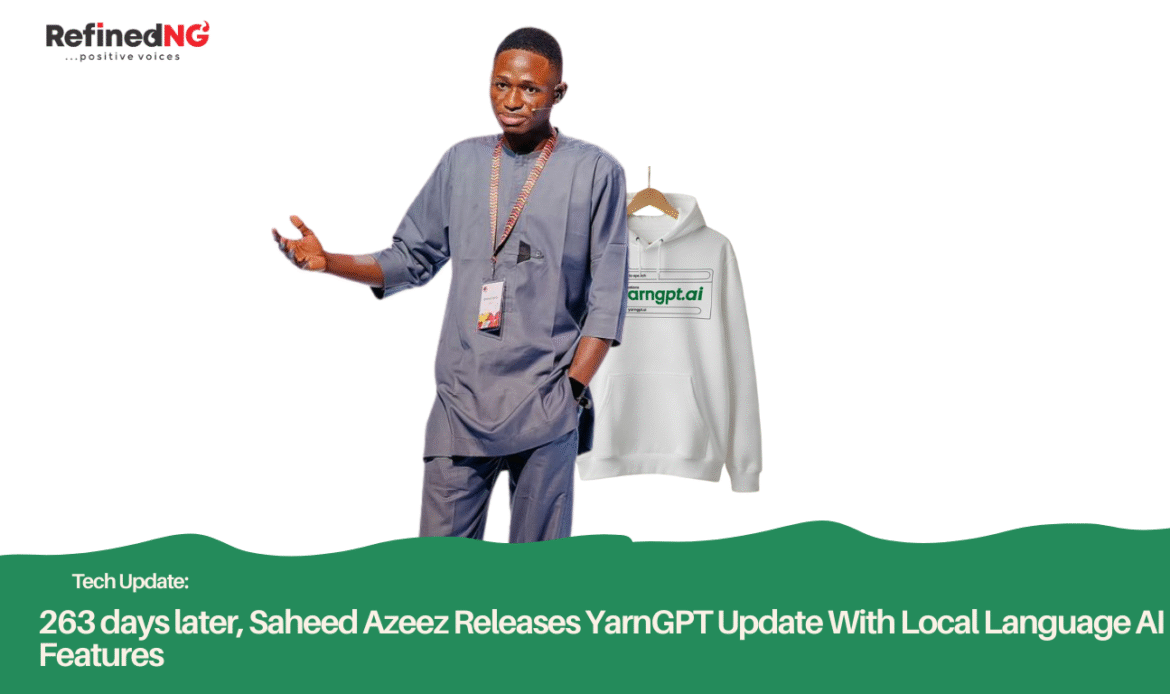
Two hundred and sixty-three days after a simple idea began taking shape in a UNILAG hostel room, YarnGPT has officially entered a new chapter. What started as a passion project by Saheed Azeez, when he was a final-year Mechanical Engineering student, has grown into one of the most ambitious attempts to build truly Nigerian text-to-speech technology, and this weekend, Azeez rolled out the biggest update yet.
The journey began last year when Azeez asked a simple question: “What does a Nigerian voice sound like in AI form?”
At the time, no major text-to-speech system could confidently produce clear Yoruba, Igbo, Hausa, or even neutral Nigerian English. So he built his own. The early version of YarnGPT quickly went viral, attracted developer interest, and earned him features in major media outlets.
But Azeez always admitted its flaws: inconsistent pronunciations, shaky outputs, and unpredictable audio quality. The model had heart, but it lacked polish.This weekend, everything changed.
Read: Nigerian Student Develops AI Text-to-Speech Model with Nigerian Accent
Inside the New Upgrade: More Languages, Better Clarity, and Wider Access
Azeez announced what he calls “the best version of YarnGPT,” and for the first time, the tool is no longer built only for developers. The upgrade introduces cleaner accents, sharper timing, and improved naturalness across Nigerian languages. But the biggest shift is accessibility: anyone can now use the system without touching a line of code.
The new YarnGPT supports:
- Text-to-speech with clearer Nigerian accents
- Video and audio translation across languages
- Text conversion for documents, webpages, and long-form content
- AI-powered conversations tailored to creators, businesses, and educators
With these features, YarnGPT moves beyond being a student project. It has become a communication tool for content creators, brands, media publishers, and anyone trying to reach Nigerian audiences in their own voice.
Azeez says the upgrade was inspired by a simple frustration:
“There are moments when you want to watch a video or read an article in your own language and the option just isn’t there.”
The new model aims to close that gap.
Read: Nigerian Teenager Builds Homegrown ChatGPT Rival, OkeyAI
From Classroom to National Innovation
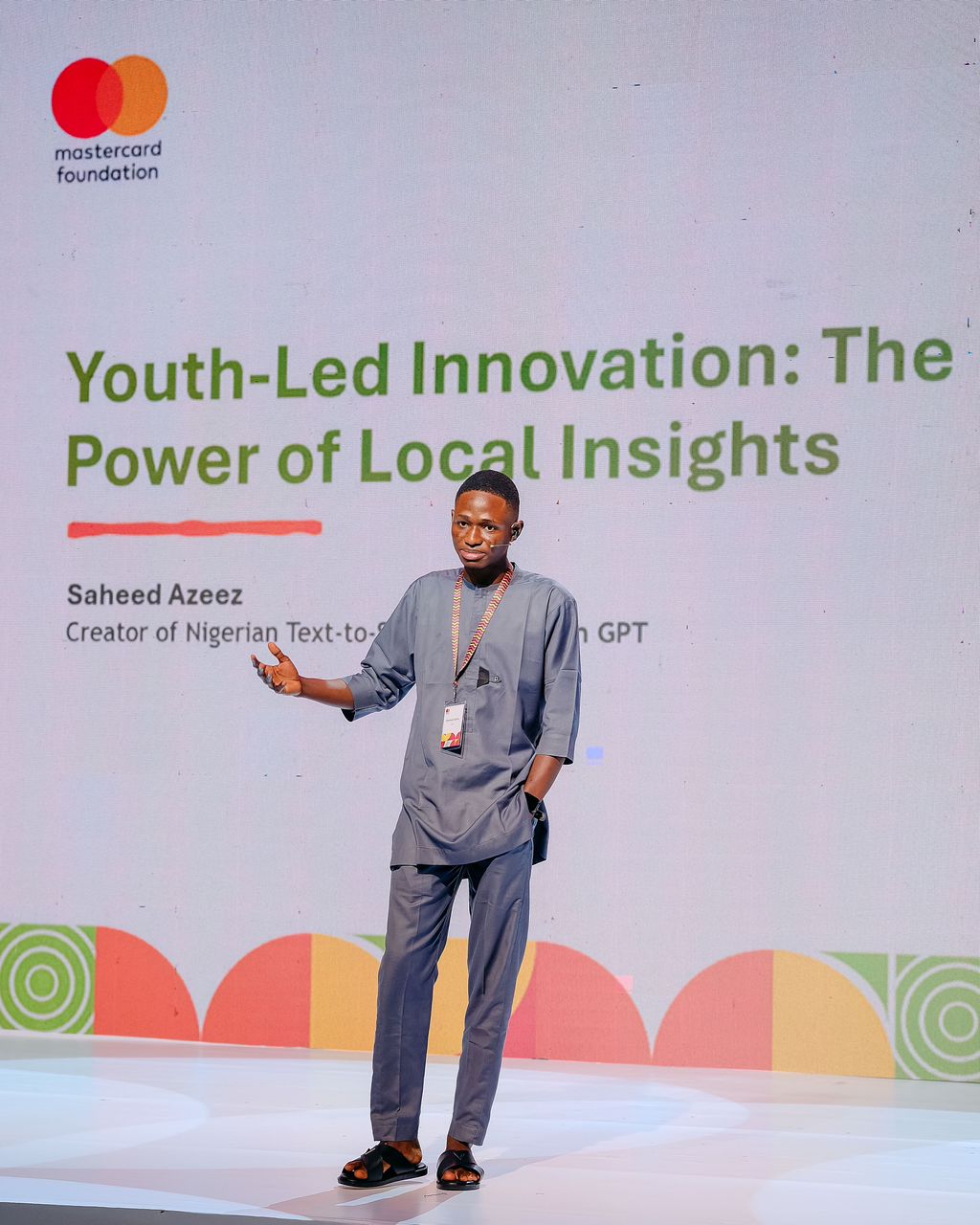
Azeez’s progress is even more impressive when placed in context. He built YarnGPT while juggling coursework, a limited budget, and unreliable access to computational power. Cloud credits ran out. GPUs were too expensive. Nollywood audio wasn’t clean enough. Yet he kept rebuilding, re-training, and refining — often starting from scratch.
His determination echoes a broader trend: young Nigerian builders are no longer waiting for perfect infrastructure or Silicon Valley validation before launching bold ideas. They are building with what they have, for communities that global tech companies often overlook.
What Comes Next?
With YarnGPT.ai now live, Azeez says he plans to focus on scaling quality and reach. The tool will soon support more voices, more dialects, and more real-time conversational features. His long-term vision is clear: make YarnGPT the most reliable Nigerian TTS platform and eventually, a global leader in African voice technology.
The new version isn’t just an upgrade. It feels like a signal: Nigeria’s voice, in every language, deserves to exist in the future of AI.