
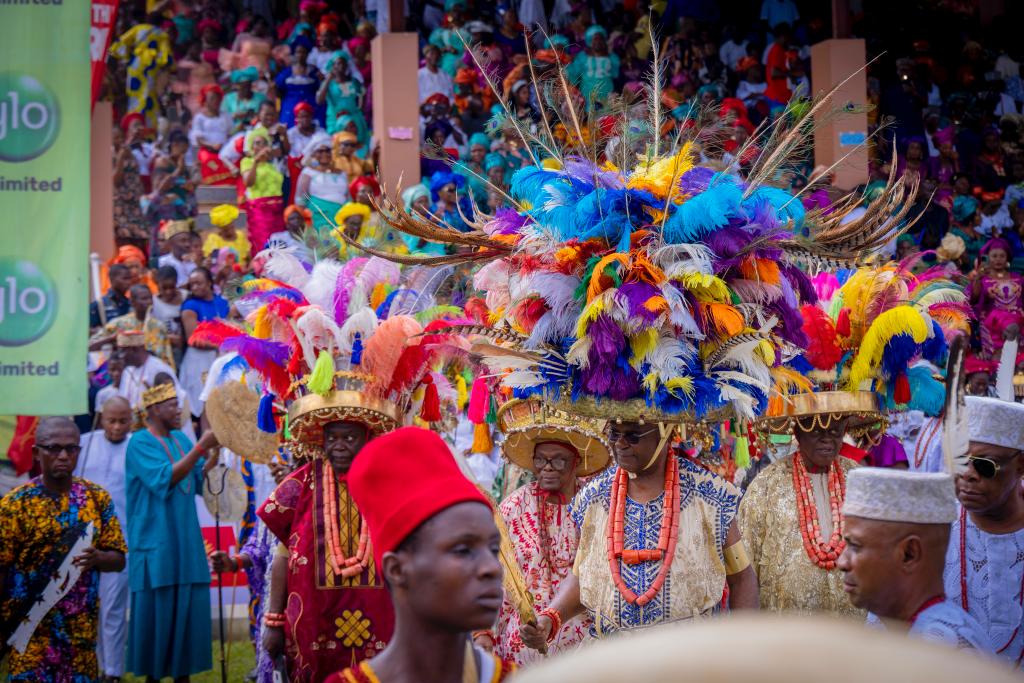
Every October, the city of Onitsha comes alive in a quiet but colorful rhythm — traditional music, royal processions, and people gathering in their best attires to honor their king. It’s called the Ofala Festival, one of the oldest and most respected cultural events among the Igbo people.
But Ofala is more than a celebration. It’s a time for renewal, reflection, and connection between the Obi (king) and his people — a moment that blends history, faith, and community spirit.
Many Nigerians have heard the name “Ofala,” but few know what truly happens during the festival or why it continues to hold such deep meaning centuries after it began. So, what exactly makes Ofala special — and why does it matter today?
What Exactly Is the Ofala Festival?
The word Ofala comes from two Igbo words — ọfọ, meaning authority, and ala, meaning land. Together, they represent the sacred bond between leadership and the people, between the king’s authority and the community he serves.
The Ofala Festival is more than just a celebration; it’s a rites of renewal for the king — known as the Obi or Igwe. After a period of spiritual retreat, the monarch re-emerges to bless his people, offer prayers for peace and prosperity, and reaffirm his commitment to the wellbeing of the land.
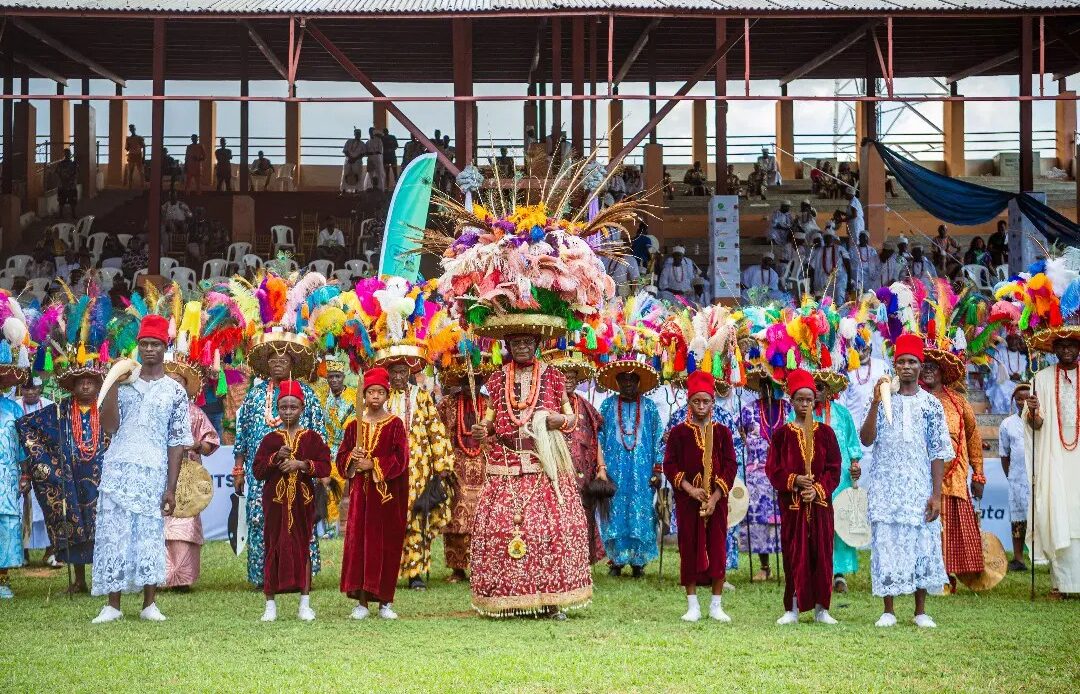
Celebrated mostly in Onitsha, Umueri, Aguleri, Umuoji, and Nnewi, Ofala is deeply symbolic of unity, continuity, and respect for tradition. If you think about it, Ofala is like a royal Thanksgiving or a cultural New Year — a time when the people gather not only to dance and feast, but to give thanks for survival, honor their ancestors, and look ahead with hope.
Read: The Importance of Oji (Kola Nut) in the Igbo Culture
The story of the Ofala Festival goes back to the 16th century, when the people of Onitsha migrated from the Benin Kingdom and brought with them the traditions of kingship and renewal. Just like Benin’s Igue Festival, which celebrates the spiritual fortification of the Oba, Ofala became the Igbo expression of reverence for leadership and communal blessing.
Over time, what began as a sacred royal ritual evolved into a vibrant cultural celebration — one that now blends tradition, tourism, and art. Drums, dances, and regalia still carry echoes of the old ways, but today’s Ofala also features exhibitions, media coverage, and global audiences.
Under the leadership of His Royal Majesty Igwe Nnaemeka Achebe, the Obi of Onitsha, Ofala has grown into a living symbol of Igbo identity and a world-recognized heritage that unites generations.
What Happens During Ofala?
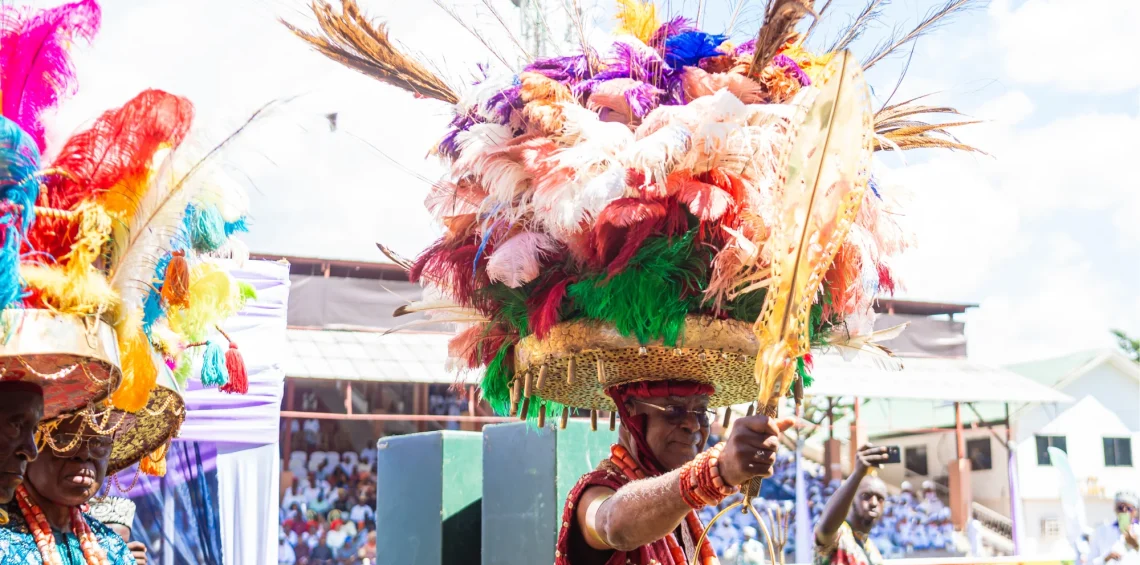
Dawn breaks over Onitsha, and the air trembles with the sound of a 21-gun salute. The deep rhythm of the royal gong (Ufie) follows, summoning everyone — chiefs in red caps, dancers in coral beads, and visitors from far and wide — to the palace courtyard. This is the start of Ofala, where history and pageantry meet.
The celebration unfolds over two days. Iru Ofala, the first day, marks the Obi’s grand emergence. To the thunder of traditional gunfire and the pulse of drums, he steps out in royal regalia, offering blessings and symbolizing his renewed strength and connection to the people.
On Azu Ofala, the second day, the energy deepens — it’s a day of homage, recognition, and gratitude. Chiefs pay their respects, titles are conferred, and the Obi dances in the arena, embodying the joy and unity of his kingdom. More than spectacle, Ofala is renewal in motion — a living bond between tradition, leadership, and community.
Beyond the Drums – The Meaning Behind It All
Behind the color and music, Ofala is deeply spiritual. Before the festival, the Obi withdraws for a period of purification known as Inye Ukwu na Nlo — a time of quiet reflection, prayer, and preparation. When he finally reappears, it’s more than ceremony; it’s a renewal of purpose and leadership, a blessing shared with his people.
The 2025 theme, “Njiko na Ntachi” (Unity and Perseverance), captures what Ofala truly stands for — the enduring spirit of the Igbo people. It celebrates the strength to stay united, to honor roots, and to find power in community even in changing times.
In a world that moves too fast, Ofala teaches a gentle truth: renewal isn’t found in noise or haste — it’s found in reflection, in faith, and in the shared rhythm of a people who never forget where they come from.
Read: From Yam to Song: The Igede Agba Festival Story
Ofala Today – Culture Meets Modernity
Today, the Ofala Festival is as vibrant as ever, blending heritage with innovation. With Globacom’s sponsorship, the event now reaches global audiences — complete with the Oreze Art Exhibition, youth carnivals, and even community health programs. These additions show that culture isn’t standing still; it’s adapting, growing, and giving back.
Ofala has become more than a local celebration — it’s a symbol of Nigeria’s creative strength. Each year, it reminds the world that tradition doesn’t have to fade in the face of modernity — it can shine brighter through it.
Ofala isn’t just for the Igbo people — it’s a story of Nigeria itself. It’s about leadership rooted in service, art that tells history, and unity that endures through generations.
It’s proof that culture is living memory, not nostalgia.So, have you heard of the Ofala Festival?
Maybe it’s time you did — or better yet, experienced it for yourself.