
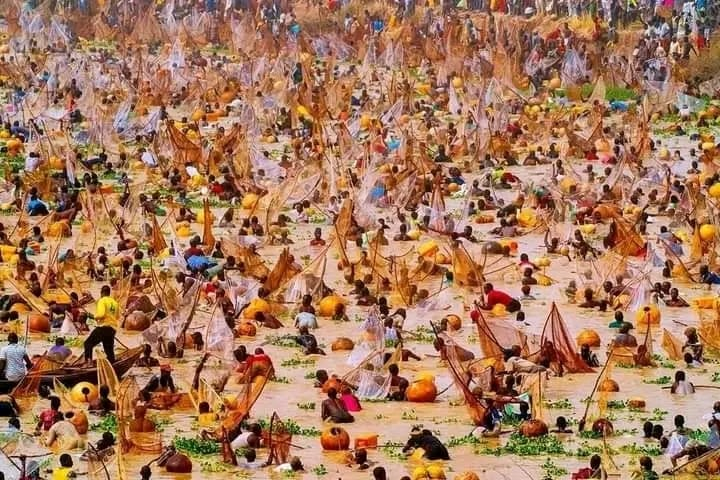
If you’ve seen photos or clips of the Argungu Fishing Festival, the first image that might come to mind is a mass of men standing waist-deep in water, arms stretched, racing to catch fish by hand as splashes fill the frame. That scene will return from February 11 to 14, 2026, when the annual festival once again takes place along the rivers of Kebbi State.
Most people think of Argungu as a spectacle, a lively moment of action and colour. But there’s more beneath the surface of the river than just bodies and fish. Long before it drew crowds or headlines, the festival stood as a symbol of peace, community, and shared history.
Argungu has a story that stretches back almost a century, tied to reconciliation and unity. To understand why people still gather here every year, you have to step past the splash and look at the story that brought them together in the first place.
Here are a few things you probably didn’t know about the festival.
1. It Started as a Peace Agreement, Not a Competition
The Argungu Fishing Festival began in 1934, and its origin has nothing to do with prizes or fame. It was created to mark peace between the Sokoto Caliphate and the Kebbi Kingdom after years of conflict.
Fishing was chosen for a reason. It was a shared activity that did not belong to one side alone. By standing in the same river and taking part in the same tradition, former rivals found common ground.In that sense, Argungu started as a gesture of reconciliation. It showed that culture could bring people together when politics and power could not. The competition came later. The meaning came first.
Read: Argungu Fishing Festival
2. The Festival Once Helped Heal a Post-War Nigeria
After the Nigerian Civil War, the country needed symbols that could remind people of togetherness. The Argungu Fishing Festival became one of those symbols.
During the early 1970s, the Federal Government supported the festival as a national event. Fishermen from different parts of Nigeria were encouraged to attend. Argungu became a place where people could gather without suspicion or tension.
At a time when unity was fragile, the festival offered a shared experience. People came to fish, to watch, to celebrate, and to remember that Nigeria could still gather around culture instead of conflict.
3. Hand Fishing Is the Rule, and That’s the Point
One of the most talked-about rules of the festival is also the simplest: fishing must be done with bare hands. No nets, hooks or tools.
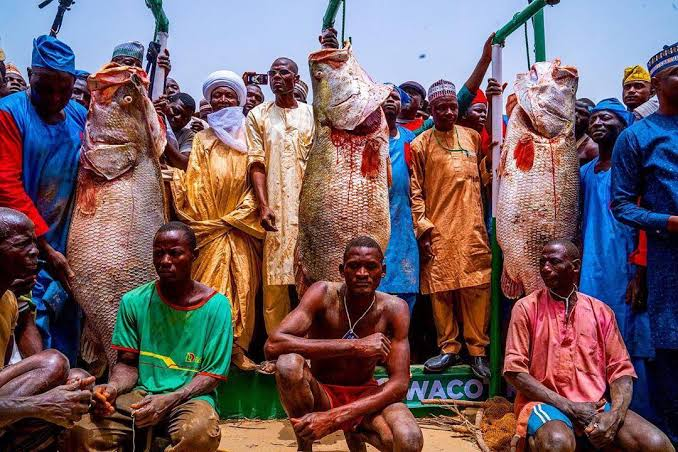
This rule keeps the tradition fair and grounded. It also protects the river by limiting overfishing. The idea is not to clear the water but to test strength, skill, and endurance.
The fisherman who catches the biggest fish earns respect across the community. The prize matters, but the honour matters more. Winning becomes part of personal and family history, often remembered for years.
4. Fishing Is Only One Part of the Festival
The river moment may be the highlight, but Argungu does not begin or end there. The festival includes days of activities that reflect the life of the Kebbi people.
There are canoe races that show balance and teamwork. Traditional wrestling and boxing matches that display strength and discipline. Music and dance fill the air, with drummers setting the rhythm for celebrations.
Women, elders, and youths all play roles. Food is shared. Stories are told. Titles like Sarkin Ruwa, the river chief, remind everyone that leadership and tradition still matter. Argungu works as a full cultural gathering.
5. UNESCO Recognition Didn’t Change the Soul of Argungu
In 2016, UNESCO recognised the Argungu Fishing Festival as part of the world’s Intangible Cultural Heritage. For many outsiders, this brought global attention. For the local community, it was simply an acknowledgement of what they already knew.
The festival did not change because of the recognition. Knowledge is still passed down through families. The rules are still explained by elders. Children still grow up watching, learning, and waiting for their turn to enter the river.
Argungu survives because people live it.
Read: Three things that remind us of how culturally rich we are as Nigerians
Why Argungu Still Matters Today
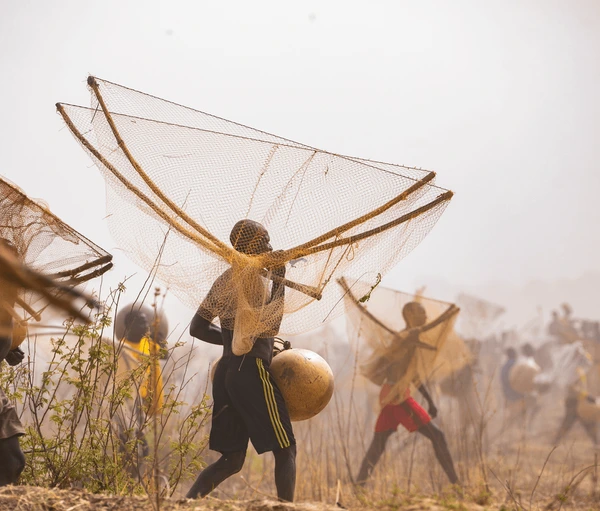
Today, the Argungu Fishing Festival sits at the meeting point of culture, tourism, and identity. It brings visitors to Kebbi State and reminds younger generations that tradition can still have a place in modern life.
Beyond tourism, the festival keeps conversations alive around conservation, community pride, and cultural memory. Each edition proves that heritage does not need to be frozen in time to remain relevant.
As Nigeria continues to change, Argungu remains a reminder that some stories are worth carrying forward carefully.
What Argungu Really Teaches
The Argungu Fishing Festival is not just about catching fish. It is about how communities remember their past, celebrate peace, and gather around shared values. It shows that culture can outlast conflict, that tradition can adapt without losing its meaning, and that some rivers are more than just water. They tell stories.
To truly understand Argungu is to see it as a living story. Follow RefinedNG for more cultural stories that explore Nigeria beyond the headlines.