

2025 has been loud in every possible way. The news cycle moved fast, timelines refreshed by the second, and big stories competed endlessly for attention. Somewhere in that noise, we came across a story that did not shout for relevance yet refused to be ignored. It belonged to Bohlale Mphahlele, a young South African innovator whose work still feels urgent years after it first surfaced.
This was not a breaking headline or a shiny new launch. It was a rediscovery. A reminder that some ideas age well because the problem they address never disappeared. As conversations around safety, technology, and gender based violence continue to dominate public discourse, Bohlale’s invention quietly reentered the room and demanded a second look.
Back then, she was a teenager asking practical questions when many adults felt stuck. Today, her story reads less like a moment and more like a blueprint. To understand why it still matters, it helps to return to where it all began.
An Inventor at Sixteen
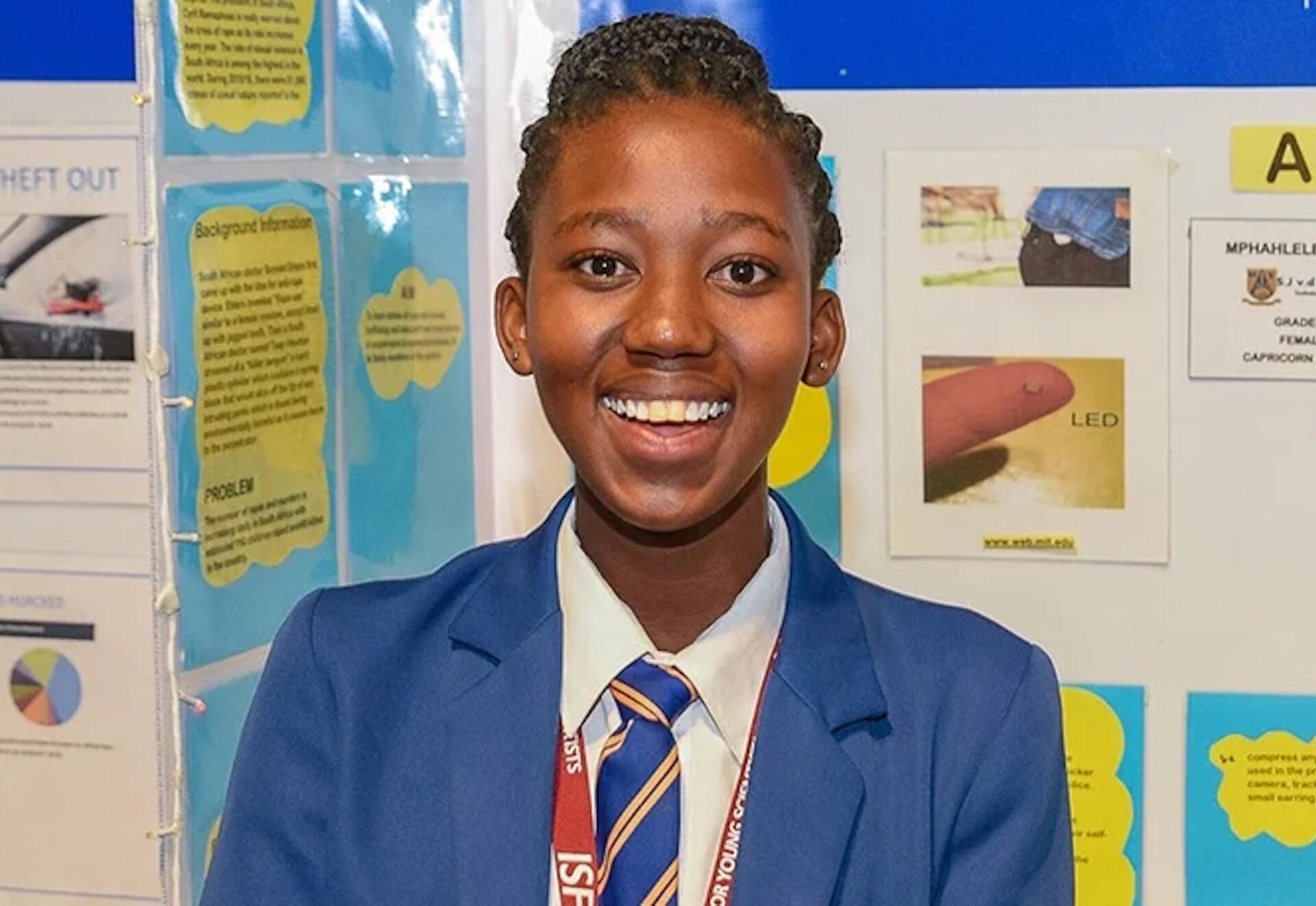
Did you know that one of South Africa’s most thoughtful safety innovations started in a Grade 11 classroom in Limpopo? At sixteen, while most teenagers were focused on exams, friendships, and the rhythm of school life, Bohlale Mphahlele was paying attention to something heavier. The headlines were impossible to ignore. Reports of gender-based violence kept rising, and the numbers felt less like statistics and more like warnings no one knew how to answer.
Instead of turning away, she leaned in. Bohlale began asking a simple but brave question: what could someone her age actually do? She didn’t wait for permission, funding, or a title. She worked with what she had, curiosity, empathy, and a deep frustration with how unsafe everyday life had become for women and children. Age never became an excuse because the problem felt too urgent for hesitation.
That urgency shaped the Alerting Earpiece. Not a flashy gadget, not tech for tech’s sake, but a quiet response to fear. An earring that looks ordinary, designed to work in moments when shouting or running isn’t possible. One press. Help alerted. Location shared. Evidence captured.It wasn’t just theory. It was built for real situations, real people, and real risk. And that’s where her idea truly came alive.
Read: ‘Behind The Scenes’ by Funke Akindele Hits ₦512M
An Earring That Thinks Faster Than Fear
The Alerting Earpiece works because it understands something fear often steals: time. Bohlale designed it to act faster than panic, without asking the wearer to explain, shout, or even be noticed. Worn like a normal earring, it blends into everyday life, which is exactly the point. Safety tools only work when they do not make a situation worse.

With a discreet press, the device quietly activates. A tiny concealed camera captures images of the attacker. At the same time, the earpiece sends an alert to pre-selected contacts, sharing the wearer’s live location in real time. No screen to unlock or call to place. No obvious movement that could escalate danger. Everything happens quickly and silently.
What makes it powerful is not complexity, but restraint. Bohlale focused on the few actions that matter most in a crisis: documenting what is happening, letting trusted people know, and pinpointing where help is needed. The technology steps back so the person wearing it can stay present and safe.
That clarity is what made people stop and look twice. Before long, this small earring started making a very big impression.
When a School Project Turned Into a National Conversation
What started as a school project did not stay in the classroom for long. When Bohlale presented the Alerting Earpiece at a national science expo, people leaned in. Judges did not just see a clever piece of electronics. They saw relevance. The project earned a bronze medal, but more importantly, it sparked conversation.
Radio stations picked up the story. Newsrooms followed. Education leaders in Limpopo publicly praised her work, calling it a point of pride. The attention was not about her age alone. It was about the honesty of the problem she chose to solve and the practicality of her response.South Africans recognised something familiar in her work. The fear was real. The need was urgent. And the solution felt possible. That combination made people listen.
At that moment, Bohlale shifted. She was no longer just a learner with a prototype. She became a young voice in a national discussion about safety, technology, and responsibility.Then the spotlight moved on. What happened next mattered even more.
She Didn’t Stop at Applause, She Built a Future

When the applause faded, Bohlale did not step away from the work. She stepped deeper into it. Instead of letting the invention live as a headline or a memory, she chose to build around it. She founded Mphahlele Alerts to give the Alerting Earpiece a real path beyond the prototype stage and into everyday use. That decision alone marked a shift from student innovator to long-term builder.
At the same time, she committed to learning the systems behind the solutions she cared about. She began studying Information Technology, not for the title, but for the tools. Code, hardware, and problem solving became extensions of the same instinct that pushed her to act at sixteen. She also joined innovation programs designed to support young women creating solutions for their communities, placing herself in rooms where ideas turn into infrastructure.
What stands out is the consistency. The same teenager who refused to ignore rising violence now mentors other girls in tech, reminding them that curiosity can become impact.In 2025, her story still matters because it is not finished. It is moving forward, quietly, with intention.
Read: Fela Anikulapo-Kuti to Receive Lifetime Achievement Award at the 2026 Grammys
The Teen Who Built A Smarter Way to Stay Safe
In a year defined by noise, Bohlale Mphahlele’s story reminds us that real change often moves quietly. It does not announce itself with spectacle. It shows up through consistency, care, and the refusal to look away from hard problems. What began as a school project in Limpopo has grown into a long-term commitment to safety, learning, and responsibility.
Her work sits at the intersection of empathy and engineering. It proves that age is not the barrier we think it is, and that meaningful innovation does not always come from well-funded labs or polished offices. Sometimes it comes from a teenager paying attention and deciding that attention is not enough.
As this story resurfaces in 2025, it lands differently. Not as a viral moment from the past, but as a reminder of what happens when young people are given space to build and the courage to keep going. Bohlale is still building, still learning, and still choosing action over silence. That is why her story continues to matter.
At RefinedNG, we spotlight stories like this because Africa’s future is already being shaped in classrooms, small workshops, and curious minds across the continent. Follow RefinedNG for more stories of builders, thinkers, and quiet disruptors who are creating lasting change, one idea at a time.