
In many parts of the world, waste is seen as an inconvenience, a problem to be discarded or buried. But a new generation of African creatives is rising to challenge that notion. These artists are not only reimagining what waste can be, they’re reshaping how the world views African art, innovation, and sustainability. Using the very materials that others throw away, they are telling powerful stories of identity, memory, environment, and transformation. Their works are bold, raw, and deeply intentional. Through the lens of their creativity, waste is no longer trash. It becomes testimony.
Among these African creatives are three artists whose works stand at the intersection of material rebirth and cultural expression: Dotun Popoola from Nigeria, Gerald Chukwuma also from Nigeria, and Cyrus Kabiru from Kenya.
Read more: Moove: How a Nigerian-Born Startup is Driving the Global Mobility Revolution
1. Dotun Popoola
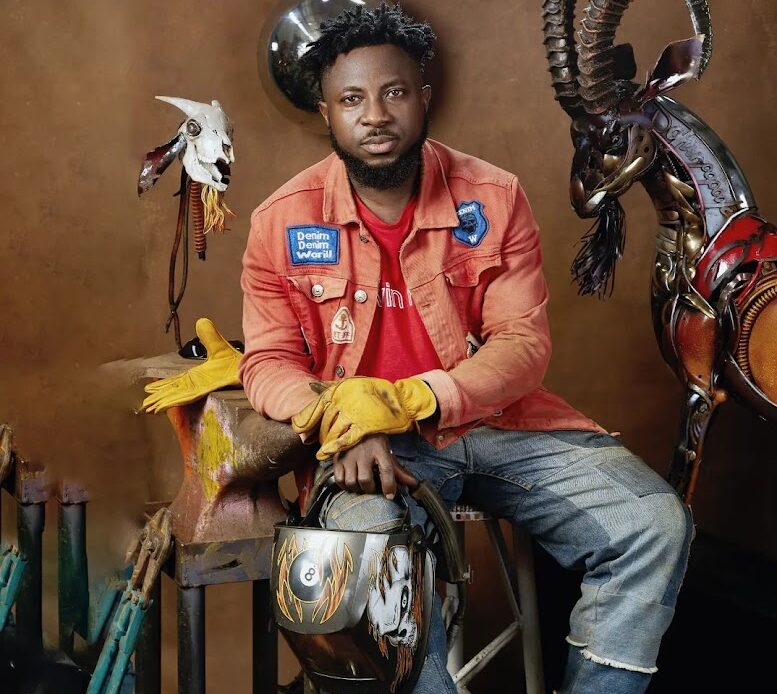
Dotun Popoola is a Nigerian artist and sculptor whose medium of choice is one many would never consider: scrap metal. What others see as rusted, broken, and forgotten, he sees as full of possibility. With a background in painting and sculpture, Dotun has mastered the delicate art of turning waste into wonder.
He constructs sculptures of majestic animals like lions, elephants, and bulls using bolts, discarded car parts, iron rods, radiators, and old tools. But these are not simply art installations, they are powerful statements on sustainability, transformation, and the hidden beauty within what the world throws away.
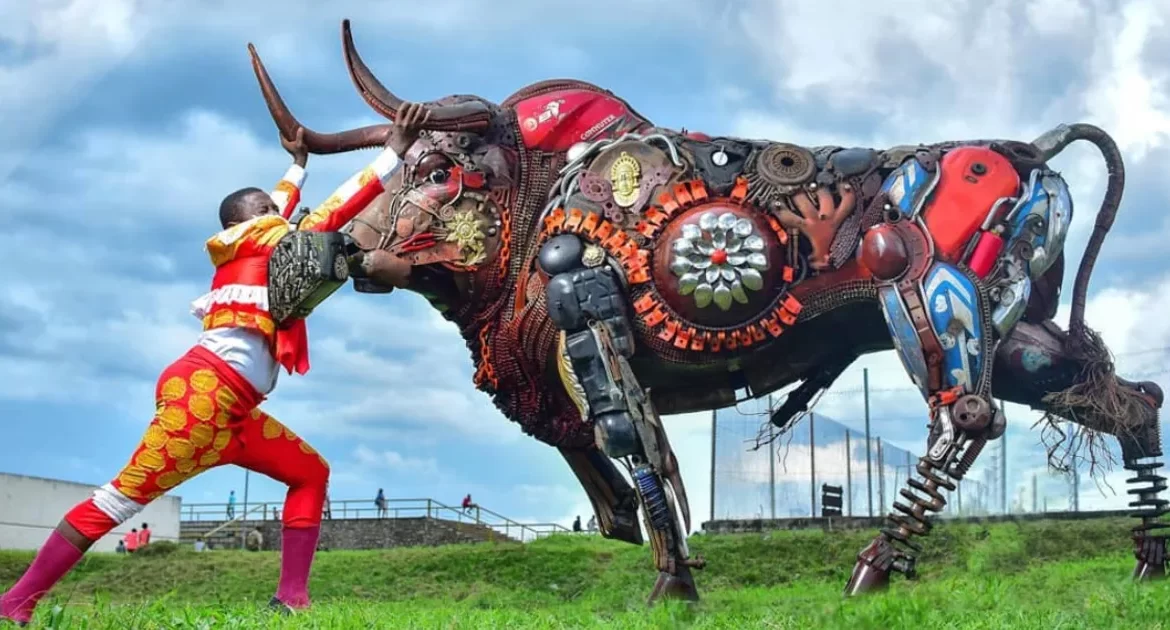
Dotun refers to his approach as “synergetic metal sculpting,” a term that reflects his process of welding disparate pieces of scrap into unified, striking forms. His work isn’t just about aesthetics, it’s a commentary on transformation, resourcefulness, and the beauty that can be born from neglect. He travels to dumpsites and metal yards in search of pieces that speak to him, then spends weeks or even months cutting, bending, and assembling them by hand.
The complex, awe-inspiring forms convey both weight and movement. Through his sculptures, Dotun has not only gained recognition across Nigeria and internationally, but he has also inspired a new conversation around sustainable art and the potential of what we call “junk.”
2. Gerald Chukwuma
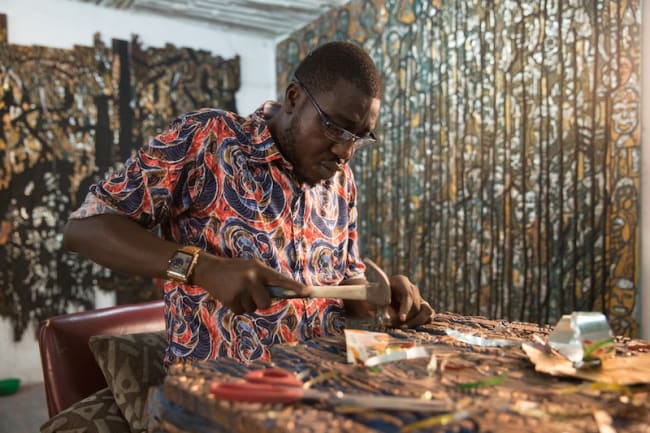
Gerald Chukwuma, a Nigerian artist based in Lagos, employs a unique and impactful approach to reimagining waste. He creates richly layered mixed-media artworks using discarded wood, metal sheets, broken doors, and various found objects. However, his creative process is far from random.
Every piece of material he collects becomes a part of a larger visual narrative, one rooted in African identity, migration, memory, and the passage of time.
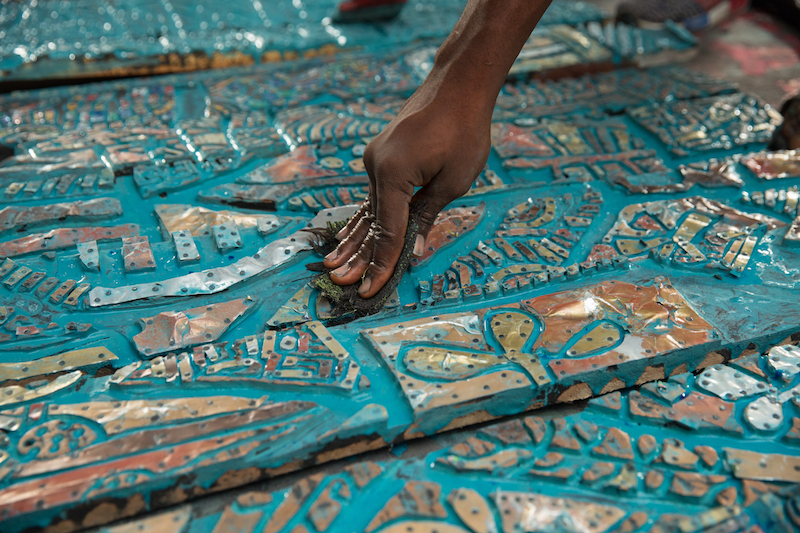
He begins by collecting old wooden panels or doors, which he then burns, carves, scrapes, paints, and etches with traditional symbols and patterns. The effect is striking, a textured, mosaic-like surface that feels both ancient and modern, chaotic and controlled. Gerald’s art speaks of movement, not just in a physical sense, but in a historical and spiritual one. His works often reflect the journeys of people across borders, the displacement of culture, and the resilience that follows.
Gerald draws inspiration from Igbo traditions and history, infusing his materials with meaning through both process and symbolism. He exhibits his artwork in galleries worldwide, from the U.S. to Europe, and his pieces are studied in discussions about contemporary African expression. By transforming everyday waste into visual narratives, Gerald creates a distinctive place in the global art scene, where heritage and innovation converge on reclaimed surfaces.
3. Cyrus Kabiru
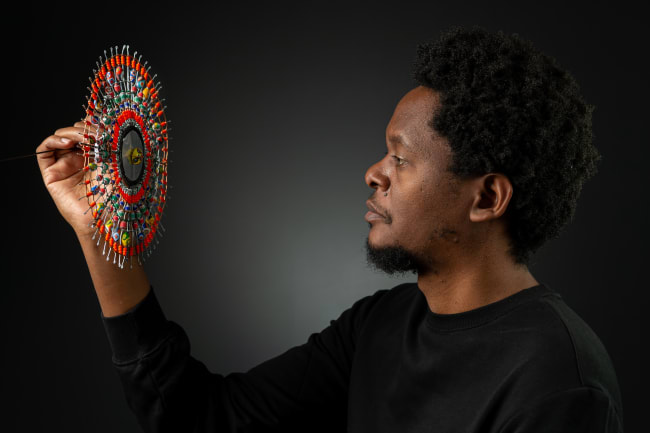
Cyrus Kabiru, from Nairobi, Kenya, brings yet another perspective to the conversation of waste and creativity. Known globally for his imaginative eyewear sculptures — the famous “C-Stunners” — Cyrus takes e-waste and transforms it into something visionary, quite literally. Using materials like bottle caps, broken circuit boards, wires, plastic scraps, and parts of discarded electronics, he constructs wearable art pieces that resemble futuristic sunglasses.
But these aren’t just accessories — they are bold statements about African identity, urban life, and the environment. Often photographed wearing his creations, Cyrus becomes both the artist and the canvas, pushing the boundaries between art, fashion, performance, and protest. His works challenge how we view beauty, material value, and innovation.
Read more: Cyrus Kabiru Makes Art You Wear—From Nairobi’s Trash
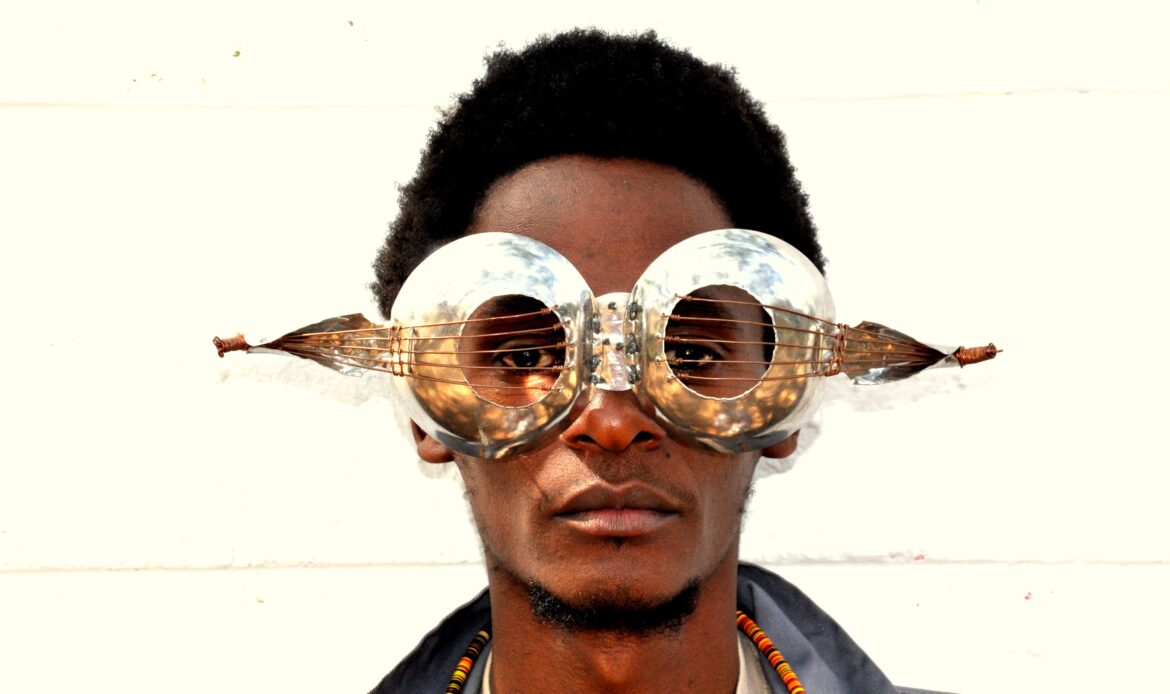
Growing up in a Nairobi neighborhood where waste was everywhere and new materials were scarce, Cyrus learned to build and repurpose from a young age. Over time, he turned this resourcefulness into a creative practice that now positions him as one of Africa’s most talked-about contemporary artists. His pieces have been featured in major exhibitions worldwide, including the Museum of Modern Art in New York and the Victoria and Albert Museum in London.
Beyond the visual appeal, Cyrus’s work brings attention to the global crisis of electronic waste and the innovative potential that lies in African cities often overlooked by mainstream narratives. His art doesn’t just recycle — it reclaims space, voice, and visibility for African creativity on a global scale.
African Creatives To The World
These African creatives remind us that art is not defined by what you have, but by what you see in what you have. They each take what the world has rejected and breathe new meaning into it. Through their work, waste is transformed not only into art, but also into a tool for education, empowerment, and cultural storytelling. In doing so, they offer the world a new perspective: that Africa is not waiting to catch up — it is leading, boldly and brilliantly, with creativity rooted in purpose.