
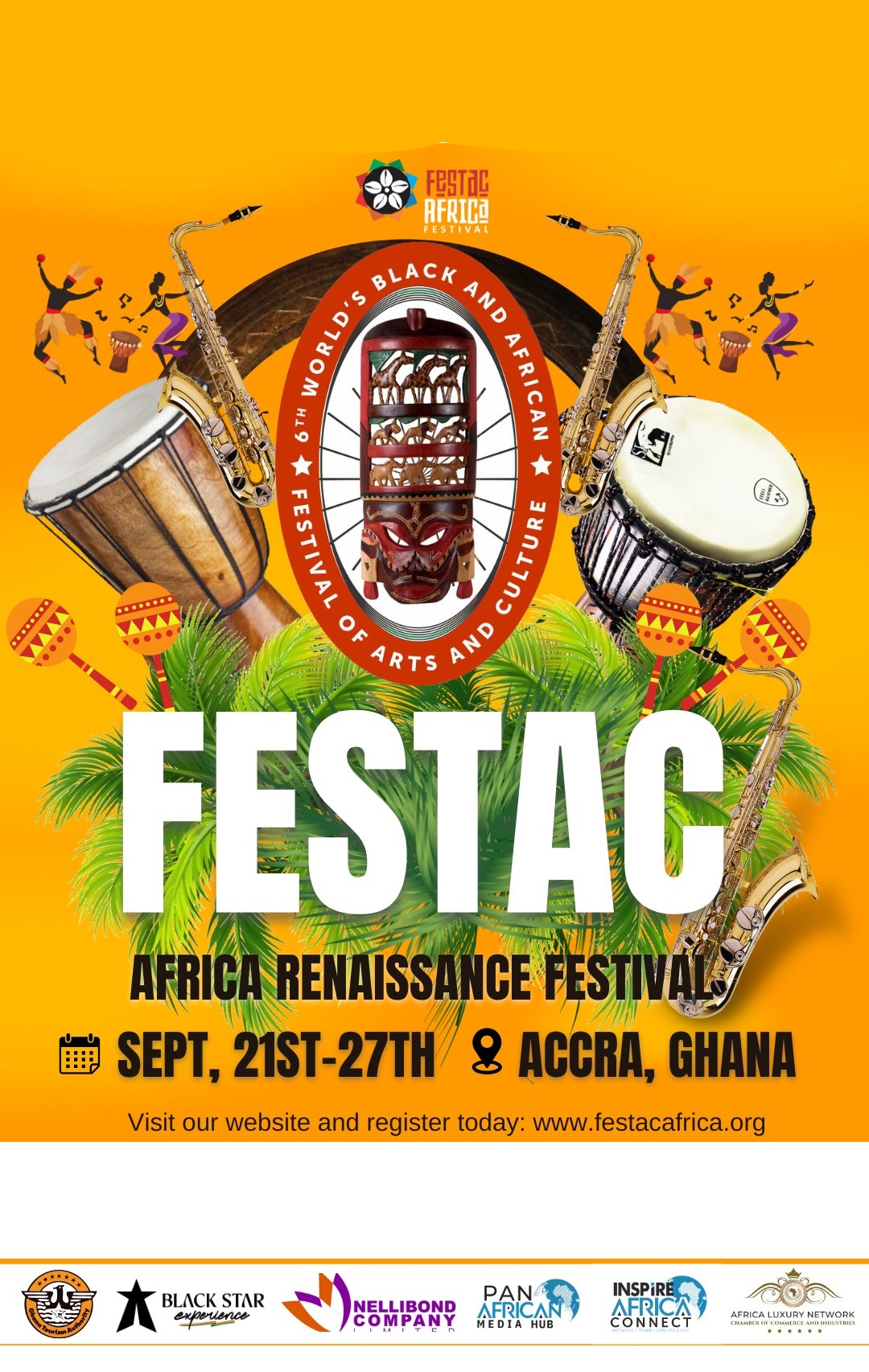
All roads will lead to Accra, Ghana, for the ongoing FESTAC Africa 2025. It’s not just another cultural event. i\it’s a continuation of a legacy that began nearly fifty years ago, when Africa decided to gather its voices, talents, and dreams in one place. Today, FESTAC is known as a hub for culture, trade, tourism, and dialogue. But if you peel back the layers, you’ll find a story that is much bigger than a week-long festival.
Many people know FESTAC by name. Some grew up in FESTAC Town in Lagos without realizing how it got its name. Others only know it as a symbol from history books. But behind it lies a remarkable story of unity, ambition, and celebration of Black identity on a global scale.
Here are seven things you should know about FESTAC: a festival that once shook the continent and still shapes its cultural future.
1. It All Began in Lagos, 1977
The story of FESTAC is inseparable from the energy of Lagos. In January 1977, Nigeria hosted the Second World Black and African Festival of Arts and Culture, famously shortened to FESTAC ’77. For an entire month, the city transformed into a vibrant arena of creativity and cultural exchange. The numbers alone were staggering: 16,000 participants from 56 countries, including nations from Africa and the diaspora, gathered in Lagos. At the time, it was the largest Pan-African gathering ever held.
Lagos became a melting pot where music, theatre, literature, religion, and art collided in grand displays. The National Theatre’s stages thundered with performances, Tafawa Balewa Square became a hub for exhibitions, and streets overflowed with people attending concerts or watching parades. It was more than just entertainment; FESTAC ’77 was a bold statement of African pride at a time when post-colonial nations were still carving out their identities on the global stage.
2. The Famous Ivory Mask
Every festival has its symbol, and for FESTAC ’77, the emblem was unforgettable: the ivory mask of Queen Idia, mother of Oba Esigie of the Benin Kingdom in the 15th century. The mask wasn’t chosen by accident. Queen Idia is remembered as a figure of wisdom, resilience, and strategy, a woman whose influence shaped the Benin Kingdom’s history.
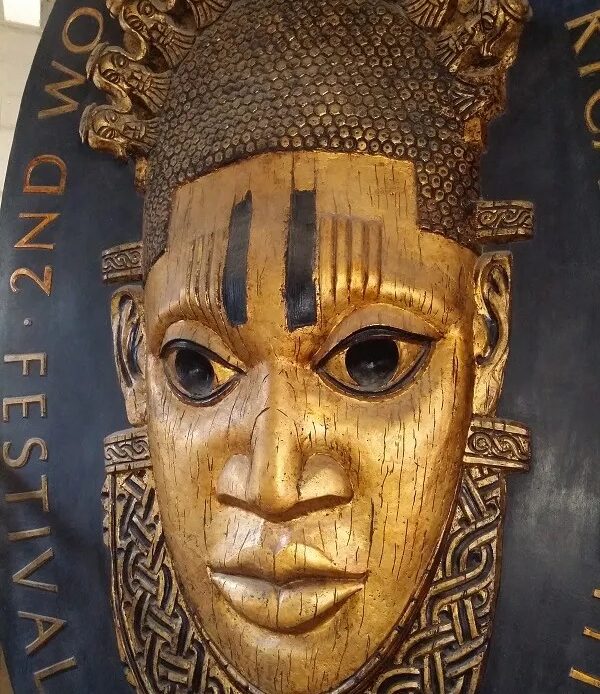
The decision to use her likeness as FESTAC’s official symbol sent a powerful message: Africa’s creativity and heritage didn’t begin in the modern era. It reached deep into history, long before colonization. The mask appeared everywhere during the festival, on posters, souvenirs, and banners, becoming an icon that linked the present celebration to the continent’s rich past.
Even today, replicas of the FESTAC mask remain one of Nigeria’s most recognizable cultural images. It represents continuity: the past speaking to the present, reminding Africa of the strength embedded in its traditions.
Read: Queen Idia: The Fearless Warrior and First Iyoba of Benin Kingdom.
3. FESTAC Built Landmarks We Still Use Today
One of FESTAC’s most enduring legacies is not just cultural, but physical. Preparing for the massive influx of visitors, Nigeria built infrastructure that still defines Lagos today. Chief among them was the National Theatre in Iganmu, a state-of-the-art cultural center modeled after Bulgaria’s Palace of Culture and Sports. With its sweeping design and massive halls, it became the central stage for performances, exhibitions, and discussions during FESTAC. Decades later, it still stands as one of Nigeria’s architectural landmarks.
Equally significant was FESTAC Village, a sprawling housing estate created to accommodate over 17,000 participants. What was meant as temporary lodging evolved into FESTAC Town, one of Lagos’ largest residential neighborhoods, with schools, markets, and a thriving community.
These weren’t just projects for a single festival. They became long-term contributions to Lagos’ urban development, showing how culture can literally shape the cityscape. Every time people gather at the National Theatre or drive through FESTAC Town, they walk through history born in 1977.
4. A Star-Studded Guest List
FESTAC ’77 was a magnet for talent, attracting some of the biggest names in global Black culture. The guest list reads like a dream lineup: Stevie Wonder brought soul from America, Miriam Makeba gave voice to South Africa’s struggles, Gilberto Gil infused Brazil’s rhythms, while legends like Franco Luambo, Bembeya Jazz, and Mighty Sparrow added their unique flavors.
But it wasn’t just about star power. This was a platform where artists from across the diaspora came face to face with their African roots. It was a reminder that Black culture is not fragmented, but interconnected. Performances spilled from official stages to impromptu jams in FESTAC Village, where musicians, dancers, and poets exchanged not only art but also ideas about identity and liberation.
The sheer diversity of participants turned FESTAC into more than an African festival. It was a global Black experience, proof that music, dance, and art could unite people across oceans.
5. More Than Music and Dance
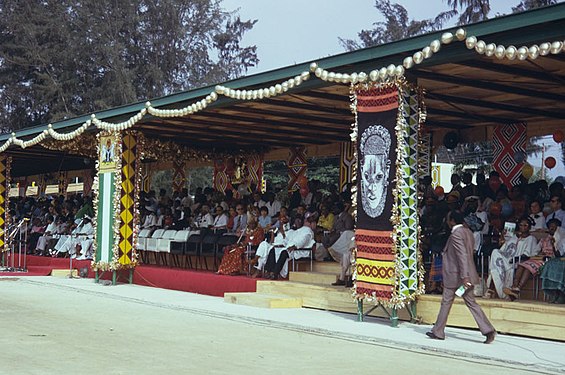
Beyond the dazzling concerts, FESTAC had an intellectual backbone. Every day, while audiences filled theatres and stadiums, another kind of gathering unfolded: the colloquiums. These were forums where writers, scholars, and thinkers debated Africa’s future. More than 700 intellectuals from across the world attended, making it one of the largest cultural dialogues of its time.
The discussions were far from lighthearted. They tackled themes of identity, cultural ownership, post-colonial struggle, and Africa’s role in shaping global thought. Imagine a room where poets, academics, and statesmen sat side by side, questioning how Africa could preserve its traditions while embracing modernity.
This mix of celebration and critical reflection is what made FESTAC unique. It wasn’t escapism. It was a declaration that Africa could dance and debate, sing and strategize, celebrate its art while shaping its politics. In many ways, the conversations at FESTAC planted seeds still growing in Africa’s cultural movements today.
6. Durbar and Regatta Showcases
FESTAC was too big to be confined to theatre halls. Its organizers ensured that the richness of African traditions spilled into public spaces. Two standout events were the Durbar in Kaduna and the Regatta in Lagos.In Kaduna, the Durbar brought together emirs, horsemen, camels, and colorful processions in a spectacle that showcased Northern Nigeria’s grandeur. The regality of Hausa-Fulani traditions added depth to the festival’s vision of celebrating Africa’s diversity.
Meanwhile, Lagos hosted a breathtaking boat regatta along the Queen’s Drive foreshore in Ikoyi. Over 200 boats, each carrying masqueraders, acrobats, drummers, and dancers, turned the lagoon into a moving festival. It was a reminder that Africa’s culture is not confined to galleries or theatres, it lives on streets, rivers, and communities.
These showcases gave FESTAC its communal spirit. They were celebrations not just for visiting dignitaries but for everyday Nigerians who witnessed their heritage come alive in spectacular ways.
Read: FESTAC 2024: What You Need to Know About Africa’s Biggest Cultural Celebration
7. A Lasting Pan-African Vision
At its core, FESTAC was about more than performances and parties. It was rooted in the ideals of Pan-Africanism and Negritude, philosophies that urged Black people worldwide to reclaim and celebrate their heritage. Figures like Léopold Senghor, Aimé Césaire, and W. E. B. Du Bois dreamed of such a festival long before Nigeria brought it to life.
By 1977, Nigeria had both the political will and the oil wealth to stage this grand vision. And it delivered. It became a symbol of unity, a reminder that despite colonial histories and geographical divides, Africans and the diaspora share a common cultural heartbeat.
Today, that vision continues. FESTAC Africa 2025 in Accra builds on this legacy, expanding beyond art into health, trade, climate, and innovation. It shows that culture is not static. It grows, adapts, and shapes the future.
FESTAC Is Still Writing Its Story
When you hear about FESTAC Africa 2025, remember, it is not just an event. It is the continuation of a legacy that began in Lagos in 1977, when Africa boldly declared its creativity to the world. From the National Theatre to FESTAC Town, from Lagos lagoons to Accra stages, FESTAC continues to evolve.
Long before hashtags, FESTAC was trending across Africa. Long before Afrobeats went global, FESTAC had already united music, dance, and culture under one banner.Now over to you: what do you know about this festival? Did your family experience its legacy?
Follow RefinedNG to discover more untold African stories, because we’re your number one stop for all things positive, cultural, and inspiring.