
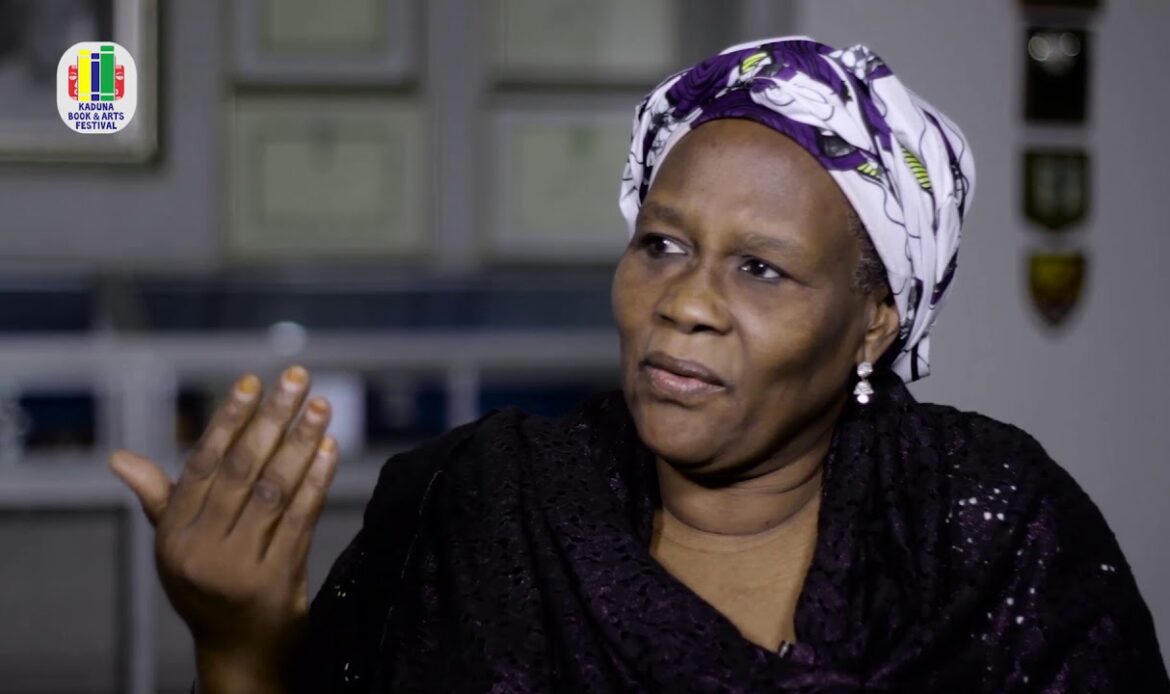
At first glance, Balaraba Ramat Yakubu’s legacy may seem straightforward: celebrated author, award-winning screenwriter, and a powerful voice for women in northern Nigeria. But behind the pages of her bestselling novels lies a haunting truth: she was once a child bride, forced into marriage at age 13, silenced before she ever had a chance to speak.
Yet, against the constraints of a patriarchal society and without formal education, she found her way to the written word. Today, she is the first female Hausa-language author to have her work translated into English and one of the most recognizable figures in the genre of littattafan soyayya—Hausa-language romance novels that champion the inner lives and struggles of northern Nigerian women.
She also carries a legacy of power and pain—Balaraba is the younger sister of General Murtala Muhammed, Nigeria’s former military ruler, who was assassinated in 1976.
Roots of Resistance
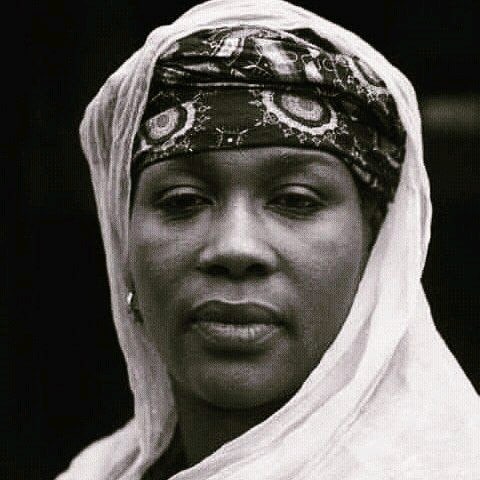
Born in 1959 in Kano, Northern Nigeria, Balaraba Ramat Yakubu was raised in a conservative Hausa-Muslim household where girls’ education was not a priority. Though her older brother, General Murtala Muhammed, was a firm believer in education and supported her schooling, family tradition overruled progress. At age 13, she was pulled out of primary school and forced into marriage to a man three decades older—a union that ended in divorce less than two years later.
The experience was traumatic, but it planted a seed of quiet defiance. Denied a chance to learn formally, Balaraba found ways to educate herself in secret, aided by her mother. Under the guise of attending sewing classes, she studied Hausa literacy at an adult education center. She began reading newspapers, writing stories, and reclaiming her agency—one word at a time. These hidden chapters of rebellion shaped her worldview and voice, laying the groundwork for a body of literature that would later challenge societal norms and celebrate the overlooked lives of women in Northern Nigeria.
Read: Ayra Starr Wins Big at 2025 BET Awards
Forced Marriage and Early Struggles
Balaraba’s journey began with heartbreak. At just 13, she was removed from primary school and married off to a man in his 40s—someone she had never met. For a while, the golden ornaments and wedding festivities distracted her from the reality of her situation. But within a year and eight months, she was returned to her father’s house in shame, discarded for being “too young.”
This trauma didn’t fade. Instead, it burned quietly, becoming fuel for her storytelling. In her novel Wa Zai Auri Jahila? (Who Would Marry an Ignorant Woman?), she channels her experience through the eyes of 13-year-old Abu, a girl forced into marriage with a man more than three times her age. Like Balaraba, Abu finds hope through education.
That early rejection became a defining moment—not an end, but a new beginning. Rather than allowing her voice to be erased, Balaraba started crafting a new identity—one word, one story, one rebellion at a time.
Secret Education and the Birth of a Writer
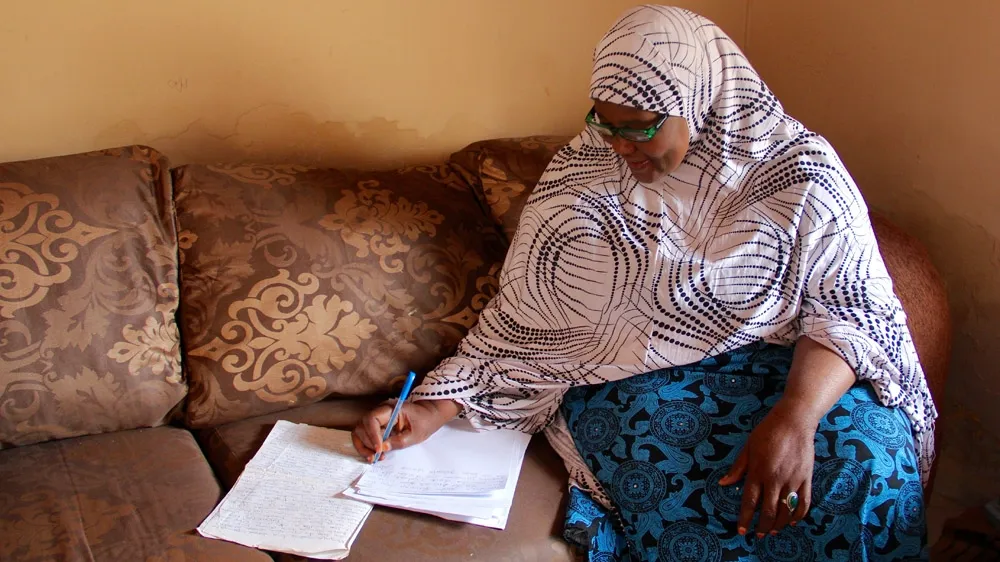
Her mother was the first rebel in Balaraba’s life. Unbeknownst to her strict father, she secretly enrolled her daughter in primary school. Among 80 granddaughters, Balaraba was the only one in class—until her father discovered the secret and arranged her marriage.
But after the collapse of her first marriage, her mother once again became her conspirator. She convinced Balaraba’s father to let her study knitting and sewing. Behind that facade, Balaraba enrolled in an adult education center to learn Hausa literacy.
She stitched baby clothes by day and scribbled words by night, smuggling knowledge past suspicion. When her father discovered a school certificate hidden in her bag, he arranged a second marriage for her. This time, she accepted—not because she was ready to be a wife, but because she had already gained what mattered most: a taste of education and the will to fight for more.
That hunger for literacy was the first act of authorship in a lifelong campaign for women’s empowerment.
Literature as Liberation: The Rise of a Soyayya Star
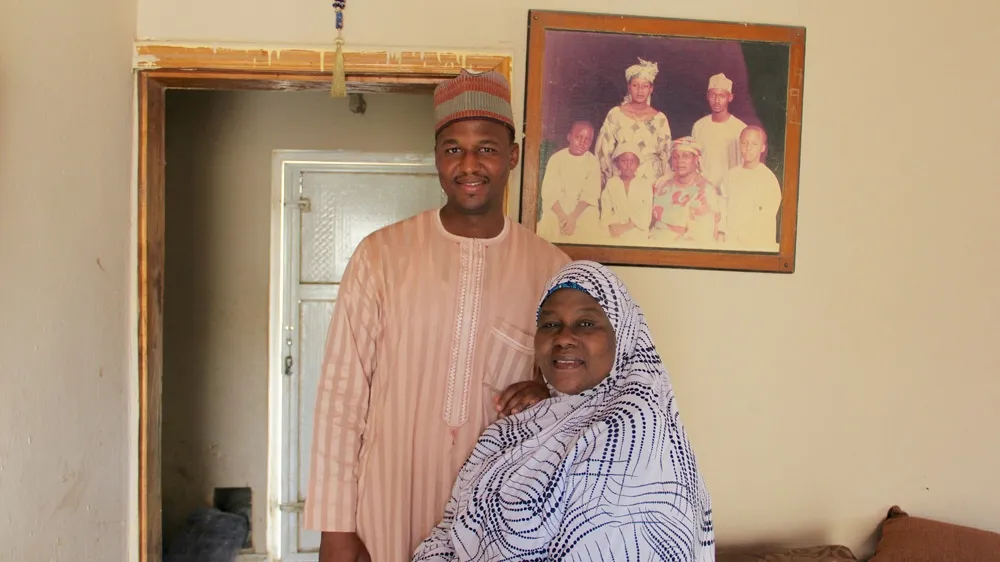
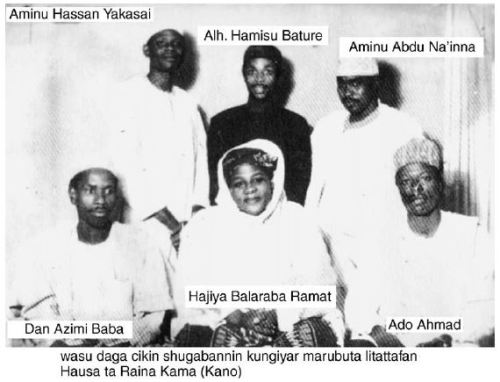
In 1987, Balaraba entered a space where few women dared to tread: the all-male literary club Raina Kama in Kano. Her debut novel, Budurwar Zuciya (Young at Heart), was published that same year, marking the beginning of a groundbreaking career.
But her bold storytelling drew fire. Religious leaders preached against her. She received threats targeting her and her children. Yet, her books continued to sell, particularly among women. In the markets of Kano, veiled schoolgirls and grandmothers alike flocked to stalls filled with “soyayya” novels: affordable romance books in Hausa that explore issues like child marriage, domestic violence, and polygamy.
Her second book, Alhaki Kuykuyo Ne… (Sin Is a Puppy That Follows You Home), was adapted into a film in 1998 and translated into English in 2012 by Indian publisher Blaft. The translation introduced Balaraba to a global audience, making her the first female Hausa-language writer published in English.
Her novels weren’t just popular—they were powerful. In a culture where women were expected to remain silent, Balaraba created characters who questioned, resisted, and rose above their limitations. And through them, she offered northern Nigerian women the most radical gift of all: visibility.
From Novelist to Filmmaker: Owning the Narrative
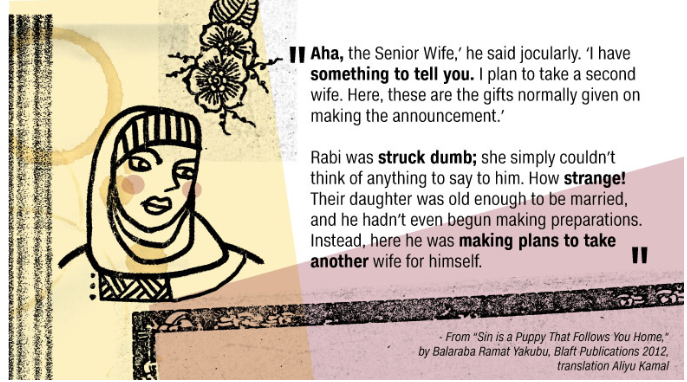
Balaraba didn’t stop at the written word. With the success of her books and film adaptations, she became increasingly involved in the Kannywood film industry. Her storytelling lens expanded from novels to cinema.
One of her most recent projects, Juyin Sarauta, is a historical epic exploring Hausa royal life from a century ago. She wrote and produced the film herself, blending history, gender politics, and art to create a sweeping cultural narrative that is both poignant and thought-provoking. The film won over ten awards and was praised by scholars and critics alike.
Why history? “Without knowledge of your past, you don’t know your roots, and you can’t stand up for your rights,” she explained. For Balaraba, storytelling isn’t just art—it’s activism. Each project, whether written or filmed, reclaims space for Hausa women in a world that has long overlooked them.
Read: Tems Receives Billboard Diamond Award in London
Trauma, Advocacy, and the Work Beyond the Page
Beyond literature and film, Balaraba now works as a trauma counsellor with the Murtala Muhammed Foundation—named after her late brother. In a region scarred by conflict and terrorism, she supports victims of bombings and insurgency, helping them find emotional footing after devastation.
Her role involves visiting hospitals, identifying patients in need of counselling, and connecting them to professional help. Many survivors resist talking, but Balaraba’s pain helps her connect. “I know how it is to feel powerless and unable to speak out,” she says.
From the silence of early marriage to the spoken power of storytelling and advocacy, her life’s work forms a full circle: lifting up the voices of those told to be quiet. She doesn’t just write stories—she rewrites destinies.
Her Legacy and the Women Who Follow
Balaraba’s journey paved the way for others. In 2005, she founded a women’s writers association in Kano. Today, it boasts more than 200 members—proof that the seeds she planted are blooming.
Once the only woman in a literary club, she’s now part of a vibrant sisterhood. Northern Nigerian women are in politics, business, education—and even flying planes. “To the West, it might not seem like much,” she says, “but to women here, it is progress.”
She believes the next generation will fight smarter, with knowledge. “When I was fighting, I did so with passion because I lacked an education. But the young women today will fight with knowledge.”
From Silenced to Sovereign
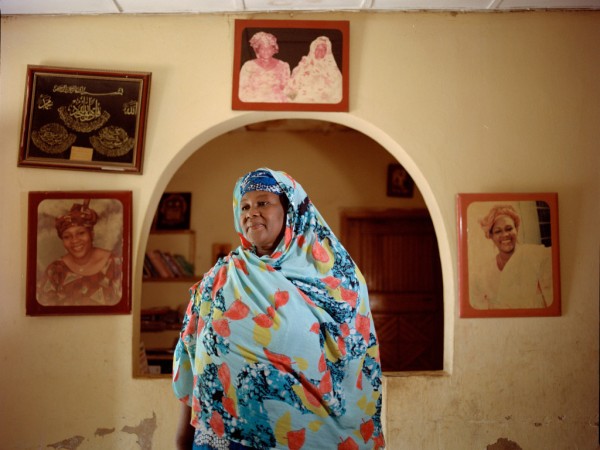
Balaraba Ramat Yakubu’s journey is a portrait of resilience—a transformation from voiceless child bride to a powerful literary icon. What began as whispered lessons in hidden classrooms became a public declaration through the written word. Her novels, filled with raw truths and everyday courage, have sparked conversations in homes, markets, and schools across Nigeria.
She did not just reclaim her own voice—she opened the door for countless others to find theirs. Today, her impact is evident in the growing chorus of northern Nigerian women authors, in classrooms filled with girls holding her books, and in readers who see themselves in her stories. Balaraba Ramat Yakubu didn’t just survive her circumstances—she rewrote them.