
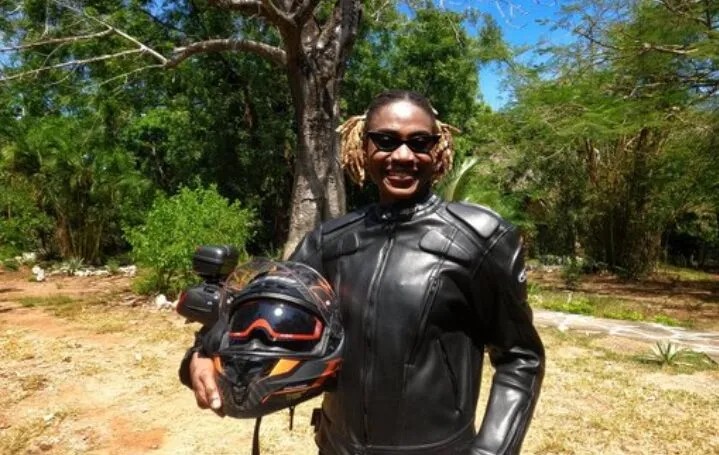
Ebaide Udoh is most likely on the road again, revving her small 250cc motorcycle somewhere between borders, the engine’s hum cutting through the early-morning stillness. She wears her full riding gear, helmet reflecting a sun she’s chased across multiple countries. Her spine is held together with screws from a near-fatal car accident eight years ago, yet her posture is upright, confident, and determined. Her heart? Even stronger.
The decision she made in the aftermath of that accident, “use my legs before I can’t”, has propelled her across Africa, not in quiet rehabilitation, but in a series of continent-wide adventures that leave trails of inspiration in their wake.
This isn’t just about motorcycles, though they are her instrument of freedom. It’s about storytelling, courage, and daring to redefine what African women can achieve. From Kenya to Nigeria, Senegal to Morocco, Ebaide has turned roads into narratives, borders into milestones, and her own body into a testament to resilience.
She’s not just chasing records; she’s challenging assumptions, one kilometer at a time. Today, we’re breaking down five things you absolutely need to know about this extraordinary Nigerian woman.
1. She Survived a Near-Fatal Accident and Turned it Into a Promise to Herself
At 23, life threw Ebaide Udoh into chaos. A car flipped multiple times, hurling her out and slamming her onto her back. Months in a wheelchair followed, where even the simplest movements were a reminder of fragility. Doctors were cautious, recovery was slow, and the future looked uncertain. Most people might have retreated into safety. Ebaide made a different choice. She quietly promised herself that she would not waste mobility when she regained it.
“It wasn’t just about being able to walk again,” she says. “It was about proving to myself that I could still move, explore, and live fully. The accident didn’t take away my legs, it gave me a reason to use them better.”
Her obsession with movement became a philosophy. Each step she took in rehab was carefully planned and executed with intention. The promise to herself wasn’t abstract; it was a call to action. She wanted to see Africa before her body gave out again, and she wanted to do it on her own terms, in ways few dared to dream. That sense of urgency, born from trauma, became the fuel for every ride, every border crossed, every story shared.
Ebaide refuses to let pain or limitation define her life after the accident. Years later, she still endures daily discomfort. The screws in her back constantly remind her of mortality. Yet she rides. She climbs. She journeys. Ebaide shows that resilience is earned on the road, not in the safety of waiting.
Read: 5 Things We Found Out About Anthony Azekwoh
2. She Became a Solo African Biker Without Knowing How to Ride a Bicycle
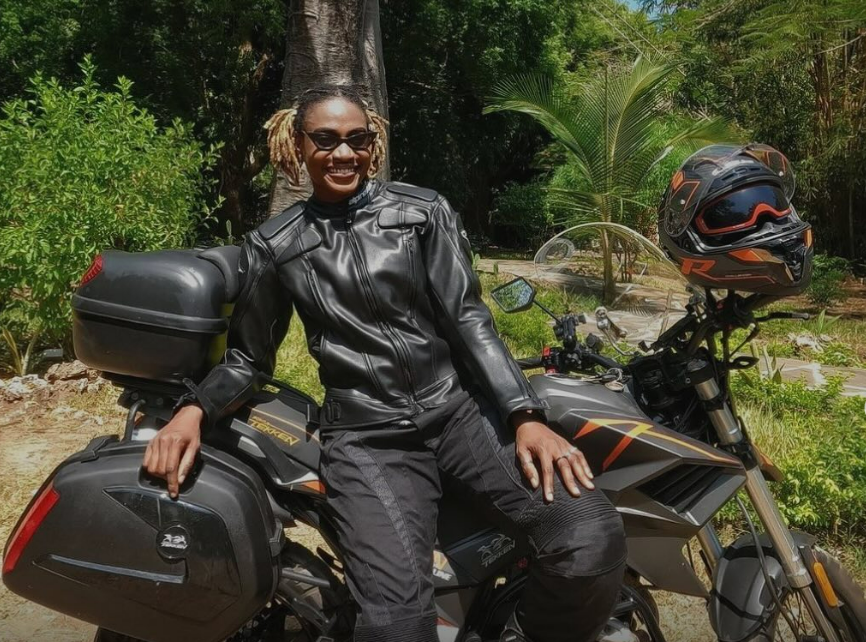
The irony isn’t lost on her. Ebaide didn’t know how to ride a bicycle, yet she now navigates rough terrains on a motorcycle that many seasoned bikers wouldn’t dare attempt. Her journey to two wheels started modestly: backpacking across West Africa, exploring cities, cultures, and people on foot. Then she transitioned to building a camper van in Kenya, traveling for months, before moving on to a tuk-tuk.
She kept thinking, if it worked out, why not push it further? So she bought a motorcycle, enrolled in a one-week riding class in Nairobi, and fell more than once. Then, instead of waiting until she was perfect, she rode nearly 1,900 kilometers just practicing before setting her sights on a border-crossing journey.
Her first major ride: Kenya to Uganda. She describes it like a baptism. Fear and exhilaration collided. She quickly learned the realities of African roads: sudden potholes, unexpected wildlife, unpredictable weather, and moments of utter isolation. But she also discovered kindness; the mechanic who refused payment after fixing her chain, the family who shared water and food without asking, the children who cheered her as she passed through villages.
Then came the big one: Mombasa, Kenya to Lagos, Nigeria, a 9,000-kilometer stretch across more than 20 countries. Rocky terrains, sweltering heat, broken roads, and unpredictable border officials became her classroom. Every morning on the bike, she reflected on the miles behind her and the miles yet to go. The journey demanded patience, focus, and a willingness to embrace discomfort. And through it all, she cultivated a rare kind of freedom; a freedom she says only comes when you’re willing to risk imperfection to see the world.
3. Ebaide Udoh Chased a Guinness World Record and Called out the System While Doing it
Ebaide’s rides are not just personal victories, they’re historic. She set her sights on the Guinness World Record for the longest solo motorcycle journey by a woman in Africa. The path wasn’t smooth. Ebaide paid a $1,000 fee for expedited review, only to be rejected. She proved the category existed and that she met the criteria, yet Guinness asked her to pay $10,000 for a “business consultation” to validate the record.
She went public. Africans rallied. Social media erupted. Within weeks, Guinness reversed the decision and officially approved her application under the title “Longest Journey by Motorcycle in Africa (Female).” Her target was ambitious: 35,000 kilometers, surpassing the previous 30,000 km record.
But the experience inspired something larger: African People’s Records, a platform she created to recognize African achievements without unnecessary gatekeeping. This wasn’t just about mileage, it was about visibility, representation, and rewriting narratives. Through the platform, extraordinary African feats that often go unnoticed now have a stage, from cyclists and chess champions to artists and inventors. Ebaide’s fight for recognition became a symbol that systems can be challenged, and change can start with one determined voice.
4. She’s Redefining Exploration for African Women, One Border at a Time
Ebaide rides for herself, but her mission resonates with thousands of African women who see possibility in her journey. Every border crossed is a statement: African women can dare boldly, handle fear, and thrive despite obstacles.
Her travel rules are strict: ride no more than 4 – 5 hours a day, never after dark, always prioritize safety over speed. She travels light; five tops, two pairs of pants, photography gear, and a backpack of essentials. She navigates visas, bribes, and corrupt officials, keeping alert while fostering human connections along the way.
Social media amplifies her journey. Followers cheer on each milestone, leaving comments like, “If she can do it, so can we,” and “We need more African women on the road like her.” For Ebaide, these interactions are proof that her rides are more than personal adventures, they’re acts of representation, inspiring a new generation of women to carve out space for themselves.
Every country she enters teaches her something unique about Africa: the resilience of its people, the diversity of culture, and the shared humanity that transcends language and borders. “I want to show the world that Africa isn’t fragmented. It’s connected. It’s alive. And women are part of the story,” she says.
Read: How Tiwalola Olanubi Turned Influence Into an Industry
5. She’s Building Legacy: A Movement, A Platform, and A Foundation
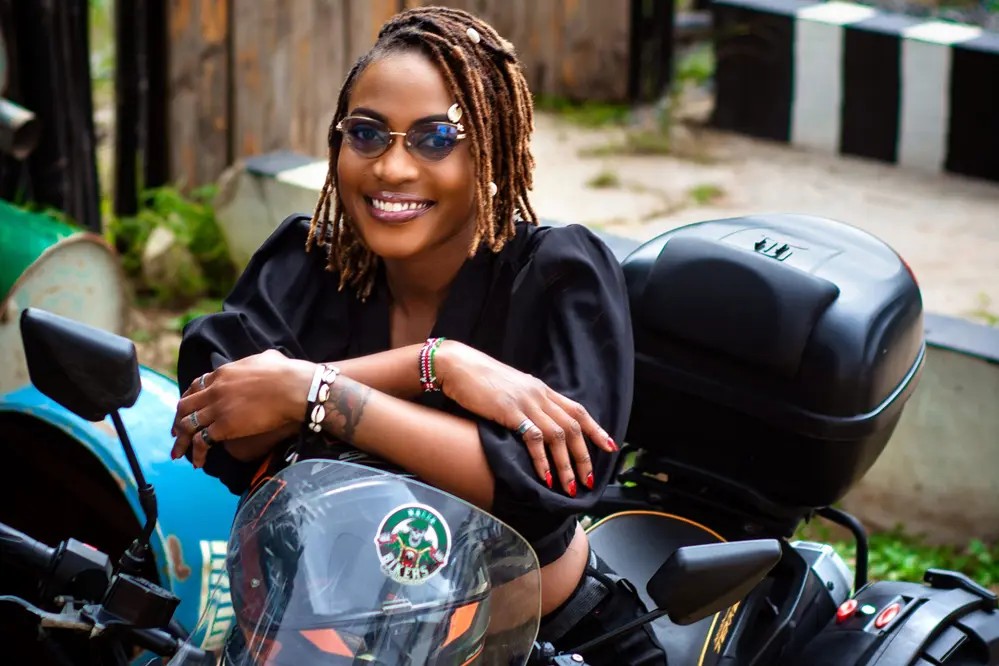
Ebaide isn’t just riding for records, she’s riding for impact. Her tour from South Africa to Kenya covered 12 countries and over 11,000 kilometers, completing a single, continuous journey across the continent. By the time she finished, she had traversed 32 countries solo, a feat no African, man or woman, has achieved on a motorcycle.
Alongside this, she launched the Ebaide Foundation, which will focus on orphan girls, teaching practical skills like tailoring, hair, catering, and wig-making. Her rides are not just adventures, they are also fundraising missions. Each border crossed, each social media post, and each story shared is tied to empowering young African women to build sustainable futures.
And then there’s African People’s Records, her platform for recognizing extraordinary African achievements. Through this initiative, she aims to ensure Africans celebrate each other, breaking the pattern of waiting for international validation to define success. Ebaide believes visibility equals possibility. By shining a light on African talent, she’s creating a ripple effect, encouraging young people to dream bigger, move boldly, and act decisively.
Her mantra is simple yet powerful: no dream is too big for an African woman armed with purpose. Through adventure, advocacy, and action, Ebaide is proving that courage isn’t just a feeling, it’s a practice, a lifestyle, and a statement.
The Road Is Turning Ebaide Udoh Into a Symbol of What’s Possible
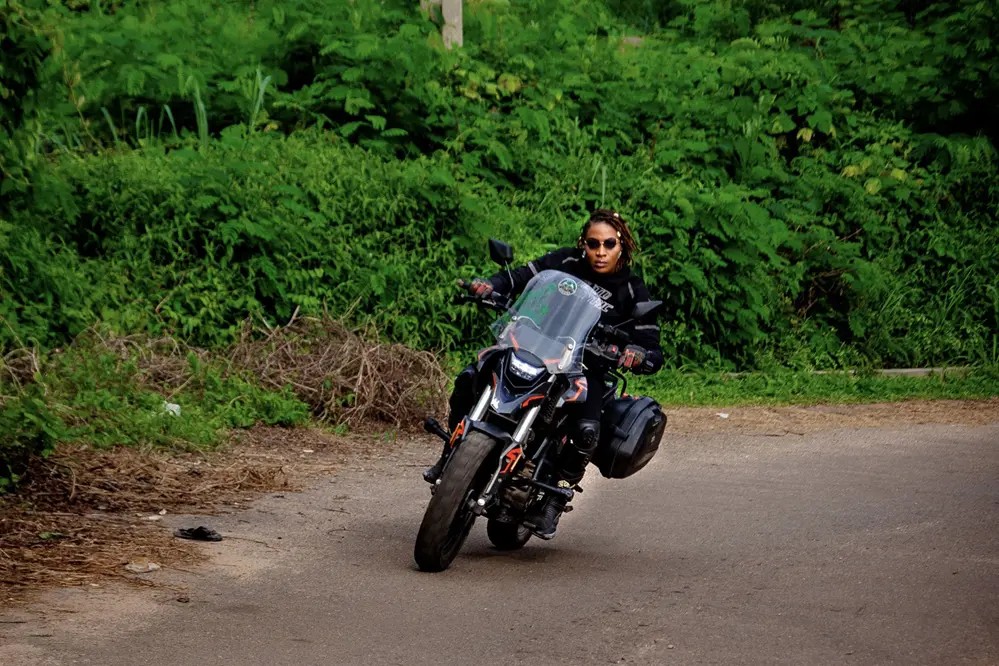
Udoh Ebaide’s journey is more than a long-distance ride. It’s a testament to resilience, a chronicle of audacity, and a living proof that purpose can propel a person across countries, continents, and limits that society places on women. She rides not just to see Africa, but to show Africa, to herself, to young women, to the world, that courage paired with action creates legacy.
Her story reminds us that adventure doesn’t require perfection, that records aren’t just numbers, and that impact can come from choosing to move forward when fear is loudest. The road has made her a symbol, but the symbol is also a human being; a woman who refused to be defined by injury, limitation, or expectation. She rides, and in doing so, she lifts a continent’s possibilities along with her.
Ebaide Udoh is not waiting for permission to be great. She’s riding into history, one country, one border, and one life-changing kilometer at a time.
For more African trailblazers rewriting narratives like Ebaide Udoh, check out RefinedNG and witness what’s possible when audacity meets action. RefinedNG, Africa’s home of positive news.