
Did you know that Africa holds the title for the highest linguistic diversity on Earth? Scholars estimate that more than 2,000 distinct languages are spoken across the continent. That figure represents nearly one-third of all known languages in the world. Linguistic diversity refers to the number of different native languages spoken within a given region, and by that measure, Africa stands apart.
While other continents contain large language populations, Africa’s concentration of languages within its borders makes it exceptional. To understand why, it helps to look at the numbers, the countries involved, and the language families that shape daily communication across the continent.
Did You Know? Africa Is Home to Nearly One-Third of the World’s Languages
Linguists estimate that the world has roughly 7,000 living languages. More than 2,000 of them are spoken in Africa. That means a significant portion of global linguistic heritage exists within one continent. Some sources note that parts of Asia rival or slightly exceed Africa in total language count. However, Africa stands out for how densely those languages cluster across its nations.
In practical terms, this means that neighboring communities may speak entirely different mother tongues, even when they share borders. The variation reflects long histories of settlement, migration, trade, and cultural development. Over thousands of years, communities formed, expanded, interacted, and preserved their linguistic identities. As a result, Africa’s linguistic landscape developed into one of the most complex in the world.
Read: Ghana’s Fugu, The Traditional Smock Making a Comeback
Most of the World’s Most Linguistically Diverse Countries Are in Africa
When researchers rank countries by linguistic diversity, African nations dominate the list. According to Ethnologue’s index of linguistic diversity, 20 of the top 25 most linguistically diverse countries are located in Africa. The index measures the probability that two randomly selected people in a country have different mother tongues.
This method focuses on distribution rather than just raw numbers. A country with many languages but one dominant majority language may rank lower than a country where languages spread more evenly across the population. By that standard, African countries consistently rank high because many languages maintain active speaker communities. The rankings highlight how diversity in Africa exists not only in count but also in everyday usage.
Did You Know That Nigeria Alone Has Over 500 Languages?
Nigeria provides one of the clearest examples of this diversity. Linguistic surveys identify more than 500 languages spoken within its borders, placing it among the most linguistically diverse countries in the world. Communities across Nigeria maintain distinct linguistic traditions that reflect ethnic, cultural, and regional identities.
Nigeria is not alone. Cameroon hosts approximately 230 to 250 languages, while the Democratic Republic of Congo counts roughly 215 to 220. Together, these countries illustrate how linguistic variety concentrates heavily in parts of West and Central Africa. Even within a single region, dozens of languages may coexist, each with its own grammar, vocabulary, and oral traditions.
African Languages Belong to Four Major Families
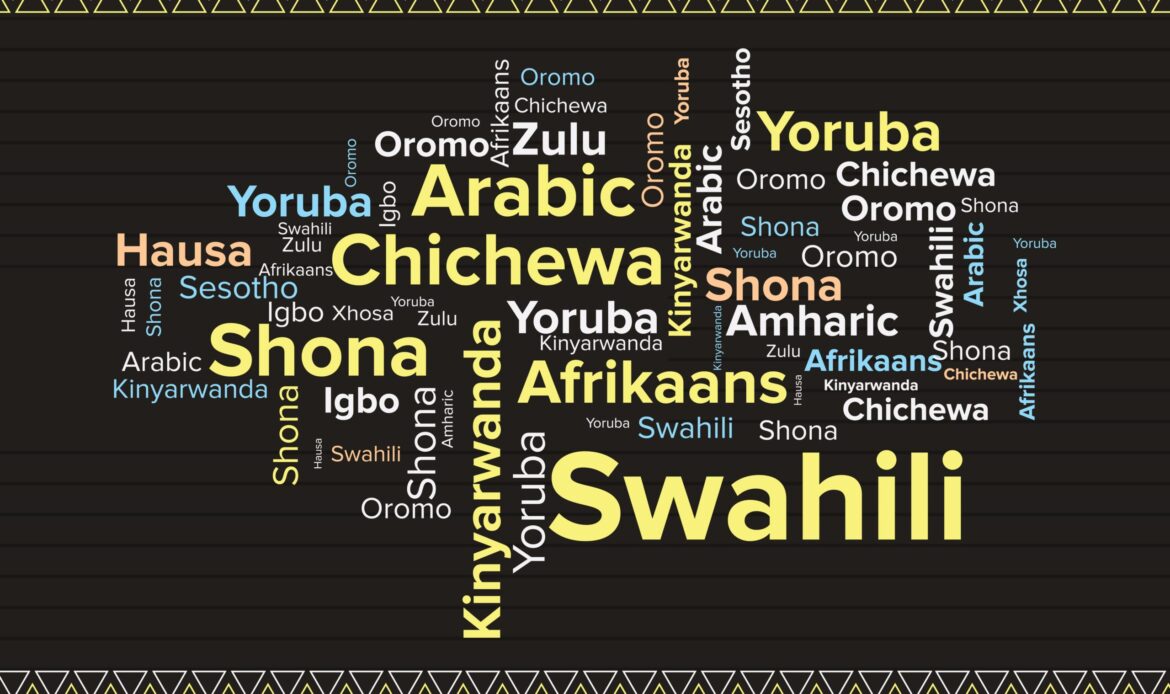
Despite the large number of languages, scholars generally group African languages into four major families: Niger-Congo, Afro-Asiatic, Nilo-Saharan, and Khoisan. Each family contains hundreds of individual languages and numerous subgroups.
The Niger-Congo family ranks as the largest. It includes widely spoken languages such as Swahili, Yoruba, Zulu, and Igbo. Many of these languages serve as regional lingua francas and connect millions of speakers across national borders.
The Afro-Asiatic family includes Arabic, Hausa, and Somali, primarily spoken in North Africa and parts of the Horn of Africa. Nilo-Saharan languages appear mainly in eastern and northeastern regions. The Khoisan family, spoken mostly in southern Africa, is well known for its distinctive click consonants. Together, these four families account for the structural foundation of African linguistic diversity.
Read: Surprising Facts About the Argungu Fishing Festival
Multilingualism Is a Daily Reality
With so many languages in close proximity, multilingualism becomes practical rather than exceptional. In several African communities, people grow up learning multiple languages for home, trade, education, and national communication.
A study conducted in western Uganda found that the average resident spoke more than four languages. In many countries, individuals use an indigenous language at home, a regional language in markets, and an official language such as English, French, or Portuguese in formal settings. Colonial history introduced these European languages as official languages in many states, yet they often function alongside strong local languages rather than replacing them.
Some of the Oldest Language Traditions Are African
Africa also preserves some of the oldest language traditions still in use today. Khoisan languages, recognized for their click sounds, trace back thousands of years. Their continued presence reflects the continent’s long human history and sustained cultural continuity.
Taken together, these facts explain why Africa stands at the center of global linguistic diversity. The continent’s languages record histories, identities, and social systems that continue to shape everyday life across its nations.
If you enjoy learning about Africa beyond the headlines, keep exploring with RefinedNG. We publish well-researched features that spotlight culture, history, travel, and the ideas shaping the continent today. Follow RefinedNG for more thoughtful stories that inform, challenge assumptions, and expand your perspective.