
The Kofar Matar Dye Pits
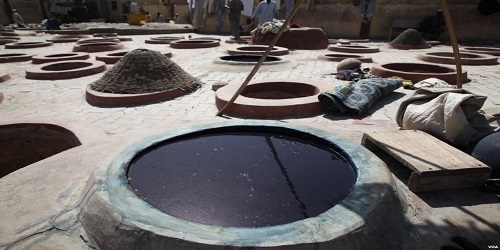
The Kofar Matar Dye Pits are a very historical place for the people of Kano State, Northern Nigeria. Situated very close to the central mosque at the centre of the city, the pits remain one of the most fascinating places to visit in Kano State.
Kofar Matar Dye Pits were established in 1498. They are said to be the oldest in Africa and the last of their kind. The dye pits have been used constantly by the indigenous people of Kano, attracting tourists from around the world. The beauty of the state, hard work and creative ingenuity of the people of Kano are often celebrated at the dye pit.
The Historic Dyeing Process
Even after several years, it is interesting to know that dyers at the pit still employ the same dyeing process used several years back. The Kofar Matar remains attractive to date because of its impressive structures maintained over the years, and the unique traditional method of dyeing fabrics that had been preserved and handed down from generations.
Read Also: Ladi Kwali, the Pioneer of Modern Pottery in Nigeria
The dyeing process at Kofar Matar involves the use of locally sourced ingredients and equipment. The ingredients which specifically consist of the baba plant, potassium and firewood ashes are mixed with water in the pit. A locally made stirrer is then used to blend the mixtures. The water poured into the pit is usually about 1550 litres and measured according to the depth of the Kofar Matar pit, which is 6 meters. Buckets of ashes are then poured into the water and left for three days. The next step in the dyeing process involves the mixture of about 200kg of the baba plant which is also left for three days. After three days, the leaves and sticks in the baba plant are filtered from the solution and three buckets of potash and ‘Katsi’ are added and left for another three days.
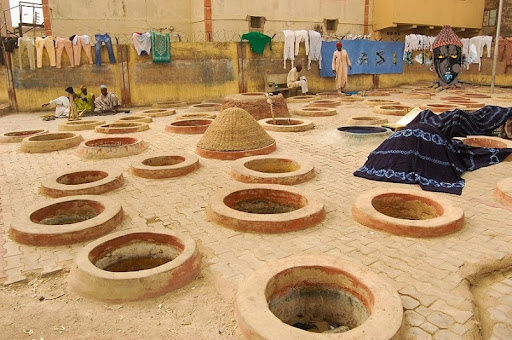
Most times, the ashes and other wastes that rise above the solution get sieved and the essential mixture is stirred with the stirring machine for one week. Although the dye solution is usually active for one year, it must be mixed regularly to keep it preserved.
Dyeing in Kofar Matar involves dipping neatly woven fabrics or yarns into fermented dye mixtures. To produce beautiful fabrics, designs are made into the material before dyeing and the fabric is often beaten to achieve a shiny, decent appearance. The techniques employed to obtain this look are unmatched around the world. Although the methods used are ancient, these lush works of art on fabric have remained extremely popular and have continued to be in great demand.
At the entrance of the Kofar Matar Dyeing Pits, hordes of activities are in full swing. From beautiful women hawking nono (fresh cow milk) to young girls with kola nuts and groundnuts placed on their heads, it’s often a great sight to behold.
There were dyeing pits in Zaria as well as in Kano those days when they were all still in use. Today, only the famous Kofar Mata pits of Kano have survived – they have also become a much-liked tourist attraction. Tourists are delighted to know that the pits were founded in 1498 and the dying process has not changed in centuries.
Stay glued with www.refinedng.com for more interesting updates.