
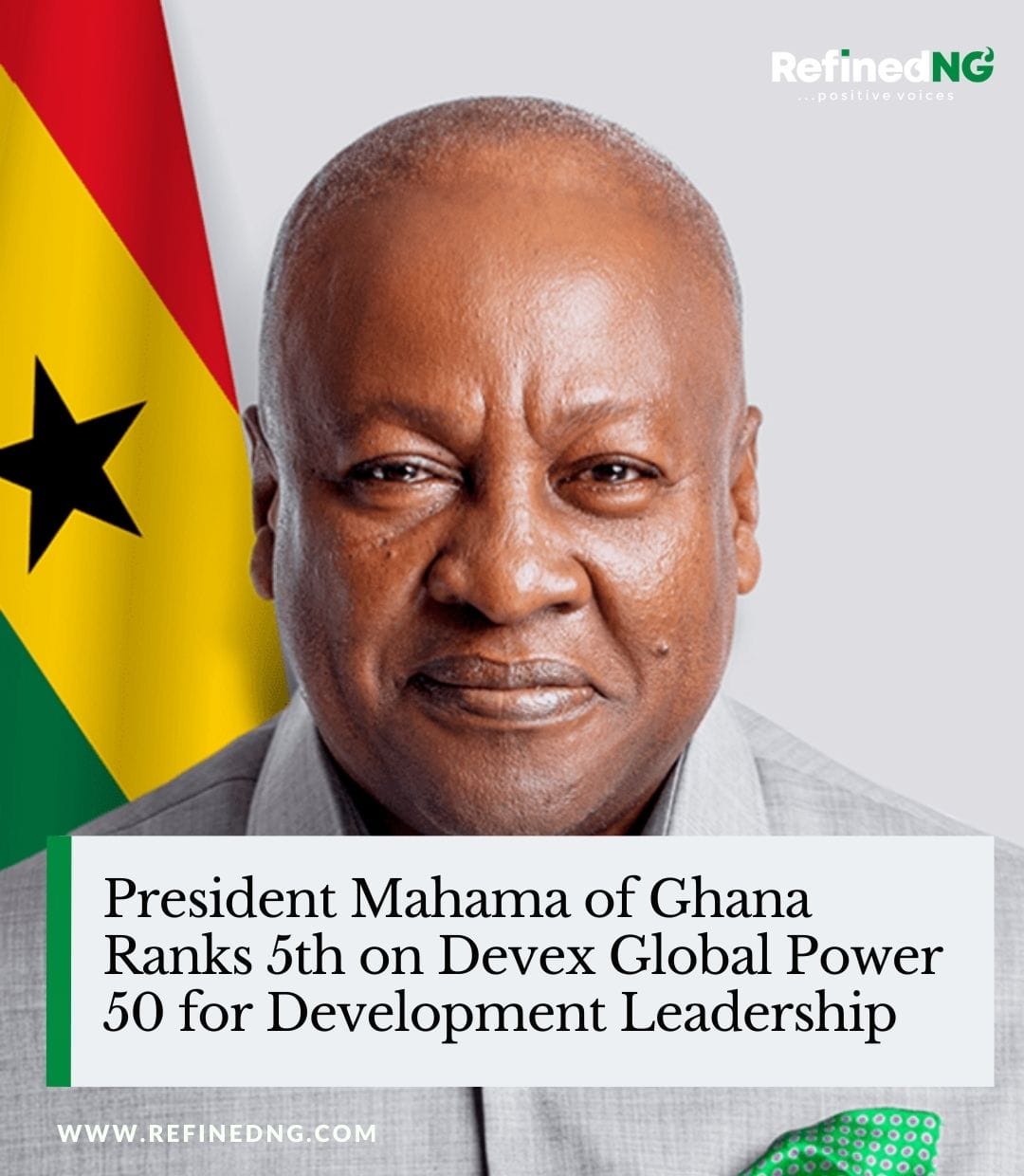
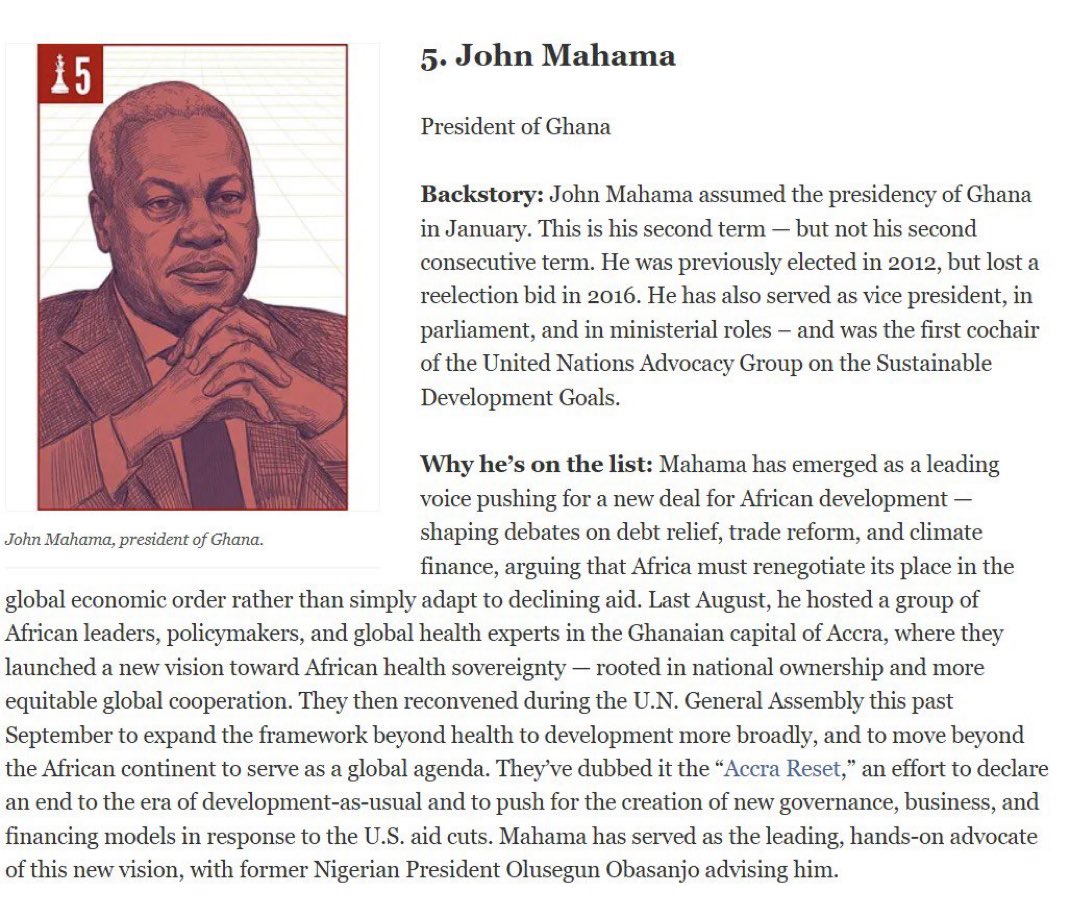
Ghana’s President, John Dramani Mahama, has been ranked fifth on the 2026 Devex Power 50 list, placing him among the world’s most influential leaders shaping the future of global development and aid financing.
Devex published the ranking on February 2, 2026, as part of its annual assessment of individuals who hold real influence over how development policy, funding, and partnerships evolve. This year’s list reflects a changing global landscape marked by shrinking foreign aid budgets, especially from the United States, and a growing push for new financing models driven by countries in the Global South.
Mahama’s placement makes him one of the highest-ranked African leaders on the list. Devex highlighted his role in challenging long-standing aid structures and pushing for African-led solutions that reduce dependence on traditional donor systems.
The Accra Reset and a Shift Away From Aid Dependence
Read: UNILAG and University of Birmingham Partner to Deliver UK Degrees in Nigeria
At the centre of Mahama’s recognition is the “Accra Reset”, an initiative launched in August 2025 in Ghana’s capital. The effort brings together African leaders, policymakers, and global health experts to rethink how development is funded and delivered, starting with health systems and expanding into broader economic policy.
The Accra Reset argues that African countries must take greater ownership of development priorities, especially as global aid declines. It focuses on debt relief, fairer access to climate finance, and partnerships that reflect local realities rather than donor preferences.
Devex noted that Mahama has not positioned the Accra Reset as a protest against aid cuts, but as a practical response to them. The initiative gained wider attention at the United Nations General Assembly in September and later at the World Economic Forum in Davos, where discussions moved beyond Africa and framed the proposal as a global response to a changing aid environment.
Former Nigerian President, Olusegun Obasanjo, has played an advisory role in the process, lending further political weight to the initiative.
Influence Beyond Ghana’s Borders
Mahama returned to office in January for a non-consecutive second term, having previously served as president from 2012 to 2016. Devex pointed to his long experience across government, parliament, and international policy as a factor in his growing influence.
Before his return to the presidency, Mahama served as co-chair of the United Nations Advocacy Group on the Sustainable Development Goals, where he built relationships across multilateral institutions and global policy circles. These networks, Devex said, now amplify his voice as debates over development financing intensify.
Rather than focusing on aid volumes, the Power 50 ranking emphasises influence, agenda-setting, and the ability to shape new thinking. In that context, Mahama’s arguments for debt restructuring, fair trade rules, and climate finance tailored to Africa’s needs have gained traction at a critical moment.
Read: From Accra to Nike: Free The Youth’s Landmark Jordan Brand Collaboration
Public Reaction at Home
News of Mahama’s ranking drew praise from many Ghanaians, who described it as a national achievement and a sign that Ghana’s leadership is shaping global conversations. Supporters say the recognition strengthens the country’s standing on the international stage.
At the same time, some critics have urged the government to match global influence with faster progress on domestic challenges, including illegal mining and environmental degradation. The debate reflects the balance Mahama faces as he pushes international reform while managing local concerns.
A Place in a Changing Global Order
Devex described the 2026 Power 50 list as a snapshot of a post-aid era, where power no longer sits only with major donors but with leaders who can rethink systems and mobilise new coalitions.
Mahama’s fifth-place ranking signals his emergence as one of those leaders. As development financing continues to shift, his role in shaping what comes next will remain under close watch.
For more in-depth reporting on African leadership, global development, and the stories shaping the continent’s future, stay with RefinedNG. Follow the link for the full report and ongoing coverage.