

On August 2nd, 2025, something extraordinary happened: a handful of egusi seeds—yes, the same ones found in kitchens across Nigeria—blasted off into orbit aboard a SpaceX Falcon 9 rocket. For many, it was a quirky headline. For others, it was a quiet revolution.
This wasn’t just an agricultural experiment. It was cultural symbolism at cosmic scale. Egusi, a dish claimed with pride by both Yoruba and Igbo communities, just became the first Nigerian object in space.
At the heart of the mission is Dr. Temidayo Oniosun—a scientist, strategist, and space policy leader. His work sits at the intersection of data, diplomacy, and identity.
This spotlight isn’t just about a seed floating in zero gravity. It’s about what happens when African culture meets global science. When storytelling fuels innovation. And when one man dares to make space feel less distant—and a little more like home.
Meet the Man Behind the Mission
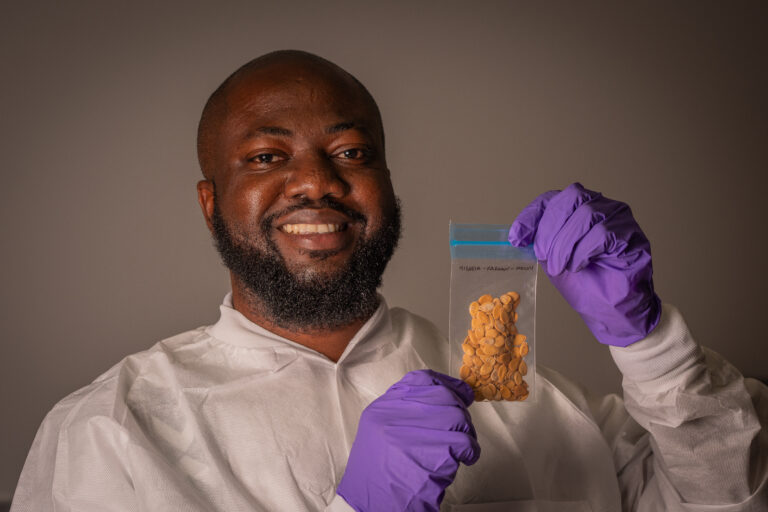
Long before his name appeared on global panels or Forbes lists, Temidayo Oniosun was just a boy in Okaka, Oyo State, quietly fascinated by the sky. He didn’t grow up surrounded by space labs or high-tech classrooms, but he grew up with curiosity, and that was enough to start everything. As a student at the Federal University of Technology, Akure, he led a group that launched a weather balloon into near space in 2015. It wasn’t just a university project. It was his first real attempt to touch the sky.
Temidayo’s path since then has been both deliberate and remarkable. He earned a B.Tech in Meteorology, a Master’s in Satellite Applications from the University of Strathclyde, and a PhD in Space Policy from the University of Delaware, where he explored the political economy of Africa’s space development. He chose not just to study science, but to shape how science shows up in African policy and identity.
Today, he stands at the intersection of technology, governance, and culture. He’s the Founder of Space in Africa, a media and analytics firm that tracks Africa’s growing space industry. He’s an advisor to the African Union, MIT Media Lab, and the Atlantic Council. He convenes the NewSpace Africa Conference, a high-level gathering for stakeholders across the continent’s space ecosystem.
But here’s the deeper story: Temidayo isn’t just helping Africa launch satellites. He is actively helping Africans feel seen, included, and proud in the next frontier of human innovation: space.
Read: Temidayo Oniosun Sends Egusi Seeds to the International Space Station
Why Egusi? Why Not Ogbono?

When asked why he chose egusi over other beloved Nigerian dishes, Dr. Temidayo Oniosun didn’t hesitate. “Egusi is the most cultural dish in Nigeria,” he said. And he meant it—not as a casual claim, but as a statement of identity.
Egusi soup isn’t just food. It’s cultural currency. It’s eaten by Yorubas, Igbos, and people across West Africa. It shows up on menus from Lagos to London, from Abuja to Atlanta. In diaspora homes, it becomes a quiet act of preservation, reminding Nigerians abroad of who they are and where they come from.
By sending egusi seeds into space, Dr. Oniosun wasn’t conducting a quirky experiment. He was staging a cultural declaration. French baguettes have their global symbolism. American apple pie stands as a national metaphor. Egusi just made its debut in orbit—and with it, so did a version of Nigeria that is warm, flavorful, and unapologetically proud.
In a world where science often looks sterile and distant—white coats, cold labs, complex codes—Dr. Oniosun is doing something different. He’s showing that space innovation can begin with a bowl of soup. That the cosmos can be a canvas for culture. That science can smell like home cooking.
Space Isn’t Distant—It’s Personal
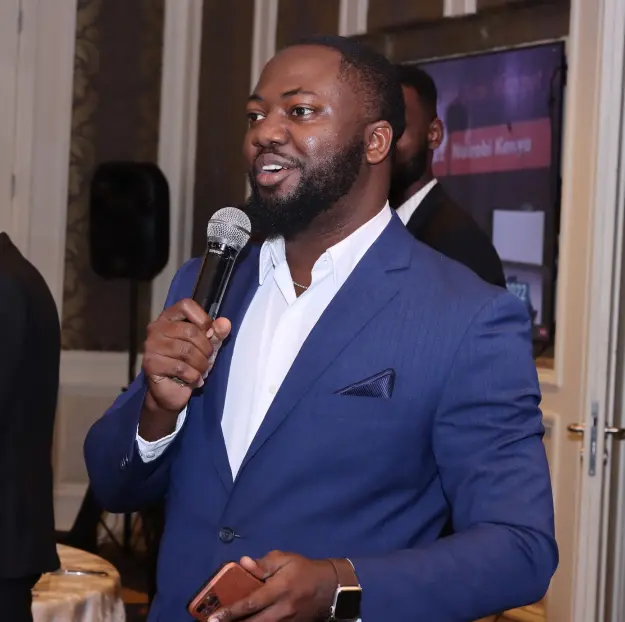
For Dr. Temidayo Oniosun, space isn’t some faraway realm reserved for billionaires and astronauts. It’s personal, policy, local. and it’s cultural.
At the heart of his work is a bold idea: Africa doesn’t need to play catch-up in space—it needs to lead, on its terms. That leadership begins with stories people understand. That’s why he didn’t just send egusi seeds to space for science—it was a way to say: you belong here too.
Oniosun has built a career on making space relatable. He’s helped African governments write space policies that prioritize local development. He’s led efforts to use satellite data for everything from agriculture planning to climate resilience and urban waste management.He demonstrates that a “space scientist” isn’t just someone in a lab coat; it’s also someone who shapes narratives, funds strategies, and gains public support.
“Cultural relevance is not soft science,” he says. “It’s how we get communities to care. It’s how we build systems that last.”
By turning satellites into tools for everyday impact—and stories like egusi into cosmic metaphors—he’s reminding us that space innovation starts at home.
Building an Ecosystem, Not Just a Brand
When Dr. Temidayo Oniosun founded Space in Africa in 2018, it wasn’t just about starting a media outlet—it was about building an entire ecosystem. Today, Space in Africa is the continent’s leading analytics and consulting firm for the space and satellite industry, shaping how the world understands Africa’s space ambitions.
From its Lagos headquarters to its office in Tallinn, Estonia, the company delivers much more than news. It publishes industry-defining reports, advises governments and multinationals, and runs the NewSpace Africa Conference, a now-global gathering for engineers, investors, policymakers, and agency leaders from over 60 countries.
Oniosun himself is a sought-after voice on global stages—he’s spoken at the U.S. Institute of Peace, the European Commission, the World Economic Forum, and more. But what sets him apart isn’t just his resume—it’s his advocacy. He consistently pushes for African-led narratives in global space diplomacy, challenging outdated perceptions and urging institutions to treat Africa as a partner, not a project.
By building Space in Africa, he creates more than just visibility—he establishes the infrastructure needed for Africa’s space economy to thrive long after the headlines fade.
Read: Scoring Goals, Saving Lives: Michelle Alozie Proves You Can Thrive in Two Careers
What Drives Him? Legacy, Equity, and Imagination

For Dr. Temidayo Oniosun, space isn’t just science—it’s strategy, equity, and imagination. “We can’t solve tomorrow’s problems if our people don’t feel like part of the solution,” he’s often said, and it’s this mindset that fuels everything he builds.
Beyond satellites and reports, he’s deeply committed to youth empowerment. In 2023, his foundation donated a ₦15 million ICT center to his alma mater in Okaka, Oyo State, complete with Starlink internet and digital literacy programs. He also sponsors WAEC and JAMB fees, ensuring rural students don’t get left behind.
Oniosun has also backed over 40 African startups as an angel investor, betting on local founders solving local challenges.
At the heart of it all is a simple belief: African children shouldn’t grow up thinking space is foreign. They should grow up knowing it’s theirs too. His legacy won’t be measured in noise, but in infrastructure, imagination, and impact that lasts.
What Comes Next?
The egusi launch is only the beginning. Dr. Oniosun has hinted at future space experiments—more seeds, more dishes, more cultural icons orbiting the Earth. But beyond symbolic gestures, his focus is on real-world infrastructure: policy shifts, satellite systems, and partnerships that put Africa at the table of global innovation.
One major step? The €100 million Africa–EU Space Partnership Programme, which he helped shape. Set to run through 2028, the initiative will boost capacity, data access, and private-sector engagement across the continent.
For Dr. Oniosun, space is not a distant dream—it’s a developing blueprint. “Africa isn’t waiting to be invited to the future,” he says. “We’re co-writing it.”