
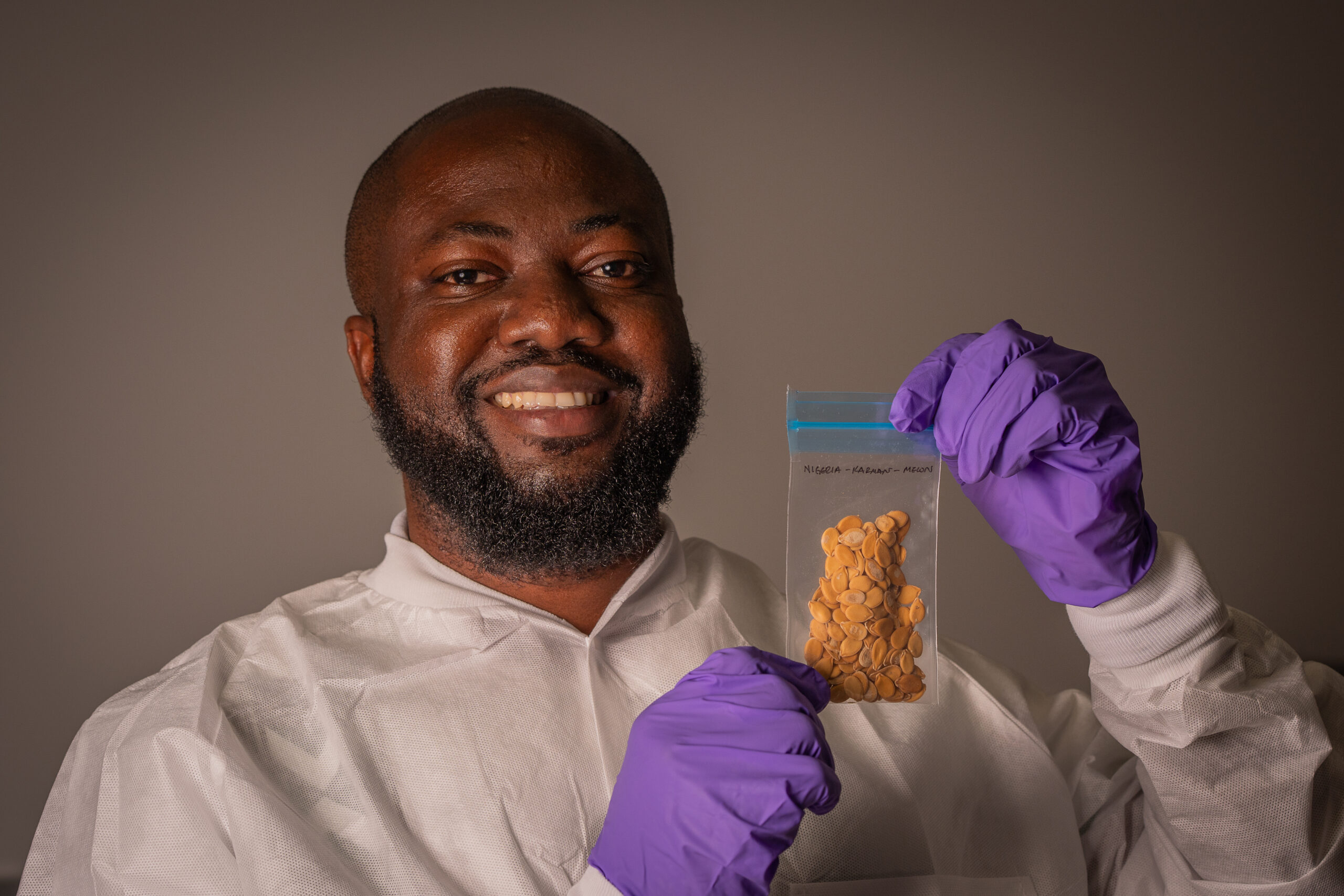
For the first time in history, a Nigerian crop is heading to space — and it’s none other than Egusi, the beloved melon seed central to West African cuisine. Today, July 31, 2025, at 12:09 PM Florida local time (5:09, Nigerian time), Egusi seeds sourced from Oyo State will be launched aboard a SpaceX Falcon 9 rocket as part of an international agricultural research mission to the International Space Station (ISS).
The groundbreaking project is spearheaded by Dr. Temidayo Oniosun, a Nigerian space scientist, entrepreneur, and global advocate for African representation in space research. Working with The Karman Project and Jaguar Space, Oniosun aims to study how Egusi seeds respond to microgravity and space conditions — research that could shape the future of sustainable food production for long-duration space missions.
Read: Esther Okoronkwo Crowned Super Falcons’ Fans’ Player of the Tournament
A Symbolic First for Nigeria and West Africa

“This is the first time an object from Nigeria is going to space,” said Oniosun, who serves as the project’s Principal Investigator. “By representing Nigeria — and West Africa — on a global platform of space research, the mission underscores the importance of indigenous crops in shaping humanity’s future beyond Earth.”
Alongside Egusi, culturally significant crops such as cotton from Egypt, pomegranate from Armenia, and wheat from Pakistan will also be part of the experiment. The initiative highlights the role of diverse agricultural traditions in advancing astro-agriculture, a field critical for survival on future missions to the Moon, Mars, and beyond.
Egusi was selected not only for its nutritional value as a protein-rich staple but also as a tribute to West African heritage and food security. For millions of Nigerians, Egusi soup is more than just food — it’s culture, identity, and livelihood.
From Oyo State to Orbit
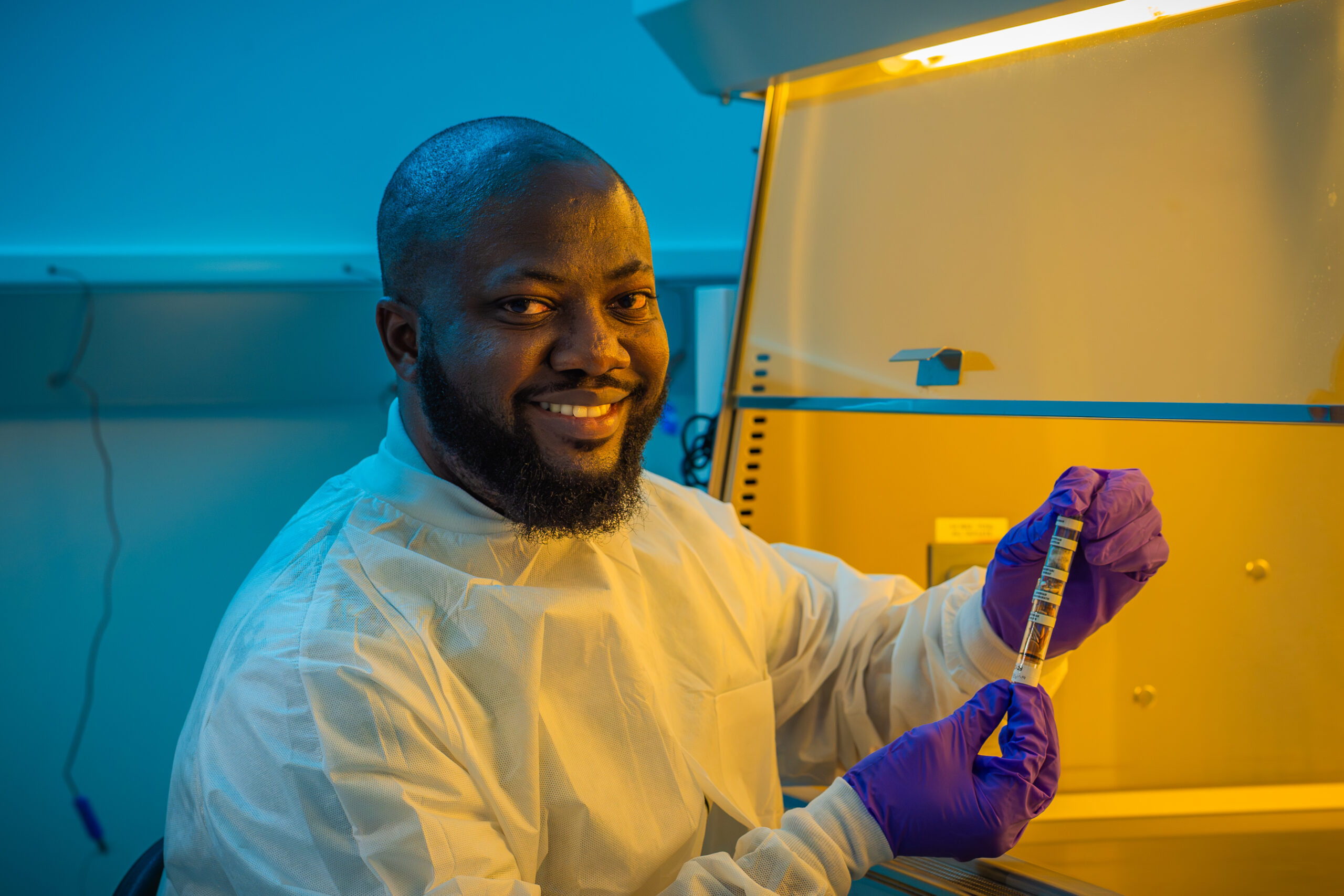
The resupply mission will send the Egusi seeds to the International Space Station (ISS), where astronauts will expose them to microgravity and cosmic radiation. After the seeds return to Earth, Dr. Wagner Vendrame, a professor at the University of Florida, will lead a team to conduct extensive analyses, including:
- In vitro germination to observe morphological and physiological changes.
- Spectral imaging to study seed viability.
- Respiration tests to evaluate metabolic activity.
- Gene expression analysis in collaboration with researchers in Brazil.
These studies will determine how space exposure affects seed growth, resilience, and genetic stability.
Why Egusi in Space Matters
As global conversations around climate change, food security, and sustainable agriculture intensify, this experiment is about much more than science fiction. If Egusi proves resilient in extreme conditions, it could open doors to cultivating indigenous crops on space stations or even future Mars colonies.
Dr. Luis Zea, founder of Jaguar Space, explained: “Integrating crops native to emerging space nations is essential for building a sustainable human presence beyond Earth. These collaborations advance nutritional diversity, preserve cultural identity, and open new scientific frontiers.”
The Man Behind the Mission

Temidayo Oniosun’s journey is as inspiring as the mission itself. Born in Oyo, Nigeria, he studied meteorology at the Federal University of Technology, Akure (FUTA) before earning a master’s degree in satellite applications from the University of Strathclyde and a Ph.D. in space policy from the University of Delaware.
He founded Space in Africa, a leading platform on African space science and industry. In 2021, Forbes Africa named him to its 30 Under 30 list, recognizing his contributions to space technology on the continent.
This mission is not Oniosun’s first groundbreaking project. As a student at FUTA in 2015, he led the university’s space club in launching a high-altitude balloon into near space — a precursor to the bold experiment now about to make history.
A Giant Leap for African Science
For Oniosun, the Egusi mission is about more than just science. It’s about representation, sovereignty, and inspiring the next generation of African scientists.
“This research goes beyond agriculture; it’s about food security, adaptability, and scientific sovereignty in space exploration,” he said. “If Egusi can survive and thrive after exposure to space conditions, it opens new doors for indigenous crops in extra-terrestrial agriculture.”
Read: 5 African Fashion Icons Under 35
Nigeria Joins the Space Race in Style
The upcoming launch is not just a milestone for Nigerian science — it’s a symbol of Africa’s growing role in global innovation. The project highlights that the future of humanity in space should reflect the diversity and richness of life on Earth.
As Professor Adenike Oladiji, Vice-Chancellor of FUTA, remarked: “The world is watching not just a rocket launch, but a symbol of African innovation hurtling beyond Earth’s atmosphere. This mission showcases Nigeria’s home-grown potential, is fueled by academic excellence, and now aims to reach for the stars.
The Countdown Begins
The Egusi seeds are set to blast off today, July 31, 2025, marking a historic first for Nigeria and West Africa. When they return, their journey — from Oyo soil to space and back — will represent a remarkable fusion of tradition, science, and innovation.
Egusi is going to space, and with it, a bold statement: Africa belongs in the future of space exploration.