
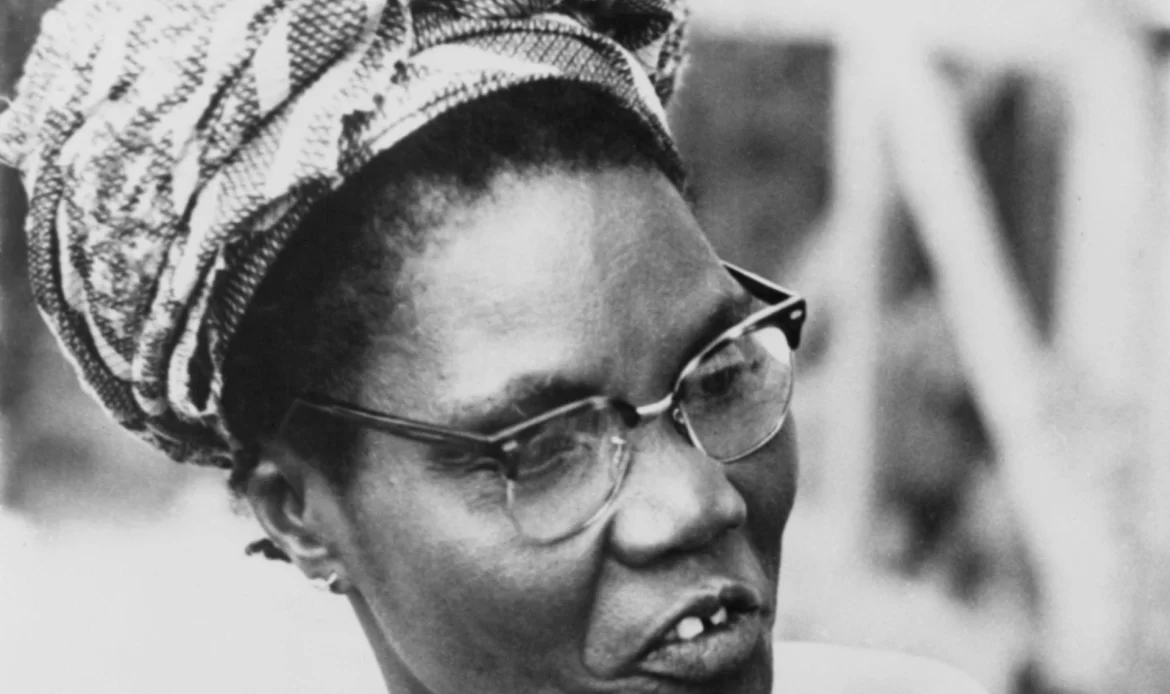
In the history of Nigeria’s fight for justice and equality, few names stand as tall as Funmilayo Ransome-Kuti. Widely celebrated as the first woman to drive a car in Nigeria, she was so much more than that. An educator, political activist, trailblazer for women’s rights, and a relentless voice for the oppressed.
Born on October 25, 1900, in Abeokuta, in present-day Ogun State, Funmilayo grew up in a progressive home. Her parents, especially her father Chief Daniel Olumeyuwa Thomas, believed in the power of education. She attended Abeokuta Grammar School, one of the few girls in a male-dominated classroom, before traveling to England for further studies at Wincham Hall School for Girls. That experience broadened her perspective and exposed her to ideas of freedom, equality, and activism.
At 25, she married Reverend Israel Oludotun Ransome-Kuti, a school principal and community activist. The couple were married for 30 years and had four children, including international music superstar Fela Ransome-Kuti. Together, they championed education and co-founded the Abeokuta Grammar School for Girls, one of the earliest institutions dedicated to educating Nigerian girls.
Funmilayo’s activism was deeply rooted in the injustices she witnessed. Colonial policies placed a heavy tax burden on market women, many of whom were widows and sole breadwinners. These women were being over-policed and silenced. Funmilayo, appalled by the oppression, organized them into a powerful collective, the Abeokuta Women’s Union (AWU) in the 1940s. The union grew rapidly, amassing over 20,000 members, mostly women traders and market women.
Read more: The Story Of Efusetan Aniwura, the Iyalode Of Ibadan
Under her leadership, the AWU became a bold force, demanding fair treatment and challenging the male-dominated colonial and traditional systems. The women staged multiple protests, famously lying on the ground in front of the king’s palace, singing, chanting, and refusing to back down. Their efforts led to a major victory in 1949, when the Alake of Abeokuta, the town’s traditional ruler, was forced to step down from his throne due to mounting pressure. This moment was groundbreaking, it showed that organized women could shift power and challenge authority in a male-dominated society.
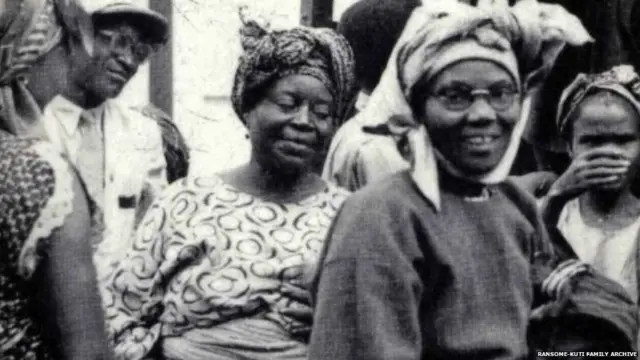
But her efforts didn’t stop in Abeokuta. Funmilayo became a national and international figure. She was a founding member of the Nigerian Women’s Union and later helped form the Federation of Nigerian Women’s Societies (FNWS), which unified women’s rights movements across the country. She was an early advocate for women’s suffrage, equal education, equal pay, and representation in politics.
Funmilayo was also a pan-Africanist and a strong anti-colonialist. She attended political conferences across Africa, Europe, and Asia, visiting countries like China, the Soviet Union, and the UK where she spoke boldly about imperialism, injustice, and the need for African independence. Her travels drew the attention of colonial authorities, and at one point, the British government revoked her passport for fear that her influence abroad would destabilize colonial control.
In 1956, she ran for a seat in the regional assembly under the National Council of Nigeria and the Cameroons (NCNC). Although she did not win, her candidacy marked a turning point, showing that women could contest for public office in a newly forming democracy. That same year, she was appointed to the Western House of Chiefs, making her one of the first women in Nigeria to hold a political title.
She was also the mother of Afrobeat legend Fela Anikulapo-Kuti, whose radical views and music were shaped by her fearless spirit. Tragically, in 1977, she was severely injured during a military raid on Fela’s home, thrown from a second-story window by soldiers. She never fully recovered and died on April 13, 1978.
Her death shocked the nation and exposed the brutality of the military regime. But even in death, Funmilayo Ransome-Kuti remained a symbol of strength and defiance.
Today, her legacy is etched into Nigeria’s history, Streets, schools, and monuments. She paved the way for generations of women to speak up, run for office, fight injustice, and dream boldly.
More than just a pioneer behind the wheel of a car, Funmilayo was a driver of change, a woman far ahead of her time, who fought not only for women, but for freedom, equity, and national progress. Her life remains a powerful reminder that one voice, backed by courage, can shake thrones and rewrite history.