There are founders who build products, and then there are founders who build from a place of lived frustration; people who see a broken system up close, feel its weight, and decide they’re done waiting for someone else to fix it. Twama Nambili belongs firmly in the second category.
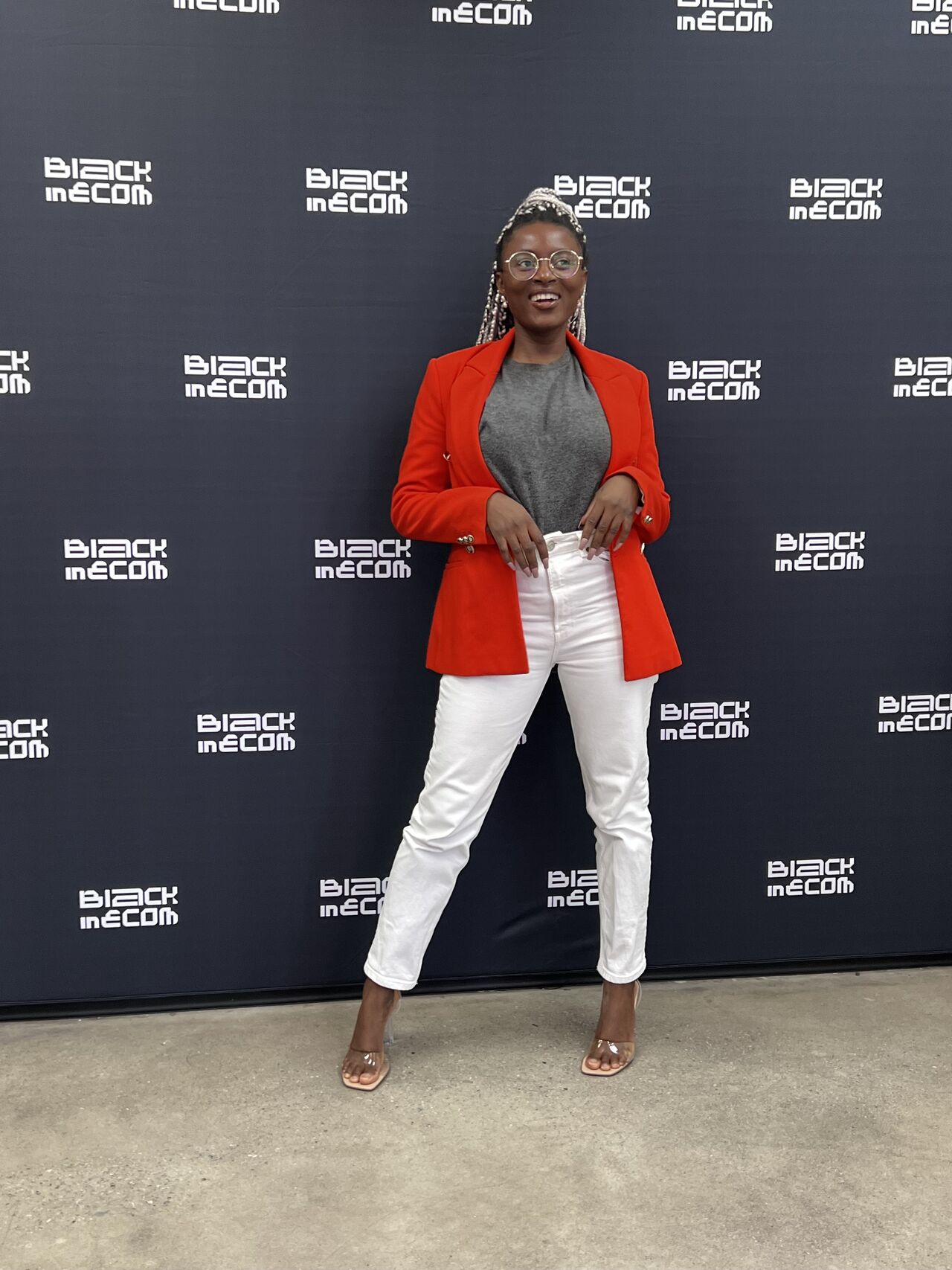
The former Amazon Senior Product Manager is shaping one of the most interesting ideas to emerge from the African tech ecosystem: Aeone is building an AI-powered platform determined to simplify the chaotic world of marketing workflows. What began as a quiet irritation, watching teams juggle too many tools for one job, has become a movement attracting more than 30,000 creators, 148 marketing leaders, and even billion-dollar enterprises.
But what makes Twama compelling isn’t just the traction, or the newly opened $4M seed round, or the impressive roster of engineers behind Aeone. It’s the mind behind the mission; the girl who grew up thinking differently, the woman who blends structure with instinct, and the builder who believes marketing deserves the same innovation other “boring” industries have enjoyed.
In this conversation, we step away from pitch decks and productivity charts to meet the person behind the platform. We talk about childhood instincts, bold decisions, the emotional math behind fundraising, the myths she’s determined to rewrite, and the future she envisions when the noise on the timeline fades.
This is Twama Nambili; her journey and the story behind the ecosystem she’s building.
1. Before the titles and the headlines, who is Twama? When you look back at your early life, what parts of your personality or upbringing quietly prepared you for the kind of builder you’ve become?
I’d say I was a very curious and inventive child, and that continued to date. I’ve always had an entrepreneurial mindset. I started my first small business at 13, in Namibia, selling goods to classmates and people in my neighborhood. From 8th grade to university, I always came up with creative business ideas to earn pocket money. These were “lifestyle businesses”, not really meant to scale.
I also grew up around entrepreneurship. My grandparents ran their own businesses. While they were modest, family-run shops rather than large enterprises, they taught me invaluable lessons about initiative, resilience, and what it really takes to run a business.
2. Every big idea starts as a feeling before it becomes a product. Do you remember the specific moment when the frustration with marketing workflows stopped being a complaint and became the spark for Aeone?
While I was in London completing my first master’s degree, I was creating content and trying to monetize it, which gave me firsthand experience of the challenges creators face. That’s when I realized there had to be a better way. After graduating, I joined a UK-based PR agency, where I managed marketing for two different companies and ran into the same issues from the marketer’s side. The number of tools involved and the amount of unnecessary manual work made the process time-consuming and frustrating. This solidified my earlier conclusion.
Today, I am grateful to the amazing team, my partners, who have come along this journey with me to build the future of marketing tech.
Read: Twama Nambili Opens $4M Seed Round For AI Startup
3. You’ve worked in structured environments like Amazon and now operate in the chaos of startup life. What was the most surprising shift you had to make, mentally or creatively, when transitioning from one world to the other?
At Amazon, you’re making high-stakes decisions with access to extensive resources, but you also operate within well-defined processes that are essential at that scale. The most surprising shift to new founders, when moving to startup life, is the pace and constraint; things move much faster, the stakes are different, and resources are extremely limited.
That forces a much sharper focus on prioritization and trade-offs. Having previously run a startup helped, and my time at Amazon trained me to simplify complex ideas and stay disciplined about objectives, which has been invaluable in navigating that transition.
4. The marketing and creator ecosystem can be messy and unpredictable. What drew you to this chaos, and why did you choose to build here instead of somewhere more straightforward?
I was drawn to this space because I’m solving a problem I’ve personally experienced—but also because no one has truly figured out marketing tech and the creator economy yet, at least not in the way that I think it could be. There are countless point solutions, and in many ways, they add to the chaos rather than reduce it.
The industry is still far from mature, and many people don’t take it as seriously as they should, which leaves significant room for improvement. That’s what excites me. Marketing and sales are essential business functions, no company survives without them, and I believe there’s a real opportunity to build better, more cohesive solutions in this space.
5. You’ve gained traction early with creators, leaders, and even billion-dollar teams. What’s one lesson your users have taught you that no corporate job or MBA-style thinking could have prepared you for?
I do believe that being street-smart, knowing people, and building deep relationships is not something taught in school. It may be encouraged in corporate, but it’s often only sales and marketing teams who tend to practice it religiously because it’s essential to their work output. Building this company reinforced that lesson for me: real progress came from trust and relationships, whether with leaders signing letters of intent or with the creators using the product.
6. Opening a $4M seed round is a bold move. What internal barrier did you have to break, self-doubt, fear, or overthinking, before deciding to make that leap?
Doubt and fear are always present, even for the most experienced founders, the key is not letting them prevent action. For me, the decision wasn’t driven by emotion but by data. The numbers made it clear that external capital was necessary to scale. We modeled what growth would realistically require based on our learnings so far, and once that analysis was done, the decision to raise became a logical next step rather than a leap of faith.
7. Founders often say “focus matters,” but focus is harder when everyone wants different things. How do you decide what NOT to build, especially when there’s pressure from users or investors to respond quickly?
Focus comes down to disciplined prioritization and simplification. I work backward from a clearly defined outcome, what success looks like, what’s required to get there, and in what order. From there, it’s easier to identify critical dependencies and make informed trade-offs, using both qualitative and quantitative data.
When customers request new features, I apply the same framework and weigh the cost of building something now versus later. As for investors, they shouldn’t be dictating features, they aren’t the end customers.
Ultimately, listening to customers is essential, because without them, there is no business.
8. In the broader African tech landscape, what’s a misconception about founders like you that you feel compelled to correct?
One persistent misconception is that African founders aren’t capable of building world-class companies, particularly in technology, or that we’re somehow better suited to roles other than entrepreneurship. This creates an unproductive ecosystem, where we often fail to invest in fellow Africans. The result is a disadvantage to our communities, and it contributes to brain drain, as highly trained professionals leave for better opportunities abroad.
The reality is that talent, ambition, and technical capability are evenly distributed globally; what often isn’t is access. Given the opportunity and resources, African founders can and do build businesses that compete on a global stage.
Read: Here’s What We Found Out About Titilope Olotu
9. And finally, when the noise fades and the metrics disappear, what does success look like to you on a personal level, beyond valuations, buzz, or virality?
To me, success comes down to one thing: creating something that delivers genuine value for humanity and the planet, alongside incredible colleagues who share that vision. I feel grateful to have already found amazing people who are helping bring that vision to life.
Building With Clarity, Not Noise
Twama Nambili’s story doesn’t hinge on spectacle. It rests on clarity. From a curious child building small businesses in Namibia, to navigating structured systems at Amazon, to choosing the uncertainty of startup life, her journey shows what happens when lived experience meets disciplined execution.
Aeone didn’t begin as a grand vision. It began as friction, noticed repeatedly and taken seriously. What followed was not blind ambition, but careful prioritization, relationship-building, and the willingness to trust data over fear. In an ecosystem that often underestimates African founders, Twama’s work quietly challenges who gets to build world-class technology and who gets believed.
When the noise fades, her definition of success feels refreshingly grounded. Build something useful. Build it with people you respect. Let the impact speak for itself.
Follow RefinedNG for more stories spotlighting Africans like Twama Nambili building quietly, thinking deeply, and shaping global industries. If you’re not following us yet, you’re likely missing some of the most interesting work happening right now.