

Nigeria has recorded a landmark moment in global health science. A research team led by scientists at Obafemi Awolowo University, Ile-Ife, has successfully determined and deposited the first-ever crystal structure of Plasmodium falciparum transketolase bound to an inhibitor in the Protein Data Bank.
The achievement marks the first structure in the global database authored entirely by Nigerian scientists, shifting the country’s role from data consumer to direct contributor in high-level structural biology.
The breakthrough comes at a critical time as resistance to existing antimalarial drugs continues to threaten progress across sub-Saharan Africa.
Breaking the Structural Barrier in Drug Design
The research was carried out in the laboratory of Dr Olatomide Fadare, Associate Professor of Chemistry at Obafemi Awolowo University. Trained initially as a synthetic organic chemist, Fadare has expanded his work into medicinal chemistry, integrating organic synthesis, bioinformatics and biological evaluation to design new antimalarial compounds.
Read: Spiro Expands Battery-Swapping Network with $50M New Funding
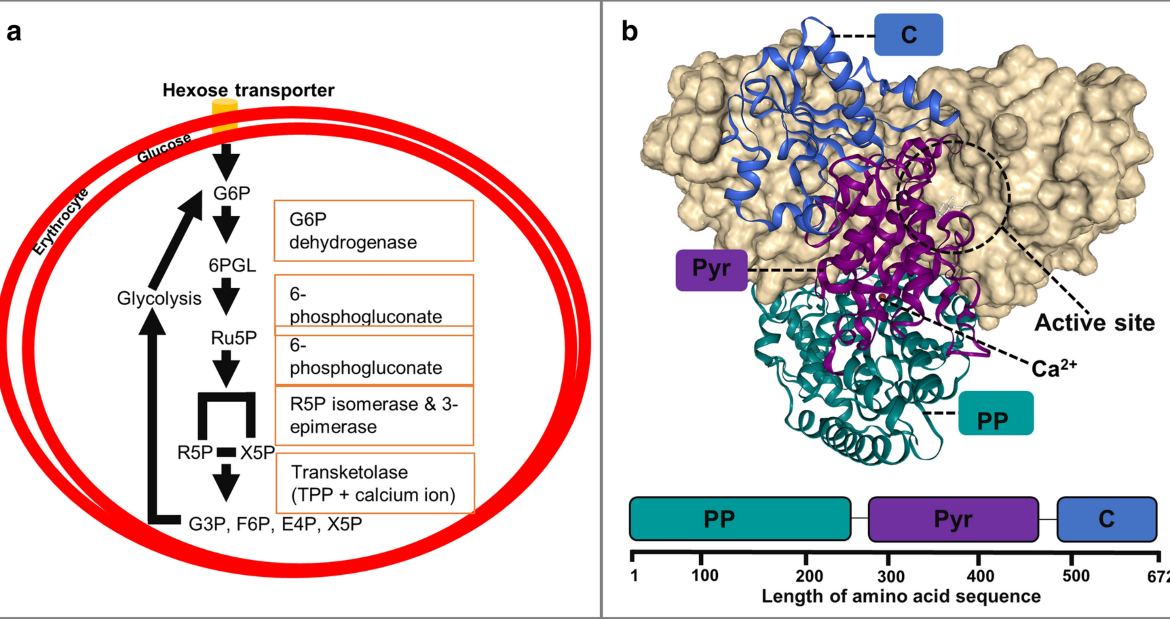
At the centre of the discovery is transketolase, a critical enzyme in Plasmodium falciparum, the parasite responsible for the most lethal form of malaria. For years, global researchers attempting to target this enzyme faced a major obstacle: the absence of experimentally determined crystal structures in the Protein Data Bank. Most efforts relied heavily on computational models.
That gap has now been closed.
Through protein engineering, the team produced and crystallised the enzyme, enabling structural determination and global deposition. The milestone provides the structural blueprint needed for rational drug design. This would allow scientists to design inhibitors with precision rather than approximation.
Beyond scientific prestige, the development positions Nigeria within the elite circle of nations contributing experimentally validated protein structures to the global repository.
New Hope Amid Rising Drug Resistance
The discovery is particularly significant as resistance to artemisinin-based combination therapies, currently the frontline malaria treatment, continues to emerge in parts of the world.
Historically, treatments such as Fansidar lost effectiveness over time due to parasite adaptation. Without continuous innovation targeting new biological pathways, malaria parasites evolve and outpace existing medicines.
By unlocking the structure of transketolase, researchers have opened a new therapeutic pathway. The team has already identified four to five small molecules that strongly inhibit the parasite’s enzyme while sparing the human equivalent.
Selectivity remains crucial. Humans also express transketolase, but subtle structural differences between the human and parasite enzymes provide an exploitable advantage. According to the research team, these differences are significant enough to allow the design of inhibitors that target the parasite without harming the human host.
The next phase of the project will focus on optimising these lead compounds to improve potency, specificity and safety before advancing toward preclinical development.
Read: Captain A.O. Akinuli Wins Double Honours at West African Surgeons’ Conference
Global Collaboration, Local Impact
The breakthrough was achieved through collaboration among Nigerian scientists across institutions in Nigeria, the United Kingdom, Canada and the United States. While the design and synthesis of new chemical entities were conducted in Ile-Ife, collaborators handled cloning, protein expression, crystallisation studies and structural analysis.
This interconnected model demonstrates the capacity of Nigerian-led science to operate within global research networks while retaining intellectual leadership.
Beyond the laboratory, the achievement highlights broader structural challenges in African science. Nigeria continues to rely heavily on imported active pharmaceutical ingredients, with limited domestic manufacturing capacity. Sustained investment in research, infrastructure and pharmaceutical development remains critical to achieving long-term health security.
Despite operating without dedicated government or institutional funding, the research team has continued to advance its work, underscoring both resilience and untapped potential within Nigeria’s scientific ecosystem.
If supported with sustained funding and industrial backing, experts say breakthroughs of this scale could catalyse meaningful transformation in the country’s pharmaceutical landscape.
RefinedNG remains committed to spotlighting African innovation, science and breakthrough research shaping the continent’s future. Stay with us for in-depth coverage of health, science and technology stories that matter.