
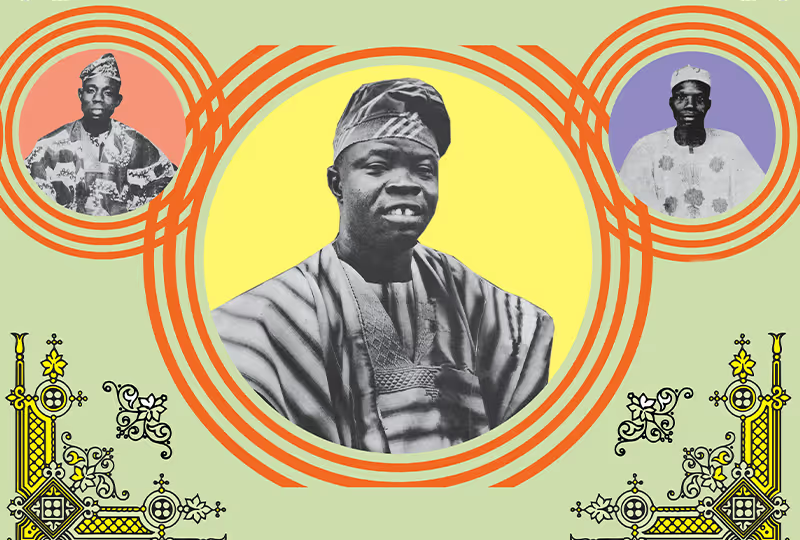
There’s a sound that makes every Yoruba ear perk up, steady, soulful, and rich with history. It’s the rhythm that speaks before words do, a pulse that carries both prayer and poetry. That sound is Apala.
Long before Afrobeats and street pop filled the airwaves, Apala was Nigeria’s rhythm of truth — the soundtrack of Yoruba pride and everyday philosophy. Born in the 1930s from Wéré chants sung by Muslim communities to wake the faithful during Ramadan, Apala began as a spiritual rhythm before becoming a cultural language.
It grew louder with time, from the poetic mastery of Haruna Ishola to the fearless innovation of Terry Apala. And through every generation, it’s remained the same heartbeat beneath new sounds.
This is the story of a genre that never stopped evolving and a beat that still speaks Yoruba, no matter the century. Here are 5 things to know about Apala Music.
1. It Started as a Wake-Up Call During Ramadan
Before Apala became a household rhythm, it began with something simple — a wake-up call. In Yoruba towns during the 1930s, Muslim drummers would roam the streets before dawn in Ramadan, beating their drums and singing Wéré, songs meant to rouse the faithful for sahur (the pre-fast meal).
But as time passed, something deeper began to unfold. Those dawn melodies, once reserved for devotion, started to stretch beyond religion. Drummers began to experiment, adding melody, layering harmonies, weaving in storytelling and praise. The music became more expressive, more poetic, and soon earned a name of its own: Apala.
What started as a ritual became a rhythm of resilience. It carried the wisdom of elders, the humor of everyday life, and the spiritual discipline of its roots. Even without the mosque’s call, the beat continued — echoing through markets, gatherings, and memories. Apala wasn’t just music; it was how a people marked time, shared values, and turned faith into art.
Read: Have You Heard Wassoulou Music?
2. It’s All About the Talking Drums
If you close your eyes while listening to Apala, you can almost hear the drums talk. That’s because Apala isn’t just rhythm, it’s percussion poetry. Its instruments are more than tools; they’re storytellers. The agidigbo (thumb piano) hums like deep thought, the sekere (rattle) adds sparkle like laughter, the agogo (bell) keeps time like a heartbeat, while the akuba and gangan (talking drum) argue and agree in melody.
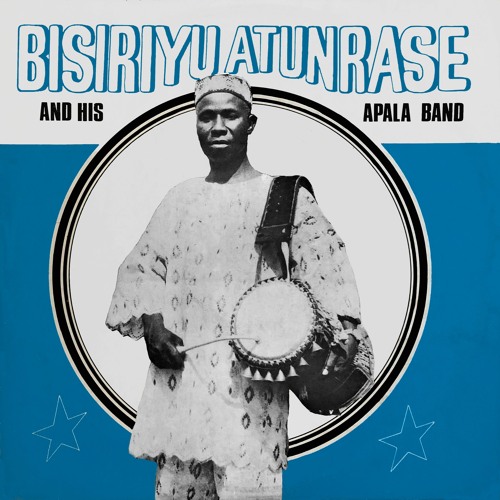
In Yoruba culture, the talking drum can literally mimic human speech, repeating phrases, teasing, even praising. That’s what gives Apala its voice. Even without a single lyric, the drums can tell a full story.
No one mastered this better than Haruna Ishola, the man who turned rhythm into language. He built songs where the drums and vocals traded meaning, where beats became proverbs, and melodies carried moral lessons.
In Apala, the percussion doesn’t just keep the rhythm. It speaks your mother tongue.
3. It Was Nigeria’s First Real Pop Culture Movement
Long before Afrobeats took global charts or Fuji filled party halls, Apala was Nigeria’s first true pop wave. In the 1950s through the 1970s, stars like Haruna Ishola and Ayinla Omowura weren’t just musicians, they were cultural heavyweights. Their faces graced vinyl covers, their names filled radio airwaves, and their lyrics sparked conversations in markets and motor parks alike.
Signed to Decca Records, Haruna Ishola became one of the first Nigerian artists to achieve mass commercial success. Meanwhile, Ayinla Omowura — the fearless voice of the people — sang for drivers, traders, and artisans. His songs carried gossip, wisdom, and grit, painting real portraits of everyday survival.
Their friendly (and sometimes fiery) rivalries made headlines, shaping how Nigerians saw celebrity, loyalty, and artistic pride.In truth, Apala was more than music. It was movement; the original street culture. It made Yoruba philosophy cool and turned poetry into popular entertainment.
4. It’s Still Evolving — From Soyoyo to Apala Trap
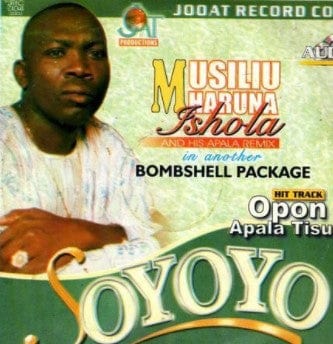
Apala didn’t retire quietly, it transformed. While many assume the genre belongs only to vinyl and vintage radios, Apala continues to thrive, wearing new clothes for a younger audience.
In the 2000s, Musiliu Haruna Ishola, son of the legendary Haruna Ishola, reignited interest with albums like Soyoyo, mixing classic Apala percussion with elements of highlife and juju. It wasn’t just nostalgia; it was a bridge connecting generations, showing that Yoruba drumming and proverbial lyrics could still resonate in contemporary life.
Fast forward to today, and artists like Terry Apala are pushing boundaries further. By fusing trap, hip-hop, and street pop with traditional Apala beats, they’ve created Apala Fusion — a sound that nods to its roots while flexing modern swagger.
The beauty? The core remains: layered rhythms, the gangan speaking in Yoruba tones, proverbs woven into every line. The only difference is the tech — 808s, microphones, and digital production have replaced calabashes and goat skins, proving that Apala’s heartbeat isn’t just alive — it’s evolving with style.
Read: Fela Kuti Honoured with 2025 Grammy Hall of Fame Award
5. It’s More Than Music — It’s Yoruba Memory
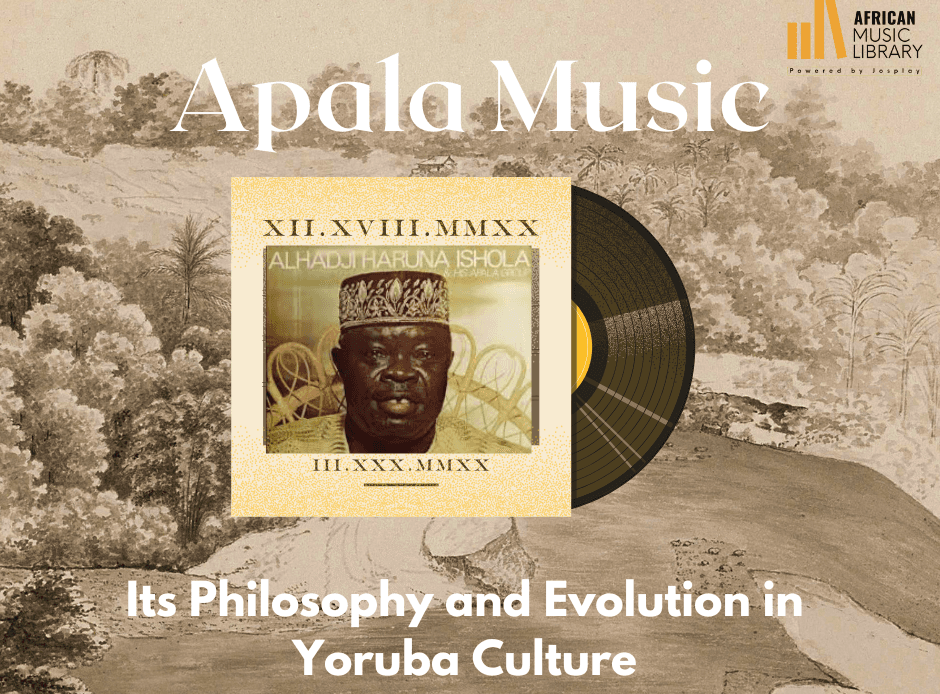
Apala isn’t just a genre, it’s living Yoruba heritage. Every drumbeat, every gangan stroke, every proverb-laden verse is a thread in a tapestry that stretches back generations. It’s how communities passed down wisdom, narrated history, and debated morality, long before classrooms or newspapers existed.
The lyrics are full of proverbs, warnings, and social commentary, teaching lessons about humility, respect, and the human condition. Musicians like Haruna Ishola and Ayinla Omowura weren’t just entertainers; they were philosophers with drumsticks, narrating the pulse of everyday life in marketplaces, mosques, and festivals.
Apala’s influence persists today, subtly echoing through Fuji, Afro-fusion, and even street pop. You might hear it in a layered beat, a call-and-response hook, or a Yoruba phrase dropped in a rap verse. It’s proof that culture doesn’t vanish, it transforms, carrying its memory forward.
So next time a drum cuts through a street anthem or a viral track, listen closely. You might just be hearing Apala — the rhythm of Yoruba memory — speaking across time, still alive and profoundly Nigerian.
Follow RefinedNG for more stories celebrating Africa’s hidden roots, musical firsts, and timeless rhythms. We’re your number one stop for all things positive.