
History books have long centred on kings, emperors, and generals, yet across centuries, women have ruled empires, negotiated treaties, commanded armies, and reshaped nations. Some governed in times of prosperity. Others rose in moments of invasion and crisis. Many had to legitimise their authority in systems built for men.
From the Nile Valley to the forests of West Africa, these five women were not symbolic figures. They were strategists, rulers, and political actors who altered the course of history.
1. Hatshepsut: The Pharaoh Who Ruled as King (Ancient Egypt)
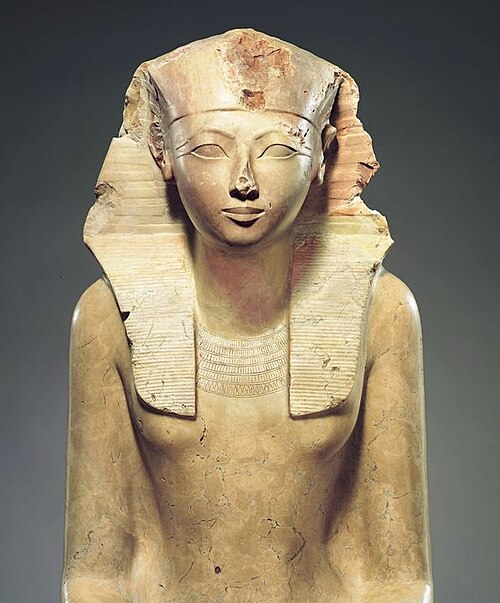
In the 15th century BC, during Egypt’s powerful 18th Dynasty, Hatshepsut did something extraordinary: she ruled not merely as queen, but as pharaoh.Initially serving as regent for her young stepson Thutmose III, Hatshepsut gradually assumed full pharaonic authority around 1472 BC. To consolidate power within a deeply patriarchal political system, she adopted male royal titulary and was depicted in statues wearing the traditional false beard and kilt of a king. This was not a disguise; it was political symbolism, reinforcing her legitimacy as ruler of Upper and Lower Egypt.
Her reign was marked by stability and economic expansion. She re-established trade networks disrupted during earlier conflicts and famously dispatched an expedition to the Land of Punt, bringing back incense, exotic goods, and even live myrrh trees. Architecturally, she was prolific. Her mortuary temple at Deir el-Bahari remains one of the masterpieces of ancient Egyptian design, and she erected towering obelisks at Karnak.
After her death around 1458 BC, many of her monuments were defaced and her name removed from official records, likely an attempt to restore male continuity in the royal lineage. Yet archaeology restored what politics tried to erase. Today, Hatshepsut stands as one of Egypt’s most accomplished rulers.
Read: Kumbwada, the only Female-led kingdom in Northern Nigeria
2. Amanirenas: The Queen Who Faced Rome (Kingdom of Kush)
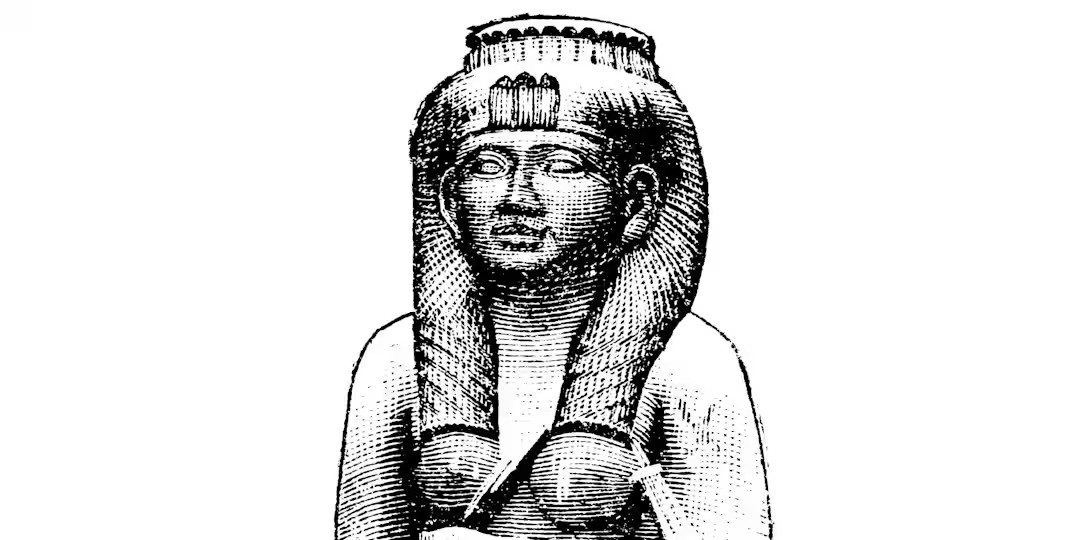
While Rome expanded aggressively across the Mediterranean world, one African queen halted its southern ambitions. Amanirenas, ruler of the Kingdom of Kush in the late first century BCE, led her forces against Roman-occupied Egypt between 25 and 22 BC.
Classical historian Strabo described her as “a masculine sort of woman, blind in one eye,” but the label obscures the political sophistication of her rule. After launching a surprise attack while Roman forces were distracted elsewhere, Kushite troops captured cities including Syene and reportedly destroyed statues of Emperor Augustus.
Rome retaliated under Prefect Gaius Petronius, but despite military pressure, Amanirenas ultimately negotiated a peace treaty directly with Augustus. Crucially, Kush retained its independence and was exempted from tribute, a rare outcome in Rome’s imperial record.
One enduring symbol of this defiance is the bronze “Meroë Head” of Augustus, discovered buried beneath temple steps in Kushite territory. Whether meant as ritual humiliation or political symbolism, it represents a remarkable moment: an African kingdom resisting and negotiating with the most powerful empire of its time.
3. Taytu Betul: The Empress Who Defied Colonial Rule (Ethiopian Empire)
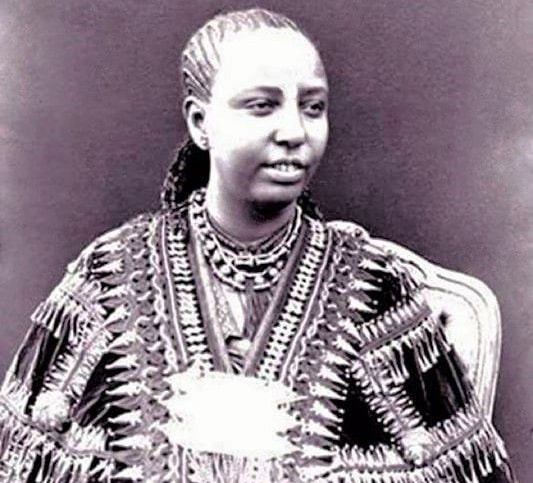
In the late 19th century, during Europe’s “Scramble for Africa,” Taytu Betul emerged as a formidable political actor within the Ethiopian Empire.
Married to Emperor Menelik II, Taytu was not a ceremonial consort. She was deeply involved in statecraft and diplomacy. When Italy attempted to manipulate the Treaty of Wuchale to establish Ethiopia as a protectorate, Taytu recognised the deception in the Italian-language version of the treaty. She opposed compromise and pushed for resistance.
In 1896, at the Battle of Adwa, Ethiopian forces decisively defeated Italy in one of the most significant anti-colonial victories in African history. Taytu reportedly commanded artillery units and played a central role in mobilising resistance.
Beyond warfare, she co-founded Addis Ababa, now Ethiopia’s capital. Her political influence extended into court appointments and imperial decision-making. Although later sidelined during succession disputes, Taytu’s legacy endures as a symbol of African sovereignty and resistance to colonial encroachment.
4. Yaa Asantewaa: The Warrior Queen Mother (Ashanti Empire)
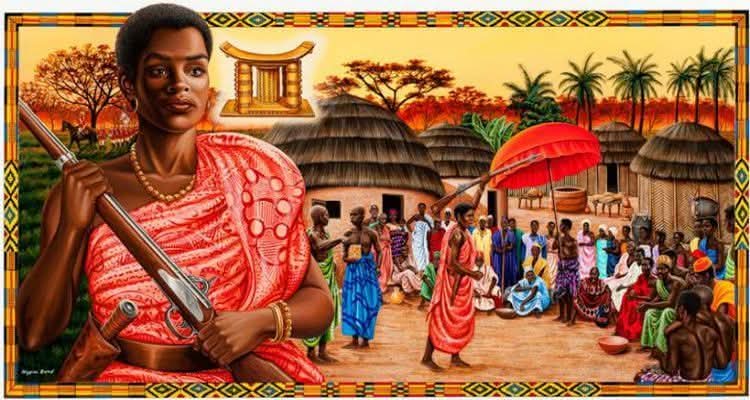
At the dawn of the 20th century, British colonial expansion confronted the Ashanti Empire in present-day Ghana. When colonial authorities demanded the sacred Golden Stool, the spiritual symbol of Ashanti sovereignty, resistance seemed uncertain.It was Yaa Asantewaa, Queen Mother of Ejisu, who transformed hesitation into rebellion.
In 1900, she delivered a speech challenging male chiefs who were reluctant to fight. If they would not defend their nation, she declared, women would. She was subsequently appointed war leader, the only woman in Ashanti history to hold that role.
The War of the Golden Stool lasted six months. Though ultimately suppressed by superior British reinforcements, the rebellion marked the final and most intense of the Anglo-Ashanti wars. Yaa Asantewaa was captured and exiled to the Seychelles, where she died in 1921.
Her resistance became foundational to Ghanaian nationalist memory. When Ghana achieved independence in 1957, it did so in a lineage of defiance that figures like Yaa Asantewaa helped define.
Read: Emotan
5. Moremi Ajasoro: The Queen Who Chose Sacrifice (Yorubaland)
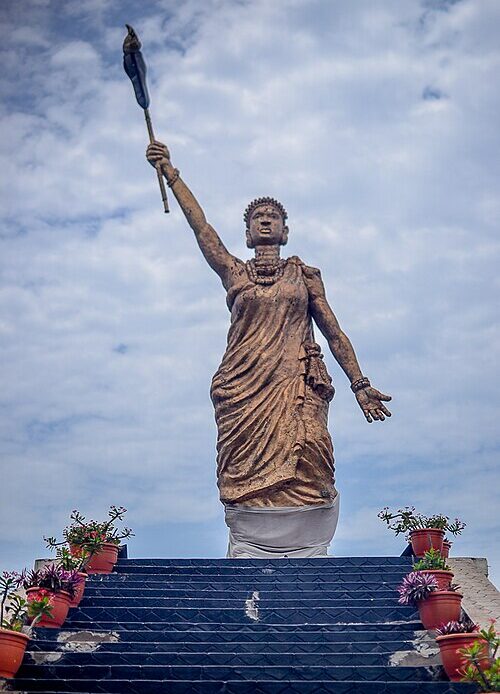
Not all leadership is recorded in treaties and battle reports. Some survive through oral tradition and cultural memory. Moremi Ajasoro, a legendary queen of Ile-Ife in the 12th century, embodies this tradition.
According to Yoruba history, Ile-Ife was under constant attack from raiders believed to be supernatural beings. Moremi volunteered to be captured to uncover their secret. Taken into the enemy community, she married their ruler and discovered that the feared warriors were ordinary men disguised in raffia.
She escaped, revealed the strategy to her people, and enabled Ife’s victory. But she had made a vow to the river deity Esimirin. The price was her only son.
Her story, commemorated annually during the Edi Festival in Ile-Ife, speaks to intelligence, statecraft, and sacrifice. Though legendary in form, it reflects real political themes: espionage, diplomacy, and the moral cost of leadership.
Leadership Beyond Gender
Across millennia, these women governed, negotiated, built cities, led armies, and defended sovereignty. Some ruled in prosperity. Others rose in crisis. Many had to justify authority in systems designed to exclude them.
Their stories challenge the idea that female leadership is modern or exceptional. It is historical. It is global. And it has shaped empires.
History did not merely happen around them. They directed it.As we look ahead to International Women’s Day, it is worth remembering that conversations about women in leadership are not new; they are continuations. From ancient Egypt to precolonial West Africa, women have always negotiated power, built institutions, and defended their nations.
At RefinedNG, we remain committed to spotlighting stories that restore balance to the historical record and celebrate the depth of African and global heritage. Follow us for more cultural and historical features and share this piece to keep these legacies alive beyond a single day of recognition.