

Most people do not spend four years studying Computer Science at Babcock University only to decide their next move is shoemaking. But for Yinka Atunde, the expected route was never the most interesting one. What looked like a career detour became the foundation of a manufacturing business now helping reshape West Africa’s safety footwear industry.
A delay in his National Youth Service Corps (NYSC) placement about a decade ago gave him an unexpected gift: time. Instead of waiting for the next opportunity, he asked himself what he really wanted to build. The answer led him to shoemaking, factory floors across three countries, and eventually Yikodeen, now one of West Africa’s leading safety footwear manufacturers.
This is not simply a founder’s story. It is a story about rediscovering what a country once knew how to make.
He Took a Factory Job on Purpose
Before launching Yikodeen, Atunde decided to learn the business from the ground up. He trained in Italy, where shoemaking was treated as a craft, and visited factories in China to understand large-scale production. Both experiences offered valuable lessons, but neither answered the question he cared about most.
Rather than jumping into entrepreneurship, he took a job as a factory worker in a local shoe manufacturing company. It was an unusual decision for a university graduate, but he wanted to understand the industry from the inside. He studied the production process, identified inefficiencies, and observed where local manufacturing struggled to compete.
The experience also revealed an opportunity. While Nigeria imported huge volumes of industrial safety footwear, local production remained limited. Atunde initially experimented with fashion shoes, but safety footwear captured his attention. It was more demanding, more technical, and harder for competitors to copy.
Read: Nigerian Teams Shine on the Global Technology Stage
He Drove Across Nigeria Looking for Machines
Building a manufacturing company required equipment, and new machinery was expensive. Instead of accepting defeat, Atunde looked backwards.
Nigeria once had a thriving footwear industry, but decades of economic changes and cheaper imports had left many factories abandoned. Across the country, warehouses still housed old machines that had not been used for years.
Where others saw scrap metal, Atunde saw possibility. He travelled across Nigeria, visiting more than fifteen defunct footwear factories and meeting former owners and their families. Some of the equipment had gathered dust for decades, but he believed it could work again.
He bought what he could afford and partnered with engineers to restore the machines. Breakdowns were common, and spare parts were difficult to find, but slowly the equipment came back to life.
Yikodeen was not built entirely from scratch. In many ways, it was rebuilt from what others had left behind.
The Orders That Changed Everything
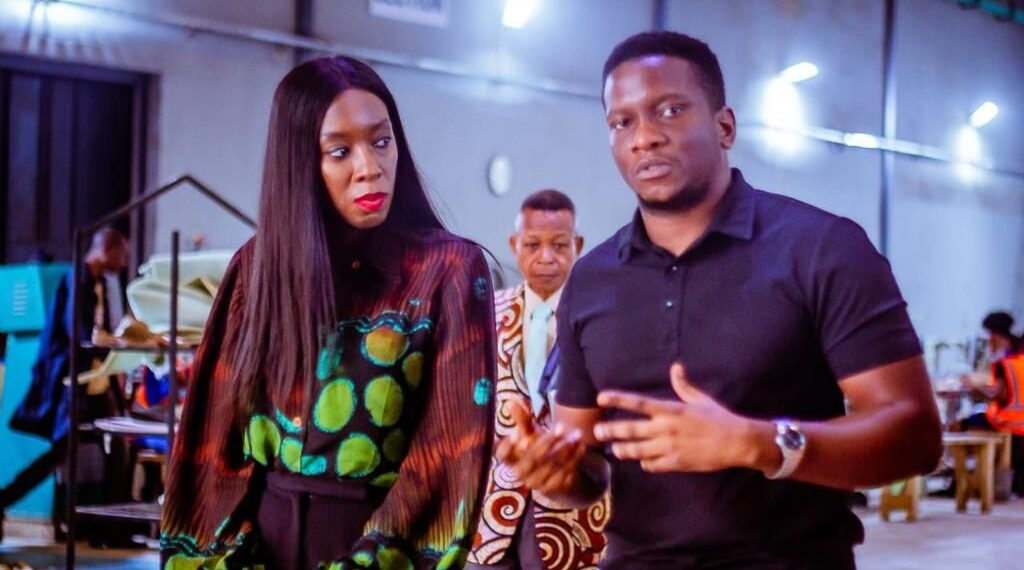
Having a factory was one challenge. Convincing customers to trust locally made safety footwear was another. Atunde deliberately targeted demanding industries like oil and gas, believing that meeting the highest standards would open other doors. After extensive testing, Italian energy services company, Saipem, approved Yikodeen’s products, a milestone that validated years of effort.
A bigger breakthrough followed when the company secured an order for 10,000 pairs of shoes for the Nigerian Police. The contract forced Yikodeen to expand production, strengthen its systems, and prove it could deliver at scale.
Momentum quickly followed. The company’s client list grew to include the Nigerian Army, Dangote Group, NLNG, BUA, Seplat, and several major industrial organisations.
The hardest product Yikodeen had to manufacture was not a boot. It was trust.
Read: Harvard Recognition Puts Nigerian Health Expert on Global Stage
Building More Than a Footwear Company
By 2025, Yikodeen had entered a new phase. A $1.5 million investment from Aruwa Capital Management accelerated its growth, helping expand production and manufacturing capacity.
From producing a handful of shoes each day, the company can now manufacture more than 5,000 pairs of safety footwear in 24 hours at its facility in Ejigbo, Lagos, supported by a workforce where women make up more than 60 per cent of factory employees.
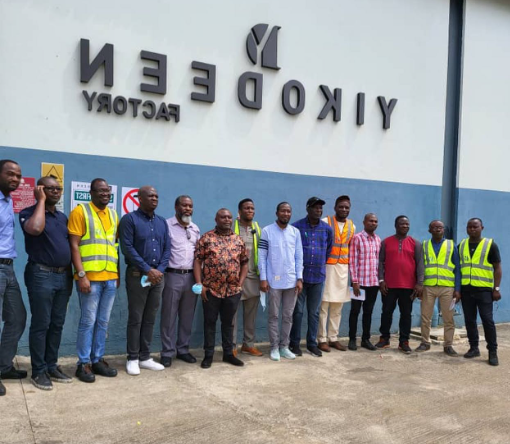
For Atunde, however, the mission goes beyond footwear. He sees opportunities across the wider industrial safety equipment sector, proving that products once imported into West Africa can be designed and manufactured locally.
Yikodeen’s journey is ultimately about more than business success. It is proof that old industries can find new life, that forgotten infrastructure can become the foundation for modern innovation, and that local manufacturing can compete with global standards.
Its rise raises a bigger question for West Africa’s industrial future: how many abandoned systems could still be rebuilt?
At RefinedNG, we celebrate Africans reimagining industries and creating new possibilities. Follow us, share this story, and visit our platform for more inspiring stories of innovation and excellence across the continent.