

Kennedy Odede was in Botswana, deep in the Okavango Delta, with no internet and no phone signal, when the United Nations announced he had won the 2025 Nelson Mandela Prize. By the time he returned to connectivity, his phone had not stopped ringing. Calls. Messages. Congratulations were flooding in from across the world. His reaction, when he finally confirmed the news, was characteristically direct: “Mandela is someone I admired deeply. For the UN to recognise an organisation like SHOFCO, it’s amazing.”
The prize, awarded every five years, is one of the UN’s most significant honours. And for Odede, who grew up in Kibera, one of Africa’s largest and most densely populated informal settlements, it represents something that matters beyond the recognition itself.
It proves, as he put it, “that community organisations across Africa matter.” That their work is seen. That the people they serve are not invisible.
A Dollar a Day and a Dream That Refused to Stay Small
Odede founded Shining Hope for Communities, known as SHOFCO, in 2004. He had grown up in Kibera with essentially nothing, surviving on roughly a dollar a day, navigating poverty, violence, and the complete absence of basic services that most people elsewhere take for granted.
Read: Elohor Aiboni Makes History as Shell Nigeria’s First Female Country Chair
What he built from that starting point is one of the most remarkable grassroots organisations in Africa. SHOFCO now operates across Kibera and multiple Kenyan counties, delivering a model that links free schools for girls directly to community services, clean water, healthcare, legal aid, economic empowerment programmes, creating a comprehensive ecosystem of support rather than isolated interventions.
The logic behind the model is one Odede has articulated consistently: you cannot educate a child whose family has no clean water. You cannot empower a woman who has no access to healthcare or legal protection.
SHOFCO addresses all of it together, building what amounts to a parallel infrastructure inside communities that the state has historically underserved. The organisation has reached millions of Kenyans across its network, and its urban model is increasingly cited as a blueprint for tackling urban poverty globally.
The Warning the World Needs to Hear
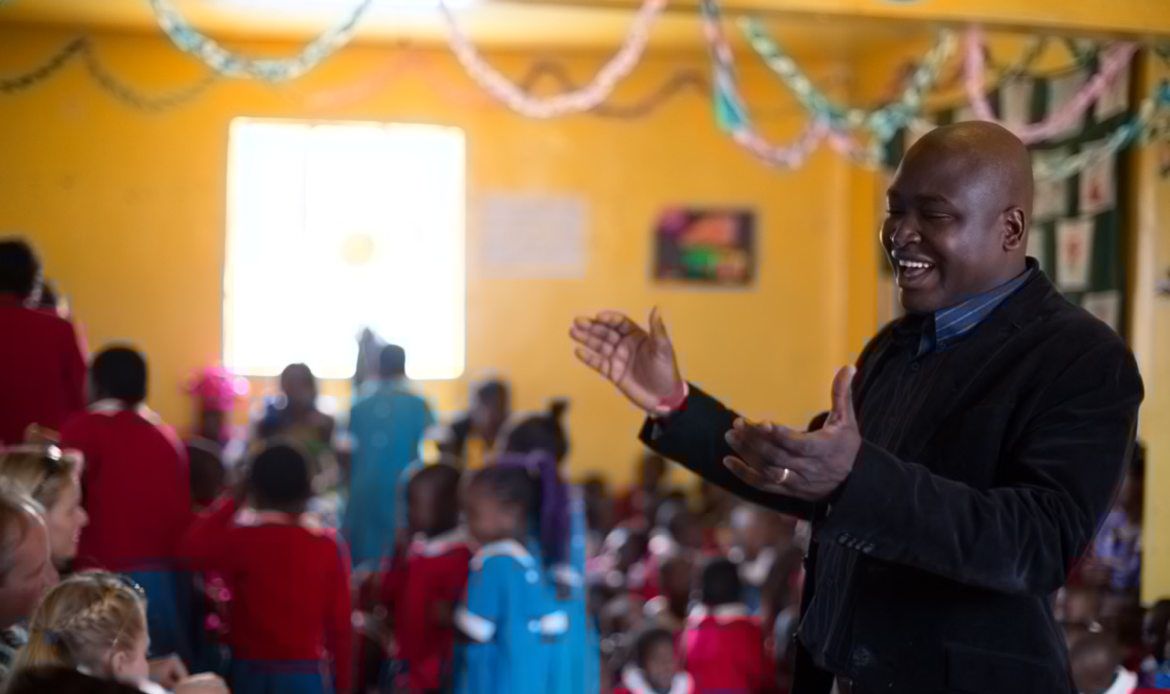
When Odede accepted his TIME100 Impact Award in Kigali in 2023, he used his speech to issue an urgent warning that has only become more relevant since. The world’s urban population, he noted, is projected to reach six billion by 2045. Without serious investment in the capacity to manage that growth, urban poverty will not just persist, it will explode.
He knows this not from statistics, but from lived experience. Odede grew up in one of the places the world’s urban growth projections point toward. He has spent his entire adult life building the infrastructure that should already be there. His organisation exists precisely because the systems around it failed first.
But Odede is not a pessimist, and that matters. He ended that Kigali speech with the phrase “urban spring”, his term for what becomes possible when talent within informal settlements is genuinely empowered rather than managed or pitied.
He has written about this in the New York Times, The Guardian, and CNN, and has spoken at Davos as a Young Global Leader at the World Economic Forum. Also, he co-authored a book, Find Me Unafraid, with his wife Jessica Posner, who first met him as a student visiting Kibera and later returned to build SHOFCO alongside him.
Read: Njideka Akunyili Crosby Unveils Obama Presidential Centre Portrait
What the Mandela Prize Actually Represents
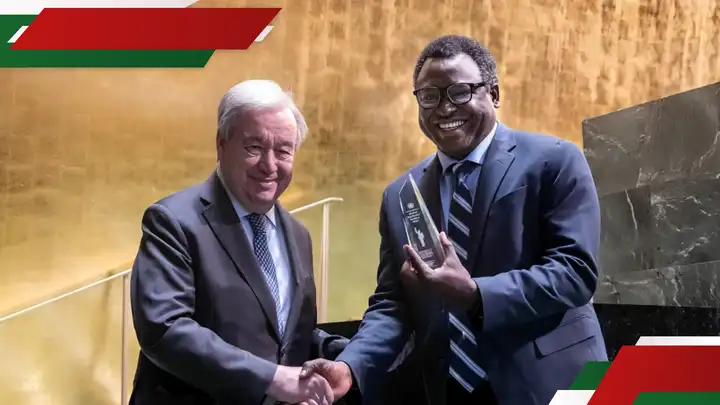
The UN Nelson Mandela Prize does not go to the loudest voice in the room. It goes to organisations and individuals who have demonstrated, over sustained time, a commitment to humanity that reflects the values Mandela himself embodied. Odede received it alongside a Canadian humanitarian, Brenda Reynolds, and he has been characteristically generous in crediting both the award and the community it belongs to.
When he visited Meru and Machakos following the announcement, the response from communities was immediate and emotional. People living in informal settlements, he has said, often do not feel seen.
That a prize carrying Mandela’s name found its way to Kibera, to a man who started with a dollar a day, a football and a sixteen-year-old’s conviction that things could be different, is exactly the kind of signal those communities needed to receive.
Kennedy Odede did not leave Kibera to build something somewhere else. He stayed, and he built something within it. That choice is the whole story.
Follow RefinedNG for more stories spotlighting the African leaders building from the ground up. Visit us at www.refinedng.com or subscribe to our newsletter to stay connected.