
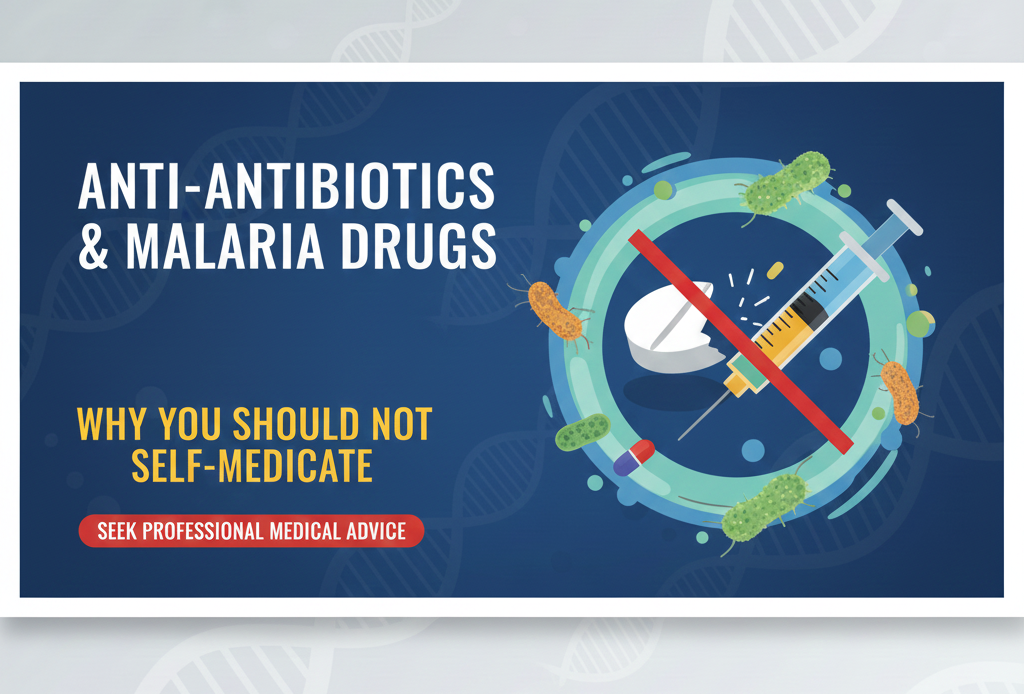
Come Nkechi and Emeka, before you start treating malaria again, let’s talk. That familiar fever has shown up. Your head is pounding and your body is weak. Someone in the house has already said, “It’s malaria, take something quickly before it gets worse”. Next thing, an old strip of antibiotics appears from a nylon bag, leftover from last year. Two capsules now, maybe two later. Problem solved, right?
Not quite.
As we step into a new year, being intentional about our health matters more than ever. Especially now, when malaria itself is getting smarter. New strains of the malaria parasite are learning how to survive the drugs meant to kill them. Resistance that once felt like faraway news from Southeast Asia is now knocking closer to home.
In moments like this, treating malaria casually or guessing our way through medication is no longer harmless. It is risky, for you and for everyone else.
Malaria Is Not a Bacterial Problem, So Antibiotics Miss the Target
Malaria is caused by a parasite called Plasmodium, not bacteria. Antibiotics are designed to fight bacteria. Giving antibiotics for malaria is like trying to fix a power outage with cooking gas. You are applying effort, but to the wrong problem.
The proper treatment for malaria is antimalarial medication, most commonly Artemisinin Combination Therapies, known as ACTs. These drugs are carefully designed to attack the malaria parasite at different stages of its life cycle. Antibiotics simply do not do that. They do not clear malaria from the blood, they do not stop the parasite from multiplying, and they do not prevent complications.
This is where confusion often creeps in. People feel slightly better after a day or two and assume the antibiotics “worked”. In reality, symptoms may ease temporarily while the parasite continues its quiet work. That false sense of recovery is one of the most dangerous parts of self-medication.
Read: How Soon Are We Starting This Fitness Journey?
Self-Medication Feels Smart Until It Starts a Bigger Problem
Self-medicating often feels practical. You save time, avoid hospital queues, and use what is already at home. But the hidden costs are steep.
Taking antibiotics without a proper diagnosis can mask symptoms of serious illness. Fever might drop for a day, but the underlying infection continues, delaying real treatment until the situation becomes severe. Incorrect dosing is another issue. Too little does nothing. Too much strains the liver and kidneys, organs that already work hard to process medications.
There are also side effects people rarely consider. Antibiotics can cause allergic reactions, stomach upset, interactions with other medications, and long-term organ damage when misused repeatedly. All that risk, without actually treating malaria.
Then there is the bigger issue that affects everyone: antibiotic resistance. When antibiotics are used unnecessarily or incorrectly, bacteria learn how to survive them. Over time, these drugs stop working when they are truly needed. Infections that were once easy to treat become stubborn, expensive, and sometimes deadly. What started as a personal shortcut quietly turns into a public health problem.
Drug-Resistant Malaria Is No Longer “Foreign News”
For years, drug-resistant malaria was mostly reported in Southeast Asia, particularly in the Greater Mekong Subregion. There, malaria parasites developed resistance to artemisinin and the partner drugs used alongside it. Treatment failures became more common, forcing scientists and doctors to rethink strategies.
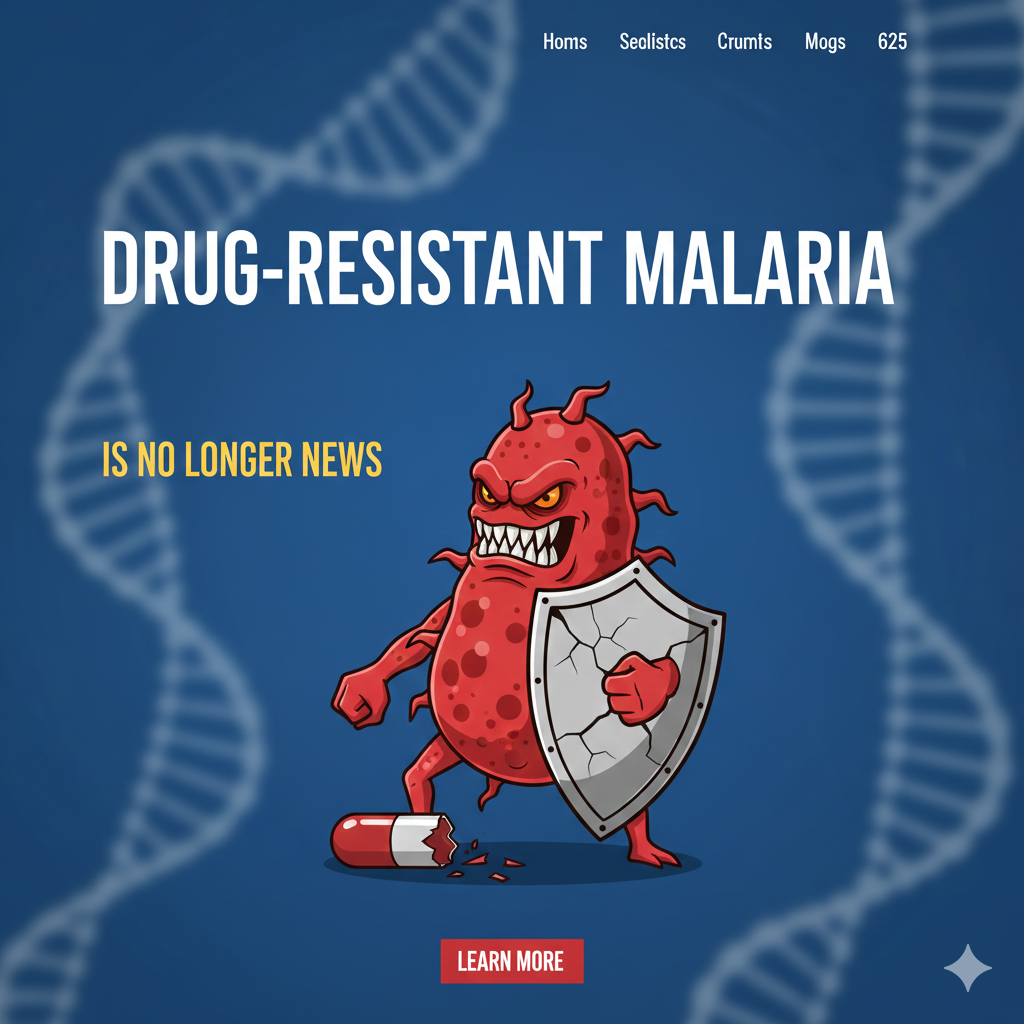
Today, that story has expanded. Partial artemisinin resistance has been detected in several African countries, including Rwanda, Uganda, Tanzania, and Ethiopia. While most ACTs still work across Africa, the warning signs are clear. If full resistance spreads widely on the continent, the consequences would be devastating, given Africa’s high malaria burden.
Resistance has also been detected in parts of South America, such as Guyana. This is no longer a regional issue. It is global. And one of the factors accelerating resistance is the misuse of medications, including self-medication and incomplete treatment courses. Every time malaria is poorly treated, the parasite gets another chance to adapt.
Yes, Some Antibiotics Are Used for Malaria, But Here’s the Catch
This is where many well-meaning arguments begin. Yes, some antibiotics are used in malaria care. But context matters.Certain antibiotics like doxycycline, azithromycin, and clindamycin have antimalarial properties. They work slowly, interfering with the parasite’s ability to produce proteins or generate energy.
Due to this delayed action, they are never used alone for the treatment of acute malaria. Instead, they are prescribed as preventive drugs for travelers or used alongside fast-acting antimalarials in specific cases of drug-resistant malaria.
This is done under medical supervision, with clear dosing and purpose. It is not a license to grab any antibiotic from the shelf. Common antibiotics, such as amoxicillin, have no antimalarial effect at all. Using them for malaria does nothing except expose your body to unnecessary risk and feed the cycle of resistance.
Read: 6 Nigerian Breakfasts That Don’t Spike Sugar
What To Do Instead in 2026: Test, Treat, Finish Strong
If fever, headache, weakness, or body aches show up, pause before guessing. Many illnesses share similar symptoms, including malaria and typhoid. The only smart first step is testing. Rapid diagnostic tests and blood smears exist for a reason.
Once a diagnosis is confirmed, follow the medical advice exactly. Take only what is prescribed, in the right dose, for the full duration. Even if you feel better halfway through, finish the course. Never share leftover medication and never save it “just in case”.
Being intentional about healthcare does not mean being dramatic. It means being precise.
Your Health Is Not a Guessing Game
Antibiotics are powerful tools. So are antimalarials. But power without direction causes damage. As malaria evolves, our habits must evolve too. Treating illness properly protects your body today and preserves effective medicine for tomorrow.
If this made you pause before your next self-diagnosis, share it with someone who keeps antibiotics “for emergencies”. And stay with RefinedNG this year as we keep breaking down health, money, and life topics in ways that actually make sense.