
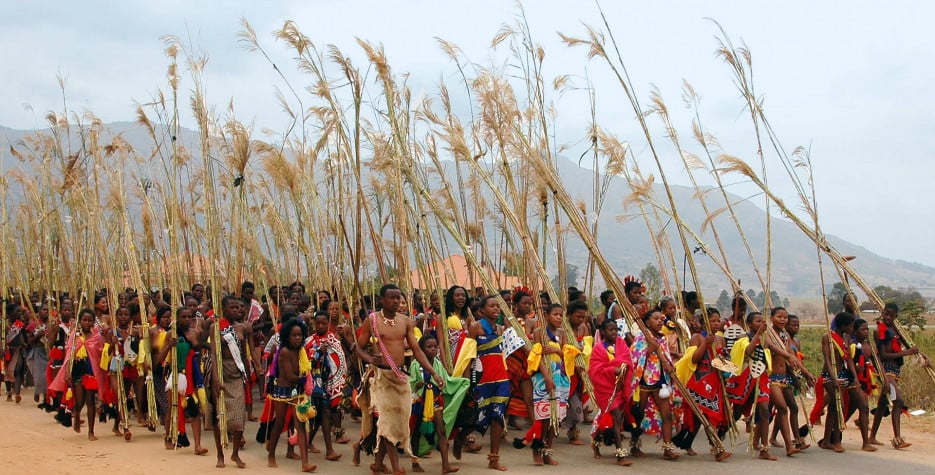
Have you heard of the Umhlanga Reed Dance? Every year, as winter fades and spring approaches in southern Africa, the quiet valleys of Eswatini erupt into color, rhythm, and celebration. Picture this: nearly 40,000 young women, adorned in vibrant traditional attire, singing in unison and carrying tall reeds across the rolling landscape.
Their destination? Ludzidzini Royal Village, the ceremonial heart of the kingdom. This is Umhlanga, the Reed Dance Festival — one of Africa’s grandest living traditions. What may first appear as a dazzling pageant is far more than spectacle. It is a ritual steeped in symbolism: a tribute to the Queen Mother, a celebration of womanhood and purity, and a statement of cultural identity that binds the Swazi people together.
To witness Umhlanga is to step into a world where history and modern life intertwine, and where the heartbeat of a nation reverberates through song, dance, and the whisper of reeds.
Roots of the Feed Dance
Though today it is one of Africa’s most photographed cultural festivals, the Umhlanga Reed Dance is a relatively recent tradition in its current form. It was formalized in the 1940s by King Sobhuza II, who sought to adapt and modernize an older Swazi custom known as Umcwasho.
Umcwasho placed young girls into age-regiments where they lived under strict guidance until they reached marriageable age. Chastity was highly valued: a girl who became pregnant outside wedlock brought shame to her family, often punished by a fine of cattle. The system was not merely restrictive — it was designed to instill discipline, community service, and shared identity among women.
The Reed Dance kept the spirit of Umcwasho alive but introduced new purpose. Each year, maidens gather reeds to repair the windbreak around the Queen Mother’s residence — a symbolic act of protection for the nation’s matriarch. The following days of dance are both a celebration of purity and unity and an expression of cultural pride.
At its heart, Umhlanga is more than a festival; it is a living ritual that honors women, reinforces communal bonds, and reminds Eswatini of its values in an ever-changing world.
Read: Did You Know: The First and Only Female Ooni in History
The Eight Day Journey
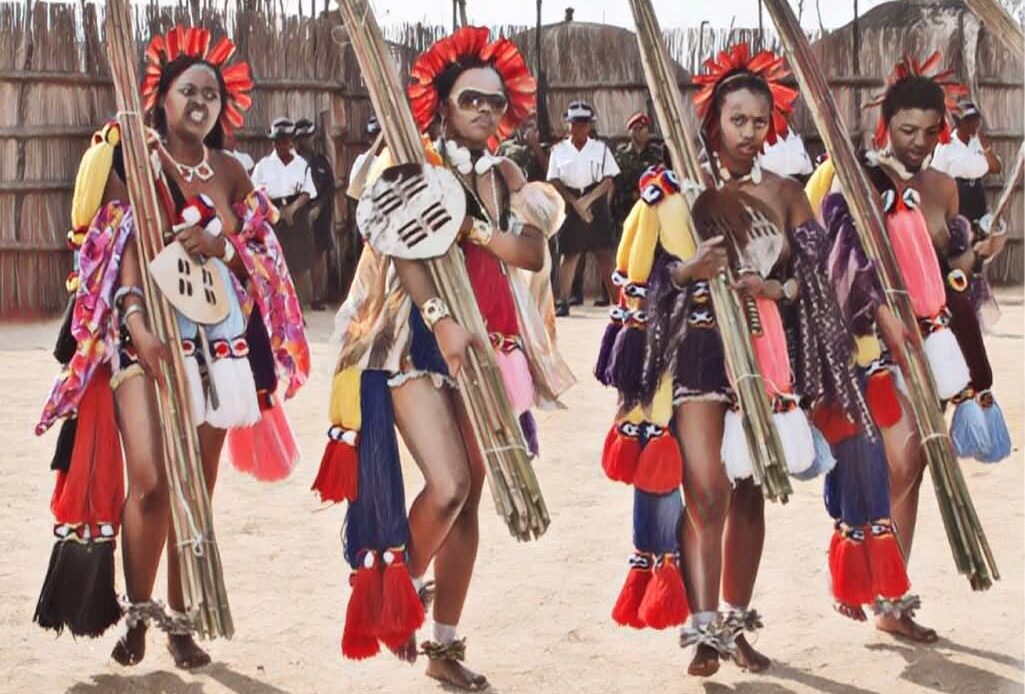
The Umhlanga is not just an event — it is an eight-day odyssey that transforms the kingdom of Eswatini into a living stage of tradition.
Day 1 begins quietly but with anticipation. Thousands of girls stream into Ludzidzini Royal Village, registering in groups from more than 300 chiefdoms. Excitement hums in the air as they settle into tents, classrooms, and relatives’ homes.
By Days 2–4, the pace quickens. Divided into older and younger regiments, the maidens march miles to the reed beds, their laughter echoing across the valleys. With long knives, they cut tall reeds, bundle them, and carry them back at night — a dramatic return meant to prove endurance and commitment.
Day 5 is a pause, a time for pampering and preparation. Hair is braided, beads polished, skirts tied. The air smells of firewood and anticipation.
Then comes the heart of the festival: Days 6 and 7.
Imagine a vast arena filled with more than 40,000 maidens, beads rattling at their ankles, bright sashes flashing in the sun. Columns of girls advance like rippling waves, singing different songs that weave into a chorus of joy. On Day 7, the King himself watches as regiments dance before him, a dazzling display of unity, discipline, and pride.
Finally, Day 8 brings the feast. Cattle are slaughtered, meat shared, and the maidens prepare for the journey home. They leave behind not just reeds, but memories — and a reaffirmation of their role in Eswatini’s living heritage.
What The Reed Dance Represents
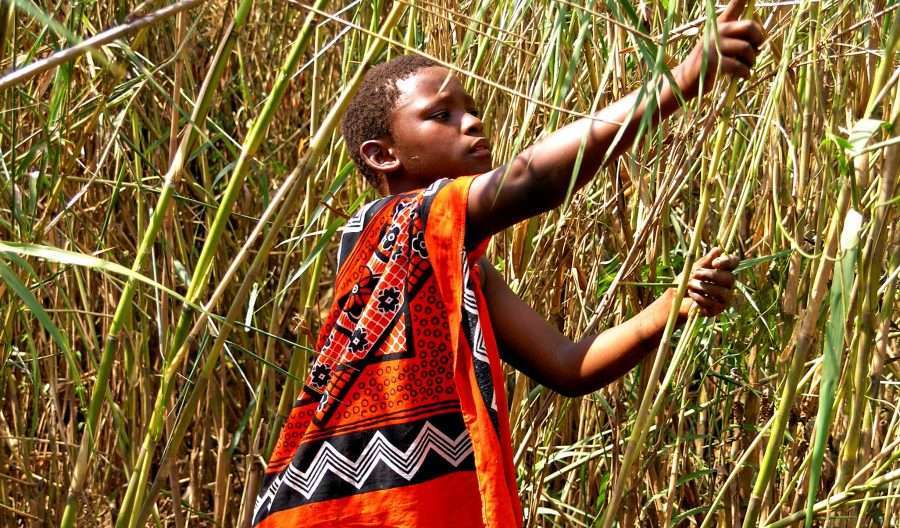
At its heart, the Umhlanga Reed Dance is more than pageantry — it is a living language of symbols. The reeds the maidens cut and carry are not just plants, but protectors. They are presented to the Queen Mother to repair the royal windscreen, a gesture of renewal that reaffirms her central place in Swazi society as the “Mother of the Nation.”
The festival also celebrates purity and discipline. By requiring participants to be unmarried and childless, the dance reinforces ideals of responsibility and respect for tradition. It is a collective vow, performed not in silence but through vibrant song and movement.
Equally important is the unity it fosters. Thousands of girls, from over 300 chiefdoms, share days of marching, camping, and dancing together. Bound by rhythm and ritual, they form bonds that outlast the festival itself. The regiments they belong to become lifelong networks of support, friendship, and solidarity.
On another level, the Umhlanga is also a proud showcase of beauty and heritage. Beaded necklaces, anklets, and sashes shimmer against the backdrop of pounding drums, reminding the world that tradition is not only preserved but performed with joy. It is culture lived, not just remembered.
A Global Attraction
The Umhlanga Reed Dance is not just a Swazi celebration — it’s a world stage of culture. Each year, tens of thousands of maidens converge at Ludzidzini, joined by royal dignitaries, locals, and curious travelers from across the globe. The Eswatini Tourism Authority plays a vital role, providing logistics, guides, and information centers to ensure visitors experience the event respectfully.
On the climactic days, tourists are permitted to photograph the dazzling parade of color and rhythm, capturing moments that ripple across social media and global news outlets. What began as a local rite of renewal has now become one of Africa’s most iconic cultural showcases, drawing attention not only to Eswatini but to the continent’s enduring heritage.
Read: Hidden Meanings Behind African Names
Tradition in Modern Times
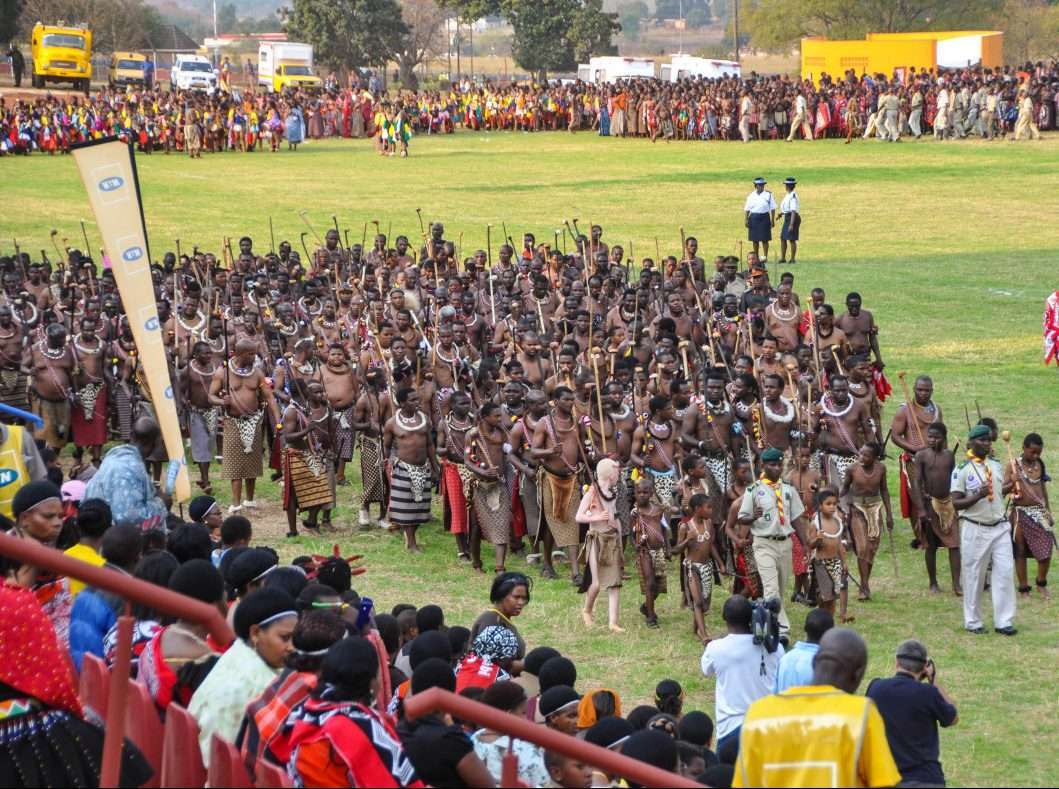
What makes the Reed Dance remarkable is its ability to remain relevant in a fast-changing world. While many cultural practices across Africa have faded, Umhlanga thrives — attracting growing numbers each year. A key reason lies in its inclusivity: royal princesses dance alongside commoners, dressed in the same beadwork and chanting the same songs, reinforcing unity beyond social class. Yet, the festival also invites debate, balancing cultural pride with questions of modern values and gender roles.
Far from being a relic, the Umhlanga exists in dialogue with today’s world — showing how tradition can adapt without losing its soul, remaining both a proud expression of identity and a magnet for global fascination.
Why Umhlanga Still Matters
The Umhlanga Reed Dance is far more than an eight-day festival — it is Eswatini’s heartbeat of heritage. Every reed carried, every drumbeat, and every ululation affirms the values of unity, purity, and identity that define Swazi culture.
In a time when traditions risk fading into memory, Umhlanga remains a living ritual — one that continues to inspire both its people and the world. Whether you witness it in person, learn its history, or share its story, the festival offers a timeless reminder: culture unites, culture endures, culture matters.