

When Ghana’s President John Mahama arrived in Zambia wearing a traditional Fugu, the internet went wild. Some mocked the outfit, others celebrated it, and suddenly, a simple Northern smock was trending across borders. What started as playful teasing quickly became a moment of cultural pride, with Ghanaians proudly sharing pictures and stories about the Fugu.
But for anyone who’s unfamiliar, the Fugu isn’t just a fancy piece of cloth. It’s a symbol of history, identity, and craftsmanship. Whether you’ve seen it in a political moment, a festival, or even a film, this article will take you through what makes the Fugu special, how it’s made, and why it has captured attention both in Africa and beyond.
So, what exactly is this Fugu everyone is talking about?
What the Fugu Is and Its Origins
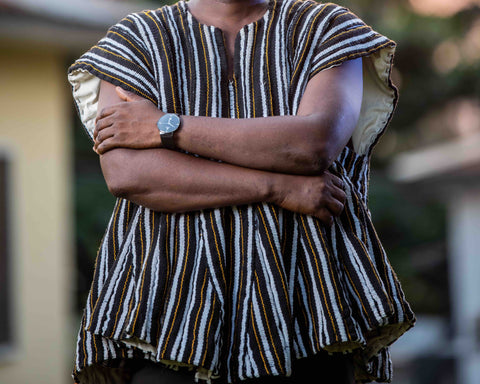
The Fugu, also known as Batakari, Tani, Bun-nwↃ, Dansika, or Banaa depending on the region, is the most popular traditional attire from Northern Ghana. Both men and women wear it, often paired with a hat called a Zipligu, a scarf known as Bobga, trousers called Kurugu, and specific footwear called Muɣri. While it shares national dress status with Kente cloth, the Fugu is more practical for everyday use and reflects the heritage of Northern Ghana, especially regions like Dagbon.
Its versatility is part of what makes it so beloved. You’ll see it at formal events, royal ceremonies, casual family gatherings, and even modern fashion statements.
The Fugu has deep roots. It originated in the 1600s during the reign of Yaa Naa Zanjina and was worn by the founding fathers of Ghana when the country gained independence in 1957.
Predating the modern suit, the smock was practical, respected, and instantly recognisable. Its influence stretches across West Africa, inspiring similar garments in Burkina Faso, where it’s called Faso Dan Fadi. By wearing it on international soil, Mahama was carrying a piece of history and culture with him.
Read: Ghana’s New President and the Power of Symbolism: A Message in Every Stitch
How the Fugu Is Made: Handcrafting Tradition
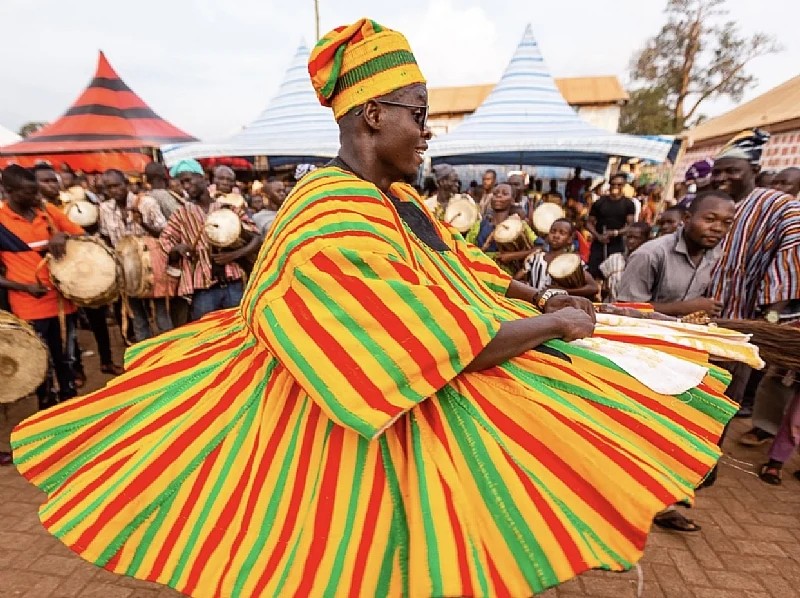
The Fugu is far from mass-produced. It starts with hand-loomed strips of cotton yarn, dyed and undyed, carefully sewn together to create the distinctive plaid pattern. Some smocks also have embroidery along the neckline, adding extra flair.
Making a Fugu is a collaborative craft. Traditionally, women create the strips, and men sew them together into the final smock. Each one is unique, reflecting the skill and care of the artisans. Even the Zipligu hat that accompanies the smock is handmade, ensuring the look is complete. Wearing a Fugu is like wearing a small piece of art, a testament to generations of craftsmanship and cultural knowledge passed down through families.
It’s this attention to detail and tradition that gives the Fugu its status as a symbol of identity and heritage.
From Ghana To The World
The Fugu wasn’t widely seen outside Ghana until the 1990s, mostly worn by Ghanaian immigrants. Over time, its popularity grew thanks to films, African festivals, and Kwanzaa celebrations in cities like New York and Kingston.
Art has also embraced the smock. In 2024, Ghanaian artist Ibrahim Mahama created Purple Hibiscus, a large installation at London’s Barbican Centre featuring hundreds of Batakari robes. The piece highlighted craftsmanship, intergenerational knowledge, and the role of traditional textiles in telling African stories.
Moments like Mahama’s visit to Zambia show that the Fugu is a statement of identity, pride, and African heritage, sparking conversation wherever it’s seen.
Read: 10 African Fabrics You’ve (Probably) Not Heard Off
Wearing the Fugu Today: More Than Fashion
Today, the Fugu is more than a traditional garment; it’s a symbol of heritage, dignity, and Pan-African pride. The recent online debate, humorously called the “Fugu War”, shows how a piece of clothing can open cultural dialogue and reclaim narratives.
Its versatility means it can be worn at traditional ceremonies, political events, casual gatherings, fashion shows, or even on social media to make a statement. Wearing a Fugu says, “I know my roots, and I’m proud of them.” In a world where identity and heritage are constantly discussed, the Fugu speaks for itself.
Small Smock, Big Statement, Win for African Fashion
From Northern Ghana to the international stage, the Fugu is clothing, history, and art all rolled into one. It sparks conversations, celebrates African heritage, and carries the stories of the people who make it.
Whether you attend a festival, pick up a Fugu for yourself, or simply learn about it, this smock proves that even a simple piece of clothing can have a big impact. Next time you see someone rocking a Fugu, know that it’s a story woven in cotton and pride.
So, tell us: have you ever worn a Fugu, or which African traditional attire inspires you the most? For more stories on African culture, fashion, and heritage, follow RefinedNG and stay inspired every day!