
You’ve probably heard it, that deep, honeyed voice gliding over a rhythm that feels both ancient and alive. It’s the kind of sound that doesn’t just play in your ears; it hums in your chest. Recently, that sound found new fame when Oumou Sangaré’s “Kun Fe Ko” went viral across social media, its hypnotic chorus echoing through memes, reels, and skits from Lagos to London. But beyond the laughter and remixes lies something older; a music born in the red soil of southern Mali, in a cultural corridor known as Wassoulou.
Wassoulou isn’t just a genre; it’s an inheritance. It’s a call-and-response between women and their world; voices that rise in defiance, dance, and desire. The drums don’t rush; they roll like heartbeats. The strings don’t decorate; they testify. It’s music that speaks of fertility, love, and freedom, yet somehow, even when sung in Bambara, it feels like it’s telling your story.
But what exactly is Wassoulou and why does it feel like it’s singing your truth, even if you don’t understand a single word?
It Started as a Hunting Song
Long before microphones, streaming apps, or viral sounds, Wassoulou began in the forests as music for hunters. In the old days of Mali, Guinea, and Ivory Coast, the men who ventured into the wilderness to face wild beasts didn’t just carry weapons; they carried songs. These were chants of courage, protection, and praise, rhythms meant to summon nature’s strength and the ancestors’ watchful eyes. The hunters sang to steady their spirits, to speak with the forest, and to celebrate each return from danger.
The region that birthed these melodies, known as Wassoulou, once lay within the great Mandinka Empire, a crossroads of kingdoms, languages, and rituals. Music was the way people remembered who they were. Every rhythm carried a story, every chorus a lesson. Over time, as hunting songs met new instruments and voices, the sacred chants evolved, no longer bound to the forest, but to the lives of the people.
Wassoulou became the heartbeat of its community, transforming from ritual to reflection. Women began to sing these songs not of the hunt, but of life, of love, motherhood, struggle, and self-worth. Yet even in its new form, that old pulse remains raw, rhythmic, and proud, echoing the courage of those who first sang to the trees.
Women Now Sing It (Largely)
When the hunters’ drums faded into history, a new sound rose, one led by women. In the villages of southern Mali, voices once confined to lullabies and wedding songs began to carry something sharper, louder, and braver. The women who sang them were called kono — “songbirds” — but their melodies were far from delicate. With every verse, they turned rhythm into resistance, using music to speak the truths that tradition often silenced.
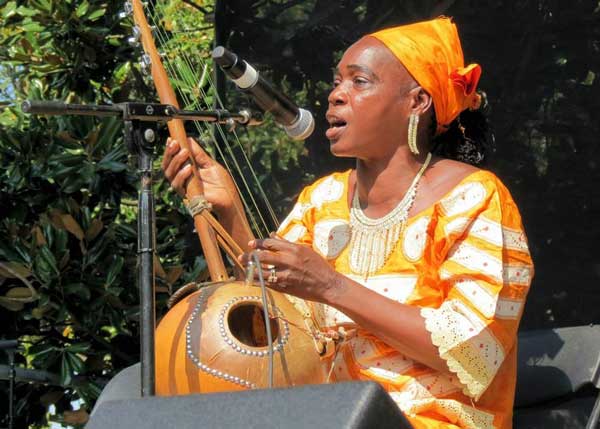
These kono sang of love and longing, of childbearing and heartbreak, of polygamy and power; themes whispered in private but rarely voiced in public. Through their songs, women confronted the weight of expectation, questioned injustice, and reclaimed joy.
Pioneers like Coumba Sidibé and Sali Sidibé gave the genre its wings, blending ancient melodies with the pulse of modern instruments. Then came Oumou Sangaré, whose voice carried Wassoulou beyond Mali’s borders, transforming local stories into universal anthems.
What began as ritual became revolution. Wassoulou evolved into a cultural mirror, a space where women could see, hear, and define themselves on their own terms. And in every defiant chorus, they reminded the world that freedom doesn’t always march; sometimes, it sings.
Read: What Do You Know About Oumou Sangaré?
The Instruments That Speak Wassoulou
To understand Wassoulou, you have to hear it not just with your ears, but with your skin. The music lives in vibration and pulse, in the dialogue between strings and skins. At its heart is the kamalen n’goni, a six-string harp whose earthy twang feels like it’s plucked straight from the soil. It carries both rhythm and melody, the sound of persistence, of something ancient that refuses to fade.
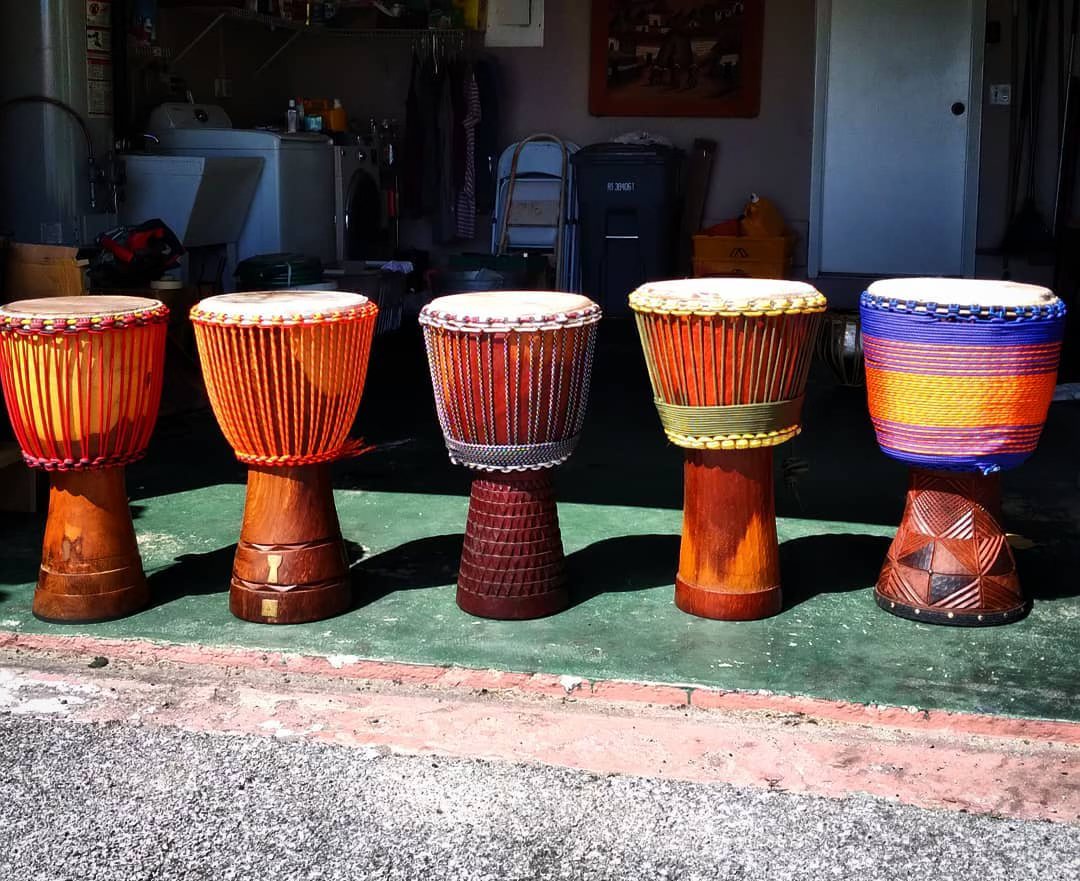
Then comes the djembe, the heartbeat. Its deep tones drive the dance, grounding the music in the language of movement. The karinyan, a metal scraper, adds its shimmering hiss, a whisper, a spark, the sound of air in motion. And beneath it all, the bolon, a four-string bass harp, rumbles like memory itself, steady, haunting, and wise.
Each instrument mirrors the human voice: a question from the strings, an answer from the drum, a cry from the singer, and the echo of a people who have turned sound into survival. Together, they create a conversation; a rhythm that feels both communal and intimate.
Today, artists blend these traditional instruments with electric guitars and synthesizers, stitching the past into the present without losing its soul. Every note feels handmade, carved from tradition, tuned with emotion.
Singing Truth in Bambara
Wassoulou doesn’t just move your body, it teaches your spirit. Sung mostly in Bambara, its lyrics are woven with proverbs, riddles, and everyday wisdom. The words might sound foreign to some, but the emotion behind them feels universal, the ache of love, the demand for dignity, the courage to speak truth even when it trembles.
In these songs, the singers, often women, don’t shy away from life’s complicated truths. They sing about childbearing, marriage, betrayal, independence, and the expectations society places on them. But beneath those themes lies a constant rhythm of self-worth; a reminder that voice itself is power.
The delivery is as striking as the message: rich ornamentation, raw vibrato, and rhythms that move like conversation. Every syllable is stretched, bent, or punctuated to make meaning not just heard, but felt. The vocals echo ancestral storytelling traditions — part prayer, part protest, part poetry.
Even in today’s recordings, the tone of Wassoulou singing feels timeless: bold yet vulnerable, earthy yet ethereal. It carries the weight of history, yet still sounds like a conversation with now, a reminder that truth, when sung, never goes out of style.
From Village Fires to Global Stages
Long before it reached Spotify playlists or Paris concert halls, Wassoulou music lived around flickering fires as a communal soundtrack for weddings, harvests, and moonlit gatherings. It was born in the villages of southern Mali, carried by word of mouth and memory, sung not for fame but for meaning. Yet, like all powerful things, it refused to stay hidden.
By the 1990s, voices like Oumou Sangaré and Nahawa Doumbia had brought Wassoulou from dusty roads to international airwaves. The music’s earthy pulse, the kamalen n’goni’s winding strings, and its fearless lyrics caught the attention of a world craving authenticity. Soon, Wassoulou was not just Mali’s sound, it was Africa’s echo to the globe.
Artists like Fatoumata Diawara have since reimagined it, blending tradition with electric guitars, jazz chords, and global collaborations. But even as the sound evolves, the spirit remains rooted; proud, grounded, and unmistakably African.
Perhaps that’s why people across continents, who’ve never spoken Bambara, still sway to it. Wassoulou doesn’t need translation. It speaks in heartbeat, in longing, in hope, in the universal language of humanity that begins deep in the soul and ends in song.
Read: Some Hausa musical instruments and their names
Why It Still Matters
Wassoulou isn’t just a genre, it’s a living memory. A sound that carries centuries of womanhood, resilience, and rhythm. When you listen closely, you’re not just hearing music; you’re hearing conversations that once echoed through courtyards and clay compounds, where women turned everyday struggles into poetry and protest.
Its influence still flows through Africa’s modern soundscape. You can hear its storytelling spirit in Afrobeats, its defiance in feminist art, and its soul in world fusion collaborations. Artists today, from Lagos to London, continue to draw from Wassoulou’s emotional honesty and its ability to say everything without shouting.
But beyond influence, its greatest power is continuity. It reminds us that Africa’s future music is always in dialogue with its past, reinventing without forgetting.So, the next time you hear that haunting melody drifting through your feed, remember, it’s not just a song. It’s centuries of women, courage, and rhythm, still finding new ways to be heard.
Follow RefinedNG for more stories that celebrate Africa’s rhythm, resilience, and the people keeping heritage alive. We’re your number one stop for all things positive, powerful, and proudly African.