
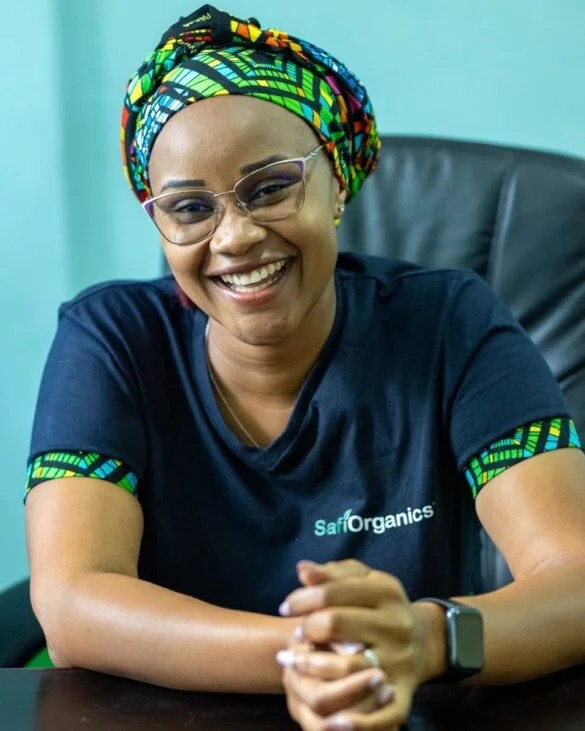
In many rural communities across Africa, farming is more than a profession. It is survival. It feeds families, pays school fees, and keeps entire local economies moving. Yet for millions of smallholder farmers, the work has become harder over the years. Soil quality is declining, fertiliser prices are rising, and climate pressures are tightening the margins of already fragile livelihoods.
For Kenyan social entrepreneur Joyce Kamande, this crisis was never an abstract issue discussed in policy papers. She saw it firsthand while growing up in a semi-arid region of central Kenya. Crops struggled to grow, families faced food shortages, and many farmers watched their land slowly lose its productivity.
Those early experiences stayed with her. Today, Kamande is helping to change that story.
As the Co-Founder and Chief Operating Officer of Safi Organics, she is part of a new generation of African innovators building practical, local solutions to long-standing agricultural problems. Her work focuses on improving soil health, increasing farmers’ incomes, and strengthening food security across rural communities.
Read: IWD: Meet Dr. Nneka Mobisson, Advancing Digital Health in Africa
Turning Agricultural Waste into Opportunity
When Safi Organics was founded in 2015, the idea behind it was simple: transform agricultural waste into something valuable.
Across Kenya, farmers often burn crop residues such as rice husks after harvest. The practice contributes to pollution while doing little to restore the soil that produced those crops in the first place. Kamande and her co-founders saw an opportunity hidden in that waste.
Using hardware technology validated by researchers at the Massachusetts Institute of Technology (MIT), Safi Organics developed a process that converts agricultural residues into high-quality organic fertilizer. The system works at the village level, allowing production to take place close to where farmers actually live and work.
This decentralised model changes the economics of fertilizer production. Instead of relying on imported chemical fertilizers that travel long distances and come with high price tags, farmers can access locally produced alternatives that are both affordable and environmentally friendly.
The fertilizer produced by Safi Organics also improves soil health, helping farmland retain nutrients and moisture more effectively. For farmers dealing with degraded soil and unpredictable weather patterns, that difference can be transformative.
A Practical Solution for Smallholder Farmers
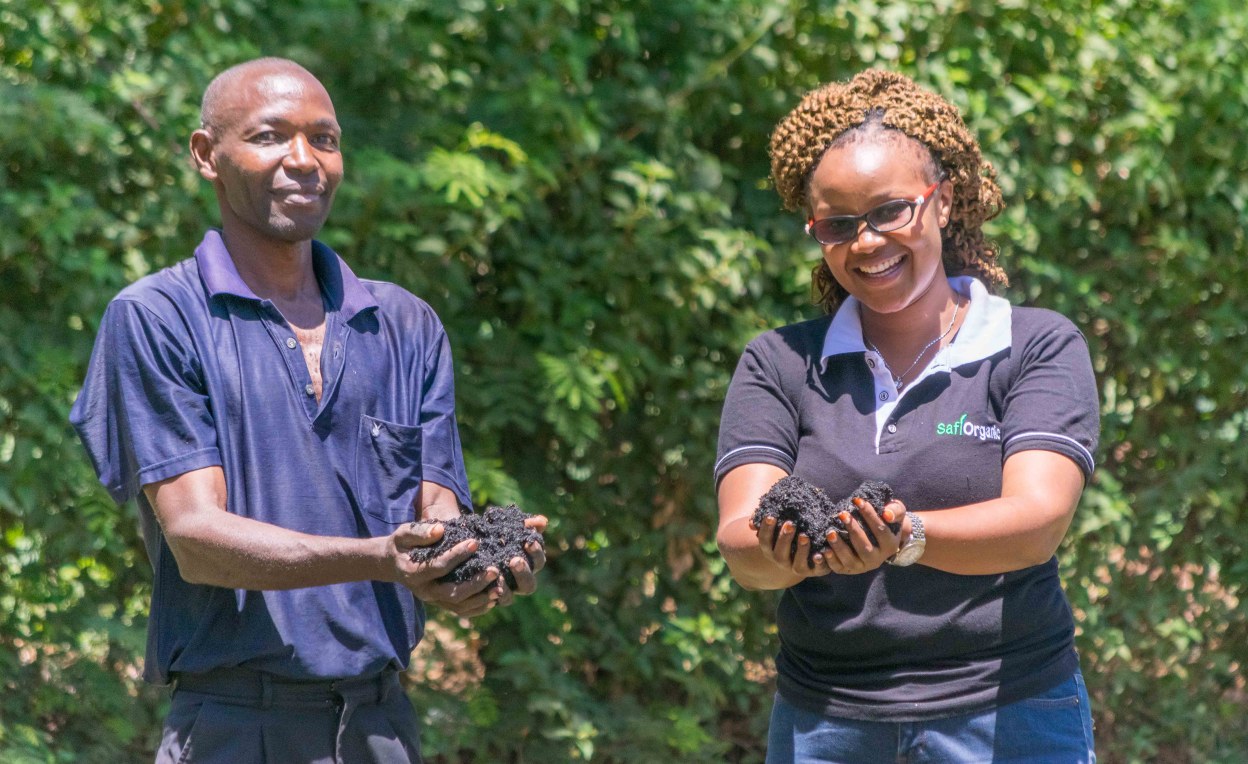
Smallholder farmers form the backbone of Africa’s food system, yet they often operate with limited resources. Rising input costs, declining soil fertility, and volatile market conditions can trap families in cycles of low productivity.
Kamande’s work addresses these realities directly.Farmers who use Safi Organics fertilizer have reported yield increases of up to 30 percent, along with noticeable improvements in soil quality. At the same time, many have reduced their fertilizer costs by as much as 30 to 40 percent, freeing up money for other household needs.
For families living close to the economic edge, even small gains can have far-reaching consequences.
In some cases, higher crop yields mean farmers can sell surplus produce at the market. For others, improved incomes make it possible to send children to school, repair homes, or invest back into their farms.
Kamande often speaks about these changes not in statistics, but in personal stories. She has seen farmers move from uncertainty to stability simply by having access to the right tools and knowledge.
Building Climate-Smart Agriculture
Beyond improving farm productivity, Safi Organics is also contributing to the broader conversation around climate change and sustainable agriculture.
The company’s fertilizer production process captures carbon and returns it to the soil, creating what scientists describe as carbon-negative fertilizer. Instead of releasing emissions into the atmosphere, the process helps store carbon in farmland for long periods.
For farmers, this translates into healthier soil and stronger crops. For the planet, it represents one of many innovative pathways toward more climate-resilient agriculture.
Kamande and her team are also exploring ways to connect farmers to emerging carbon credit markets, ensuring that smallholder farmers can benefit financially from climate-friendly farming practices. It is a model that blends technology, sustainability, and economic empowerment in ways that reflect the realities of rural Africa.
Read: IWD: Meet Ethel Cofie, Giving Technology for African Women’s Empowerment
Global Recognition for Local Impact

Kamande’s leadership has not gone unnoticed.Over the years, she has received several recognitions for her contributions to agribusiness, climate action, and social entrepreneurship. In 2024, she won the Bayer Foundation Women Empowerment Award, which celebrates women entrepreneurs driving sustainable development.
She has also been named among Business Daily’s Top 40 Under 40 Women in Kenya and selected as a Mandela Washington Fellow, a prestigious program that supports emerging African leaders.
In addition, Kamande is a MIT Legatum Foundry Fellow and a Thought For Food Ambassador, roles that connect her work to global conversations on food security and agricultural innovation.
Despite these accolades, her focus remains firmly on the communities she serves. The goal, she often says, is simple: ensure that farmers have the resources they need to build sustainable futures.
A Vision for Africa’s Agricultural Future
Africa’s agricultural sector faces enormous challenges, but it also holds immense potential. With the right investments, technologies, and leadership, smallholder farmers could play a central role in feeding the continent and strengthening rural economies.
Entrepreneurs like Joyce Kamande are helping demonstrate what that future might look like.
By turning agricultural waste into valuable fertilizer, empowering local farmers, and building systems that support both people and the environment, she is proving that innovation does not always need to start in large laboratories or corporate boardrooms. Sometimes it begins in villages, farms, and communities determined to do things differently.
And as her work continues to grow, so does the possibility that thousands more farmers across Africa will benefit from solutions designed with them in mind.
At RefinedNG, we celebrate Africans who are building solutions that matter. Follow us for more stories spotlighting innovators, creators, and leaders shaping the future of the continent.