
In most workplaces, recognition isn’t one-size-fits-all. You might hear someone getting a shout-out in a team meeting and think, “That’s exactly what motivates everyone,” only to notice a colleague nodding quietly, barely reacting. Some people light up when their effort is acknowledged publicly, while others respond better to a simple, personal conversation or even a small gesture that shows someone noticed their hard work.
These differences are in how people naturally feel appreciated. The concept of love languages, originally used to explain personal relationships, helps us understand these variations. In workplaces, applying this framework helps in communicating effectively, building stronger teams, and creating an environment where growth feels personal and achievable.
Read: 10 Toxic Workplace Habits to Avoid
The Five Love Languages, Reimagined for Work
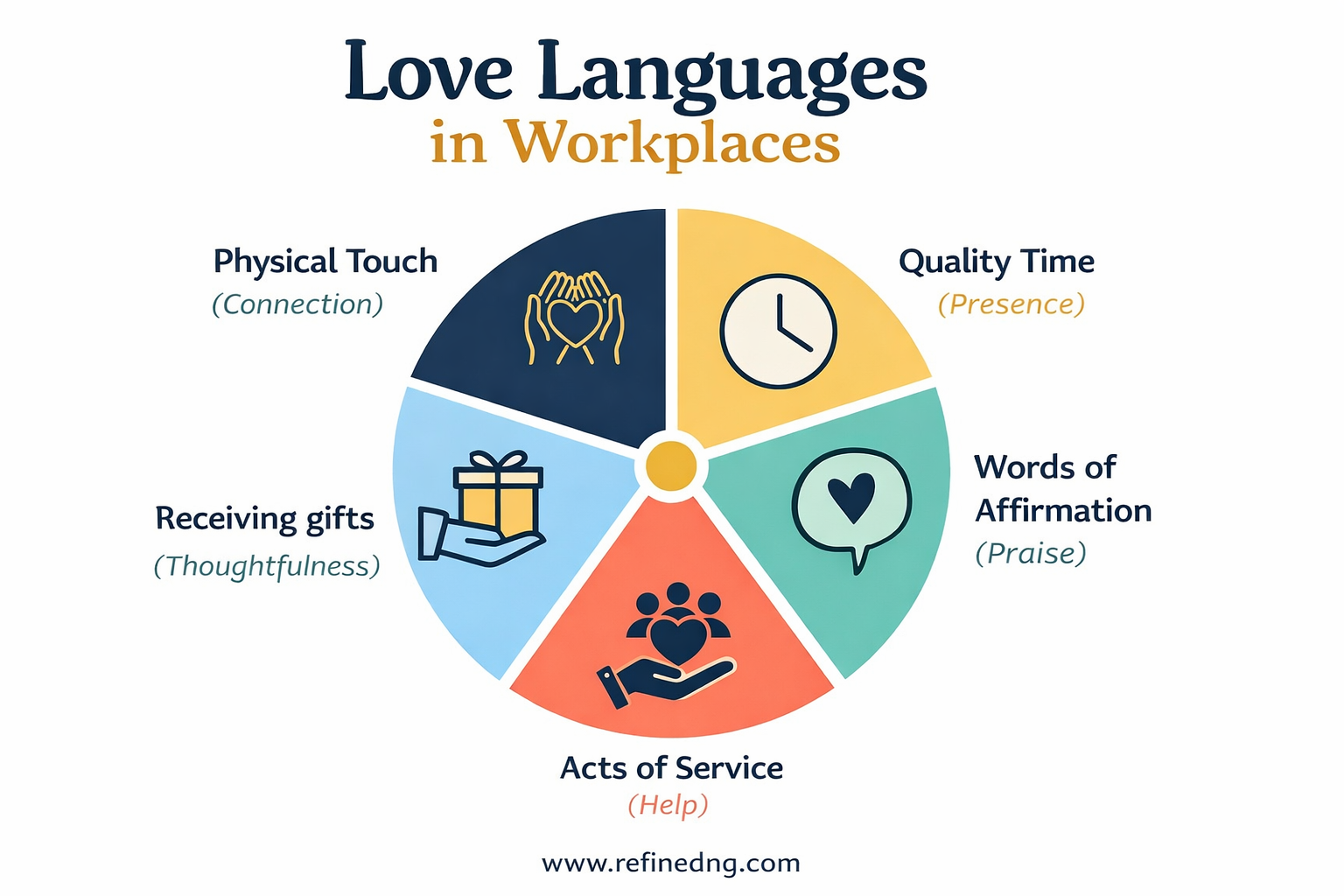
There are five primary love languages, each offering a unique lens on how people feel valued. In the workplace, they translate into practical ways to show appreciation that genuinely lands.
Words of Affirmation thrive on verbal recognition and encouragement. A simple, sincere comment like “You handled that client brilliantly” or a public acknowledgement of someone’s contribution in a meeting can be a huge motivator for those who respond to words.
Acts of Service are small, helpful actions that make a tangible difference in someone’s work life. Reviewing a colleague’s presentation, lending a hand to meet a tight deadline, or stepping in to support a team member without being asked can communicate appreciation without a single word.
Receiving Gifts doesn’t require extravagance. Thoughtful gestures like a handwritten note, a book related to their career interests, or a small token of acknowledgement can show an employee that their efforts are seen and valued.
Quality Time is about focused, undistracted attention. Employees who value this language feel most appreciated when leaders or peers dedicate time to listen, mentor, or collaborate meaningfully. A one-on-one discussion about career goals or a brainstorming session without distractions can make a lasting impression.
Physical Touch, in professional settings, is expressed carefully. Safe gestures like handshakes, fist bumps, or a congratulatory high-five, when culturally and organizationally appropriate, reinforce acknowledgement and connection without overstepping boundaries.
None of these approaches is better than the others. Understanding these preferences is more than a feel-good exercise; it’s a strategy that directly boosts performance and engagement.
Why Recognising Love Languages Affects Performance
Understanding love languages goes beyond making employees feel good; leaders use them to drive learning, growth, and performance. Managers deliver more effective feedback when they present it in ways that resonate with each team member.
For instance, a team member who thrives on words of affirmation may feel overlooked when managers limit praise to written reports or generic emails. When leaders tailor feedback to match how individuals feel appreciated, they significantly improve engagement.
Understanding love languages goes beyond making employees feel good; managers use them to improve learning, growth, and performance. Leaders deliver stronger feedback when they tailor it to what resonates with each team member.
For example, a team member who thrives on words of affirmation may feel overlooked when managers rely only on written reports or generic emails for praise. When leaders shape feedback around how individuals feel appreciated, they significantly increase engagement.
Motivation also varies. Some employees gain energy from public recognition and visibility, while others prefer quiet, personal acknowledgement. When managers identify these differences, team engagement and retention naturally improve.
Leaders are central to this process. Those who understand their team members’ preferred styles foster teams where people speak up, share ideas, and support each other without hesitation. A culture that incorporates love languages communicates care and respect, strengthening relationships and encouraging learning.
Even recognition systems can adapt. Instead of relying on generic titles or awards, organisations can use a mix of methods: public acknowledgement, personal development conversations, small thoughtful gestures, or peer recognition programs. The goal is simple: recognition must resonate with the recipient, not just be a checkbox.
Read: The “Invisible” Skills That Actually Get You Promoted
Recognition That Works: Seeing the Difference
A strong team culture doesn’t happen by accident. It grows when employees feel acknowledged in ways that resonate personally. A verbal “thank you” might energise one person, while another thrives on a quiet mentoring conversation or a small, thoughtful gesture. Applying love languages bridges these differences, creating teams where people feel genuinely seen, valued, and motivated to grow.
Intentional appreciation also drives results. Employees who feel recognised are more likely to engage fully, collaborate openly, and invest in their own development. Small, well-targeted gestures, whether verbal praise, focused time, or acts of service, can have a surprisingly large impact on team performance and morale.
As workplaces search for ways to retain talent and improve productivity, leaders can apply love languages as a simple, human, and effective strategy. During seasons when people emphasise care and recognition in other areas of life, organisations can intentionally create spaces where teams offer thoughtful, personalised, and transformational appreciation.
Want to see your team thrive? Start noticing how each person feels valued and apply the love languages in your workplace. Share your experiences, try one small change this month, and watch how appreciation transforms collaboration and growth.
Follow RefinedNG for more insights on building stronger, smarter, and more connected teams.