

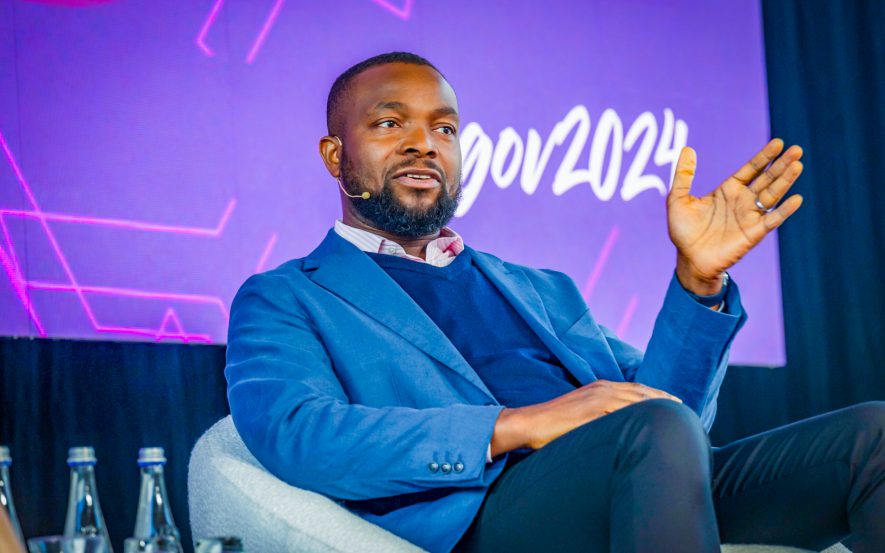
Nigeria’s Minister of Communications, Innovation and Digital Economy, Dr. Bosun Tijani, has been named to the 2025 TIME100 AI list, joining global stalwarts like Elon Musk, Sam Altman and Mark Zuckerberg. The recognition places Nigeria’s public-sector tech agenda on a world stage, highlighting a policy mix that pairs mass digital training with pragmatic infrastructure and clear rules for responsible artificial intelligence. For a country betting on technology to power jobs and productivity, the nod is both symbolic and strategic.
The selection spotlights a simple thesis running through the portfolio of Bosun Tijani: scale talent first, wire the country next, and ensure the systems built reflect African realities. “We may not have the compute and infrastructure, but we do have the talent,” he told TIME—a line that has become a shorthand for the ministry’s skills-first approach. TIME’s editors also pointed to Nigeria’s progress in deploying trainees into real work, from government digitisation to data-labeling roles, and in crafting a nationally owned playbook for AI development.
From 3MTT to National Strategy
At the heart of the story is the 3 Million Technical Talent (3MTT) initiative, which aims to equip three million Nigerians with job-ready skills by 2027. Nearly 300,000 trainees have already passed through a blended model that combines a digital platform with 220 physical learning centres nationwide. Crucially, the pipeline doesn’t end at the classroom door: fellows are placed into internships and roles through partnerships with the United Nations–European Union and companies such as Awarri, which has been hiring graduates for data-labeling and model-training projects.
The programme deliberately encompasses software engineering, data science, cybersecurity, and AI while targeting its deployment. Hundreds of fellows embed themselves across ministries, departments, and agencies, helping to digitise workflows, clean up legacy records, and build the datasets necessary for modern machine-learning systems. This creates a flywheel effect: as public services transition to digital, they generate structured data; as the data improves, local AI solutions become more accurate and useful; and as those solutions demonstrate their value, the demand for skilled talent increases.
National Policy As Second Leg of the Stool.
In April, Bosun Tijani, through the ministry released Nigeria’s National AI Strategy (NAIS), shaped with input from more than 150 local experts. Rather than chase a one-size-fits-all model, the strategy argues for responsible AI rooted in domestic context—local languages, local health records, local agricultural data, and the regulatory guardrails to protect citizens. Two institutional anchors are intended to keep momentum: a National AI Trust to prioritise long-term funding and governance, and an AI Scaling Hub—backed by partners including the Gates Foundation—to move proven solutions into everyday use in agriculture, healthcare and education.
The approach reflects a wider doctrine: Nigeria doesn’t need to replicate Silicon Valley to benefit from AI. It needs to organise talent, reduce adoption friction and back local builders who understand the problems they are solving. TIME’s recognition suggests that argument is resonating beyond the country’s borders.
Read: Igba Boi Bill Signed into Law in Anambra
Connectivity, Partnerships and Nigeria’s Global Standing
Talent and policy cannot travel without roads. For digital economies, those roads are fibre-optic cables. The ministry is overseeing the installation of 90,000 kilometres of fibre, in concert with World Bank and other development partners, a rollout that would more than triple national backbone capacity and deepen last-mile access for homes, schools and small businesses. More bandwidth does not just mean faster streaming; it lowers the cost of cloud tools for startups, improves latency for AI-enabled services, and makes it feasible for hospitals, farms and classrooms to use data-rich applications in real time.
Partnerships give the agenda scale and credibility. Microsoft Nigeria, MTN Nigeria and Airtel Africa Foundation have supported training and facilities; universities and research labs are contributing curricula and supervision; and ecosystem actors—from incubators to employers—are helping to absorb graduates into work. On the policy diplomacy front, the recent election of Dr. Bosun Tijani as Vice Chair of the International Telecommunication Union (ITU) Council—Nigeria’s first leadership role there in nearly five decades—signals a louder Nigerian voice in global standards-setting at a time when AI rules and connectivity targets are being hashed out.
The economic stakes are straightforward. A workforce fluent in AI and data tools can raise productivity across manufacturing, logistics, finance and the public sector; a trustworthy strategy can crowd in investment; and a country-wide network can lower barriers for entrepreneurs far from Nigeria’s biggest cities. For young people, it means more credible on-ramps to skilled work. For the state, it promises more efficient service delivery. In the broader ecosystem, it marks an inflection point: Nigerian technology is no longer merely participating in global conversations; it is helping to define them.
Looking Ahead
TIME’s inclusion of Dr. Bosun Tijani not a finish line, but it does change the optics. It tells investors, researchers and multilateral partners that Nigeria’s digital transformation has a plan, that its public sector is leaning into execution, and that its ambitions in AI are grounded in people, infrastructure and policy—exactly the triad that turns hype into results.
For more inspiring updates, in-depth stories, and credible reporting that highlights the best of Nigeria and beyond, make RefinedNG your daily destination. We are your number one stop for all things positive — from breakthrough achievements to uplifting developments in business, tech, culture, and more. Stay connected, stay informed, and stay inspired with us.