
Snake bites can turn an ordinary day into a medical emergency within seconds. One moment, you are stepping into your backyard or lifting a toilet seat. The next moment, you feel a sharp sting and see something slide away. Panic sets in fast. Questions race through your mind. Was it venomous? How serious is this? What should I do right now?
Across many communities, reports of snakes entering homes have increased conversations and anxiety. While most snakes avoid humans and many are non-venomous, every bite must be treated as a medical emergency. Acting quickly and correctly can prevent severe complications and save lives.
Here is what you need to know.
Not All Snakes Are the Same
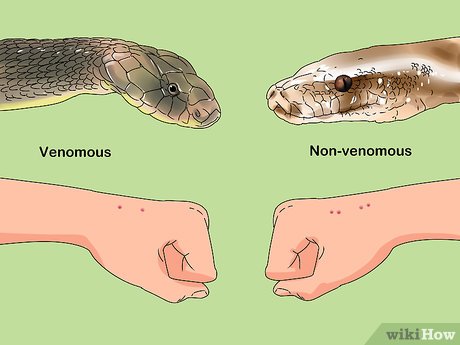
Snakes fall into two broad groups: Venomous and Non-venomous. Venomous snakes produce toxins that affect the body in different ways. Some venom damages tissue and cause intense swelling. Some interfere with blood clotting and can lead to dangerous bleeding. Others attack the nervous system and may affect breathing.
Non-venomous snakes do not produce venom, but their bites can still cause pain, infection, and anxiety. The challenge is that most people cannot confidently identify a snake in a moment of fear. The lighting may be poor. The snake may disappear quickly.
There is also something called a dry bite. This happens when a venomous snake bites but does not inject venom. However, no one can assume this at home. A bite that seems mild at first can worsen within hours. For that reason, every snake bite should be handled as a medical emergency.
Read: Antibiotics and Malaria: Here’s Why You Shouldn’t Self-Medicate
What To Do Immediately After a Snake Bite
The first step is to stay calm. Fear increases heart rate, and a faster heart rate can spread venom through the body more quickly. Take slow breaths and focus on the next step.
Move away from the snake immediately. Do not attempt to catch or kill it. Trying to prove bravery can lead to a second bite. Your safety comes first.
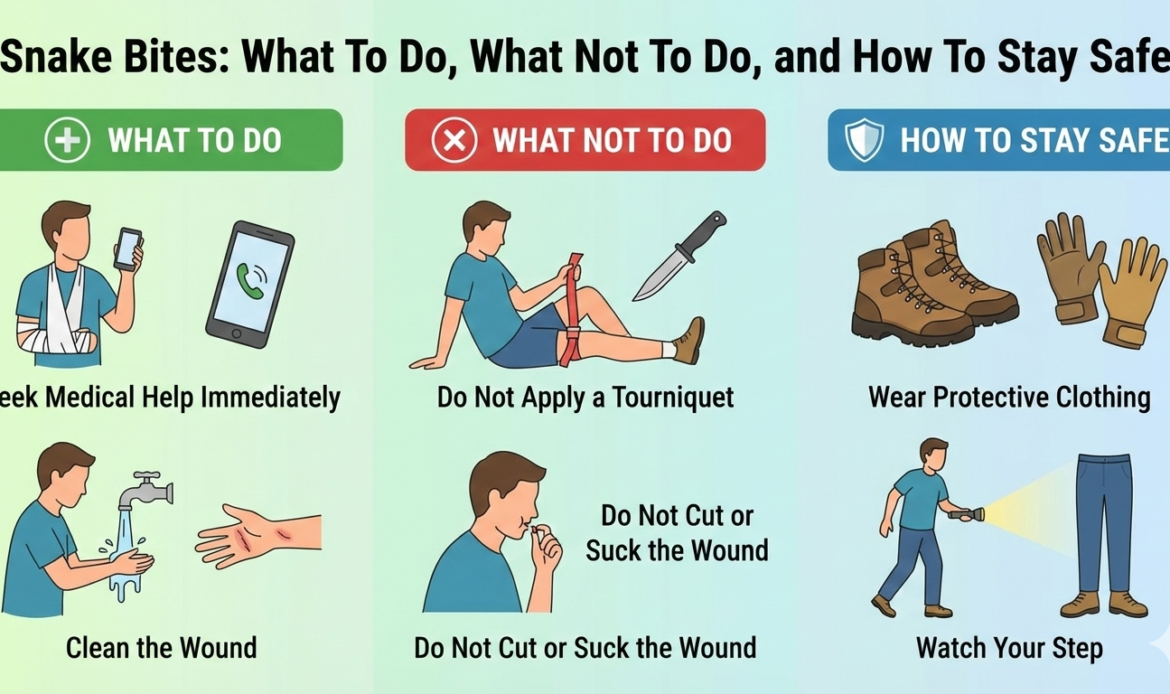
Call emergency services or arrange urgent transport to the nearest hospital. Antivenom is the only proven treatment for serious venomous snake bites, and it must be given in a medical facility. The earlier it is administered when needed, the better the outcome.
Sit or lie down and keep the affected limb still. If possible, position it slightly below heart level. Movement can increase the spread of venom, so limit walking or unnecessary activity.
Remove rings, bracelets, watches, or tight clothing near the bite site. Swelling can develop quickly, and these items may restrict blood flow. Gently clean the area with soap and water. Cover it with a clean, dry dressing. Do not apply chemicals or herbal mixtures. Then head straight to the hospital.
What You Should Never Do
There are many myths about treating snake bites. Some are deeply rooted in tradition, but they can cause serious harm. Do not cut the wound. Cutting increases the risk of infection and further tissue damage.
Do not attempt to suck out the venom. This does not remove a meaningful amount of toxin and can introduce bacteria. Do not apply a tight tourniquet. Blocking blood flow can lead to permanent damage and even limb loss.
Do not place ice on the wound. Extreme cold can worsen tissue injury. Do not drink alcohol or take random medications. These can complicate treatment.
Most importantly, do not wait for symptoms to appear before seeking help.
Signs That a Bite Is Serious
Some symptoms suggest venom may be affecting the body. Severe pain at the bite site is common. Swelling that spreads beyond the immediate area is another warning sign.
Other concerning symptoms include difficulty breathing, nausea and vomiting, blurred vision, weakness, and unusual bleeding from the gums or wounds. In some cases, a person may feel dizzy or confused.
Symptoms may not appear immediately. A person can feel stable at first and deteriorate later. That is why medical observation is critical, even if the bite seems minor.
Read: Should You Clean Your Wounds With Spirit?
Prevention Starts at Home
Preventing snake bites often comes down to awareness and simple habits. Seal cracks and holes in walls, especially in bathrooms and kitchens. Keep toilet lids closed when not in use.
Clear bushes, tall grass, and piles of debris around your home. Snakes seek shelter in quiet, undisturbed areas. Store firewood away from living spaces and keep the surroundings tidy.
When outdoors, wear boots and long trousers, especially in grassy or bushy areas. Avoid putting your hands into dark holes, under rocks, or inside storage spaces without checking first.
These small steps reduce the chances of an unexpected encounter.
Stay Alert, Not Afraid
Snake bites are serious, but they are manageable with quick and proper action. Panic can worsen the situation. Preparation can improve it.
If a bite occurs, focus on staying calm, limiting movement, and getting to a hospital immediately. Early medical treatment saves lives and reduces long-term damage.
For more practical health guides and safety updates that matter, follow RefinedNG and stay informed.