
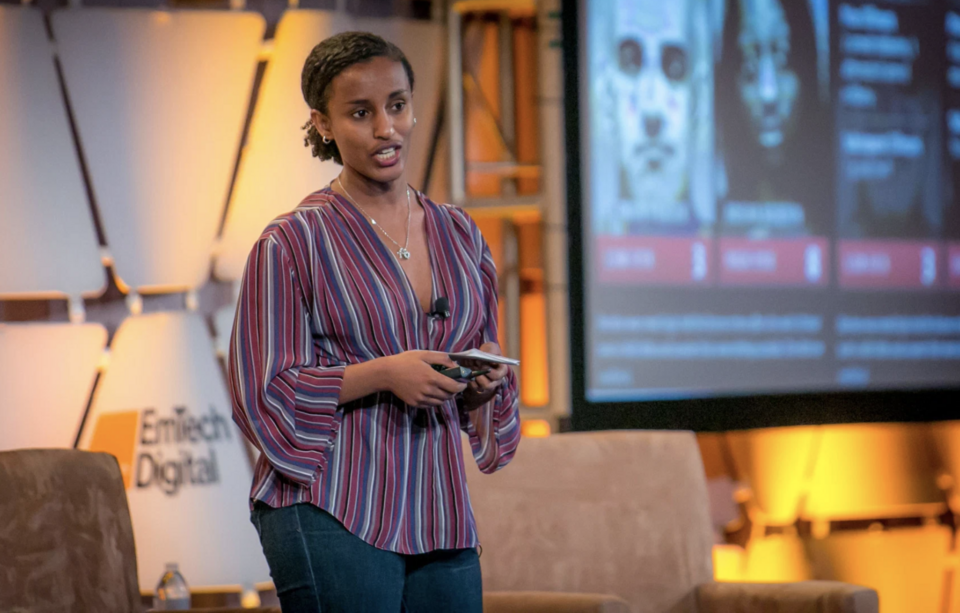
Artificial intelligence is often measured by how fast it works, how much data it processes, or how accurately it predicts outcomes. Ethiopian computer scientist, Rediet Abebe, has spent her career measuring something else entirely: whether those same systems create opportunity or deepen inequality.
That question has taken her from classrooms in Addis Ababa to some of the world’s most prestigious academic institutions. It has also made her one of the leading voices shaping how artificial intelligence can improve society instead of simply automating it.
Today, Abebe is an assistant professor of computer science at the University of California, Berkeley, where she researches algorithms, artificial intelligence, and equitable access to opportunity. But her greatest contribution may be changing the conversation around what AI should be built for in the first place.
Growing Up in Ethiopia Changed the Questions She Wanted to Solve
Rediet Abebe was born and raised in Addis Ababa, Ethiopia, where she attended local schools before earning a merit scholarship to the International Community School. Her academic talent eventually opened doors to Harvard University, where she studied mathematics. Everything seemed set for a career in theoretical mathematics until she began observing educational inequality in nearby Cambridge public schools. The experience challenged assumptions she had carried from Ethiopia.
Read Also: The First Black Woman to Graduate from Johns Hopkins Neurosurgery
Back home, limited opportunities often reflected limited resources. In the United States, she discovered that inequality could persist even in places with abundance. That realisation stayed with her. Instead of viewing mathematics and social justice as separate interests, Abebe began searching for a discipline that could bring them together. She found that answer in computer science.
After earning advanced degrees at Cambridge University and Cornell University, she focused her doctoral research on designing algorithms that improve access to opportunity for historically disadvantaged communities.
Her dissertation, appropriately titled Designing Algorithms for Social Good, would later receive the prestigious ACM SIGKDD Dissertation Award.
She Didn’t Just Study AI. She Changed What It Could Be Used For

Many researchers ask how artificial intelligence can become more powerful. Abebe asks how it can become more useful for society. Her research explores how algorithms influence poverty, education, healthcare, public policy, and access to economic opportunity. Rather than treating inequality as a problem outside technology, she examines how technology itself can either reinforce existing barriers or help remove them.
Her work has informed projects that improve university admissions systems, optimise public assistance programmes, and develop fairer algorithmic decision-making. She has also advised the U.S. National Institutes of Health on artificial intelligence and worked with the Ethiopian government to improve how students are matched with public universities, ensuring fairness across gender, geography, and ethnicity.
Creating Communities That Didn’t Exist Before
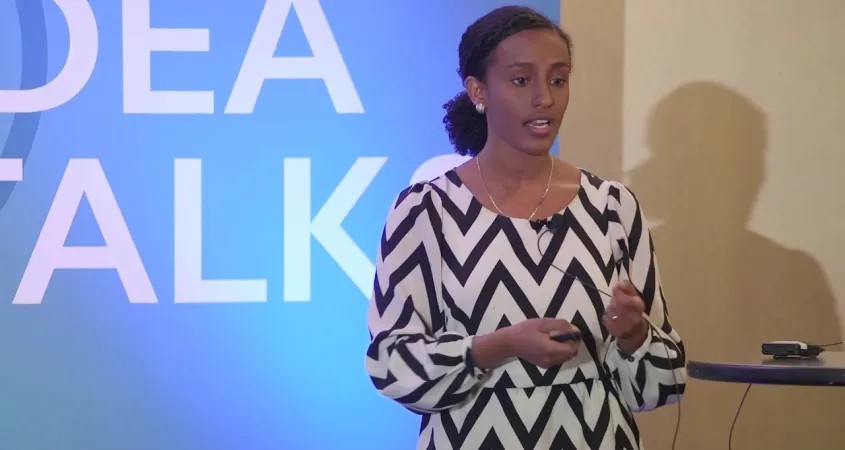
Rediet Abebe has never limited her impact to research papers. In 2016, she co-founded Black in AI, a global community created to support Black researchers working in artificial intelligence. What began as conversations among a small group of scholars has grown into an international network connecting thousands of researchers across academia and industry.
That same year, she also co-founded Mechanism Design for Social Good (MD4SG), an interdisciplinary initiative bringing together computer scientists, economists, policymakers, and social scientists to develop algorithmic solutions for real-world challenges.
Read Also: Darlington Akogo: From Hospital Queues to Global AI Leadership
Both organisations emerged from a simple belief: better technology requires more diverse voices and stronger collaboration. Her leadership has continued to break barriers. Abebe became the first Black woman to earn a Ph.D. in computer science from Cornell University. She later became the first Black female professor in the history of the Electrical Engineering and Computer Sciences department at UC Berkeley, one of the world’s leading centres for AI research.
Building an AI Future That Includes Everyone
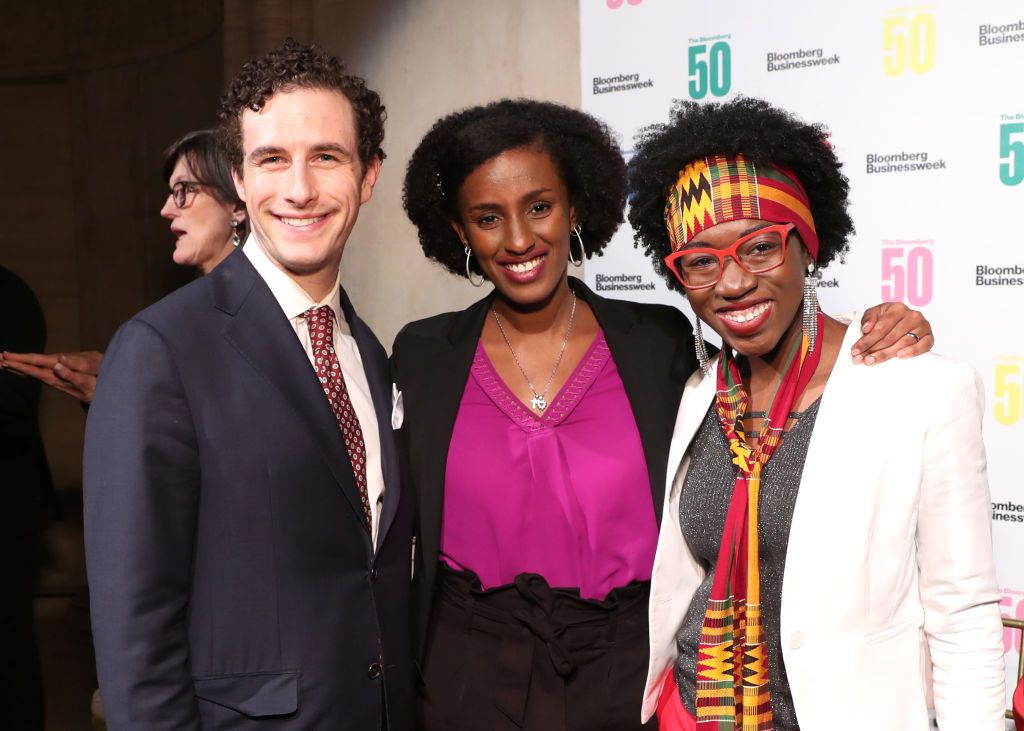
Recognition has followed naturally. Abebe has been named to MIT Technology Review’s Innovators Under 35, selected as an Andrew Carnegie Fellow, inducted into the Harvard Society of Fellows, and recognised among Africa’s most influential young leaders.
Yet awards tell only part of the story. Her work continues to influence how governments, universities, and researchers think about artificial intelligence at a time when AI is becoming deeply embedded in education, finance, healthcare, and public services.
While much of the world debates what AI might become, Rediet Abebe is helping determine what it should become. That distinction matters. The future of artificial intelligence will not be defined solely by faster machines or larger models. It will also be shaped by researchers willing to ask difficult questions about fairness, opportunity, and human dignity.
Rediet Abebe has built her career asking those questions, and the answers are already changing the future.
Follow RefinedNG for more stories spotlighting Africans transforming industries through innovation, leadership, and purpose. Visit our channels and subscribe to our newsletter so you never miss the next story.