

Sometimes, the most important healthcare innovation begins with a question that is painfully personal: what if help had arrived sooner? For Kenyan medical doctor and health-tech entrepreneur Dr. Alice Muhuhu, that question has shaped much of her work.
After losing her father following a road accident, Muhuhu experienced early in life how quickly a medical emergency can become devastating when timely care is out of reach. Years later, while training and working in healthcare, she saw similar delays affecting patients on a much larger scale.
Those experiences would eventually lead her to found Aurora Health Systems, a company developing medical technology around the realities of healthcare delivery in Africa.
From the Hospital Ward to the Innovation Lab

Muhuhu’s medical education took her through Kenya, Poland, Grenada, Egypt and South Africa, giving her a chance to experience very different healthcare systems. One experience in Poland particularly stayed with her. She saw technology being used to alert a patient to a potentially serious heart rhythm problem before it became an emergency.
Read: Lual Mayen: The South Sudanese Game Developer Turning Survival Into Stories of Peace
Back in Kenya, the contrast was striking.
During the COVID-19 pandemic, she watched patients miss follow-up appointments and return to hospitals critically ill. She also saw how specialist healthcare remained concentrated in major urban centres, leaving many rural facilities without the equipment or expertise needed for early diagnosis.
For cardiac patients, that gap can be serious. Kenya has relatively few cardiologists serving a population of more than 50 million, while fewer than 6% of health facilities have specialised cardiac diagnostic equipment.
Muhuhu began looking for a way to bring part of that capability closer to the patient.
Meet MoyoECG, The ECG Dr Muhuhu Made
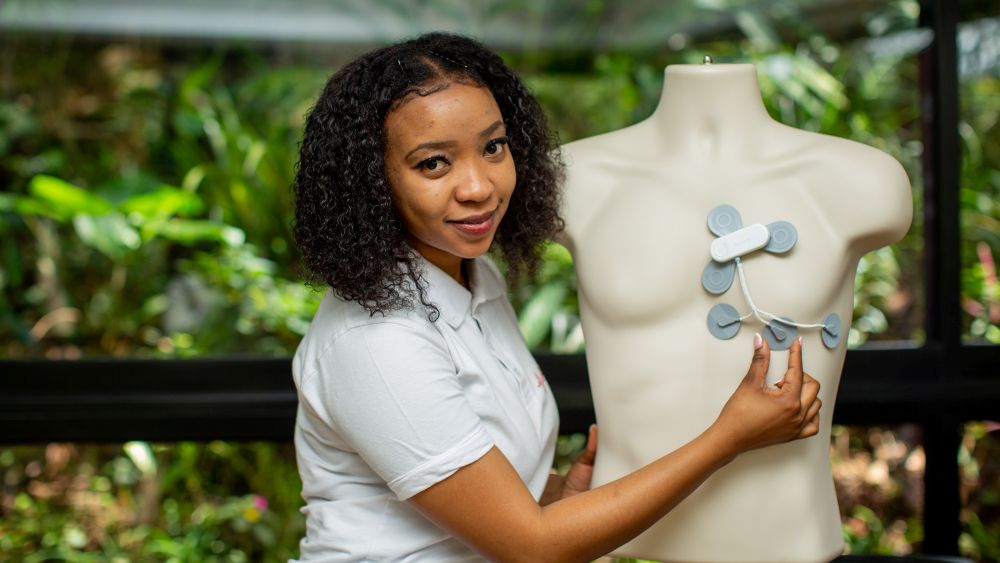
The result is MoyoECG, an AI-powered, wearable electrocardiogram platform developed through Aurora Health Systems.
Named after the Swahili word for “heart”, MoyoECG is designed for frontline healthcare workers in lower-resource facilities. It captures electrical signals from the heart and uses embedded artificial intelligence to support faster interpretation, helping identify abnormal rhythms and other cardiac conditions.
The practical details matter.
The device is designed to function in environments where reliable electricity and internet connectivity cannot always be guaranteed. That means a rural clinic does not necessarily have to wait for a patient to reach a major hospital before cardiac screening can begin.
Clinical pilots have shown strong diagnostic performance for arrhythmias and cardiac abnormalities, while reducing interpretation time from roughly 30 minutes to less than five.
Making Early Diagnosis More Accessible
The value of MoyoECG extends beyond shortening a diagnostic process.
When cardiac problems are detected earlier, healthcare workers have a better opportunity to identify patients who need urgent specialist attention. This can be particularly important in communities where travelling to a referral hospital is expensive, time-consuming or simply difficult.
The technology also has potential applications in maternal health, where cardiac complications can go undetected and contribute to serious outcomes.
Muhuhu’s work is therefore tackling a familiar African healthcare challenge from a different direction: rather than waiting for patients to reach specialist centres, bring useful diagnostic capacity closer to them.
Aurora Health Systems has expanded MoyoECG into additional districts in Kenya and is benchmarking the technology in Rwanda ahead of a planned market launch.
Read: Shifra Ainomugisha’s Journey from Family Farm to Global Recognition
An African Solution With Global Potential
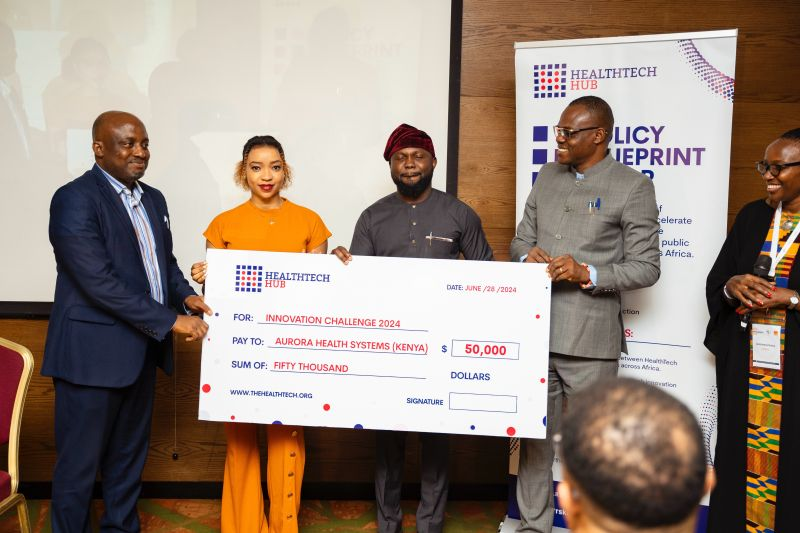
Muhuhu’s innovation has already attracted international attention. MoyoECG was named a Top African Winner by Qualcomm in 2024 and won the HealthTech Hub Africa Innovation Challenge. Its work has also received recognition from the Kenya Cardiac Society and appeared in the Cardiovascular Journal of Africa.
The project is contributing to another important area too: African medical data. Building larger ECG datasets from African populations can help improve future diagnostic tools and address gaps in global medical datasets.
For Muhuhu, the bigger opportunity is clear. Africa needs medical technologies that understand its infrastructure, populations and healthcare realities.
MoyoECG is one example of what that can look like.
And as Aurora Health Systems works towards wider deployment, Dr. Alice Muhuhu is showing that the future of African healthcare can be shaped by people who understand both sides of the problem: the doctor who sees the patient, and the innovator asking how technology can help them sooner.
Follow RefinedNG for more stories spotlighting Africans building practical solutions for the challenges around them.