
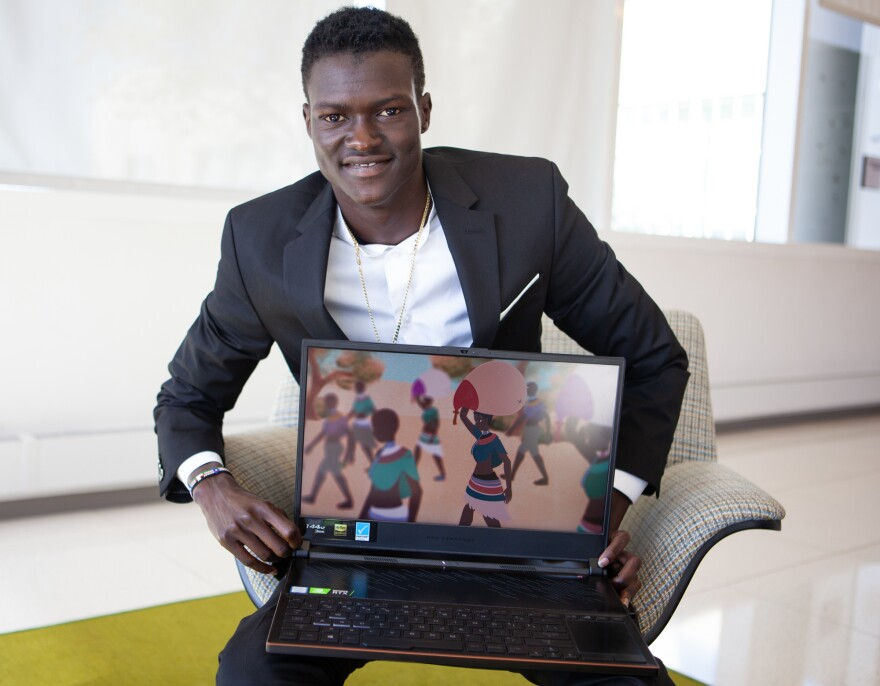
For most teenagers, discovering a computer can open a world of entertainment, schoolwork and endless possibilities. For Lual Mayen, it became something much bigger. Growing up in a refugee settlement after his family fled the conflict in South Sudan, Mayen encountered technology at a time when basic necessities were often difficult to secure. Years later, that same computer would help him build games designed to make people think differently about conflict, peace and what is possible.
Today, Mayen is a South Sudanese video game developer, designer, social entrepreneur and founder of Junub Games. His journey shows how an African creator turned a tool he had almost no access to into a platform for telling stories that matter.
Read: Why Seun Rasheed Chose Rwanda to Build a Thriving Agribusiness
A Computer, a Refugee Camp and an Unlikely Beginning
Mayen was born in 1993 while his family was fleeing conflict. He spent more than two decades in refugee settlements in Uganda, where everyday life was shaped by displacement and uncertainty.
Then, in 2007, he saw a computer for the first time.
The fascination stuck. His mother eventually spent years saving money from her sewing work to buy him one. Getting the computer was only the beginning. There was no convenient classroom waiting for him, and reliable electricity was another challenge. Mayen would walk for hours to a United Nations facility to charge the computer and download tutorials that could teach him how to use it.
He taught himself graphics, programming and software development, turning curiosity into a practical skill. Even when people around him questioned whether computers could give him a future, he kept learning.
What If Games Could Teach People to Save?

Mayen’s introduction to video games came through Grand Theft Auto: Vice City. The experience made him think about something deeper than gameplay.
He had lived through conflict. He had seen what violence could do to families and communities. So he began asking a simple but powerful question: if games could put players in the middle of violence, could they also put players in situations where they had to protect people?
That question shaped his approach to game development.
Rather than simply reproducing stories created elsewhere, Mayen wanted to build games that reflected South Sudanese realities and encouraged young people to think about peace, unity and cooperation. His games became a way to explore difficult ideas through something young people already understood: play.
From a Refugee Camp to Junub Games
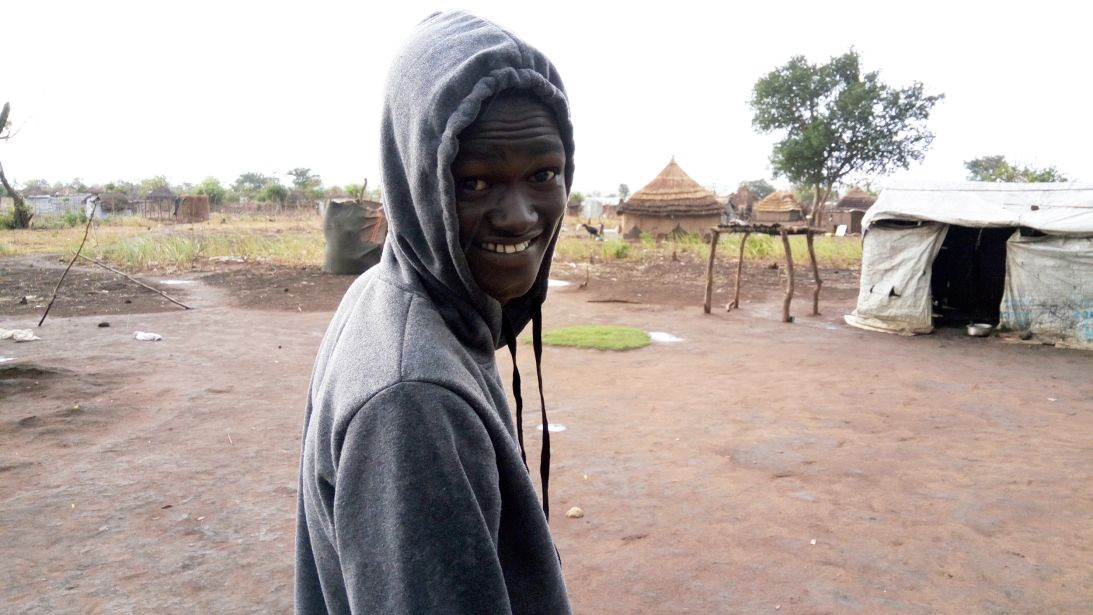
Mayen eventually founded Junub Games, creating a studio focused on games that promote peace and social change. His early work showed what could happen when local creativity met technology, even without the infrastructure usually associated with the global gaming industry.
One of his earliest games, Salaam, meaning “peace” in Arabic, places players in the position of someone trying to survive conflict. Instead of rewarding destruction, the game asks players to find food, water and medicine while helping their character reach safety.
That concept gave Mayen an unusual way to discuss the refugee experience. Players were no longer simply reading about displacement. They were interacting with a story built around survival, vulnerability and the search for safety.
His work also expanded into physical games. Wahda, meaning “unity”, uses cards featuring concepts such as love, peace, food and war, encouraging players to think about how positive choices can counter destructive ones.
Read: Shalom Osiadi Saw What Banking Missed. Then He Built Esca.
Building More Than Games
For Mayen, game development has always been connected to a larger ambition.
He has spoken about using technology to give young people in refugee communities access to skills, inspiration and opportunities. His work has included engaging refugee communities with games and organising South Sudan’s first Game Jam, creating space for people interested in developing games and exploring technology.
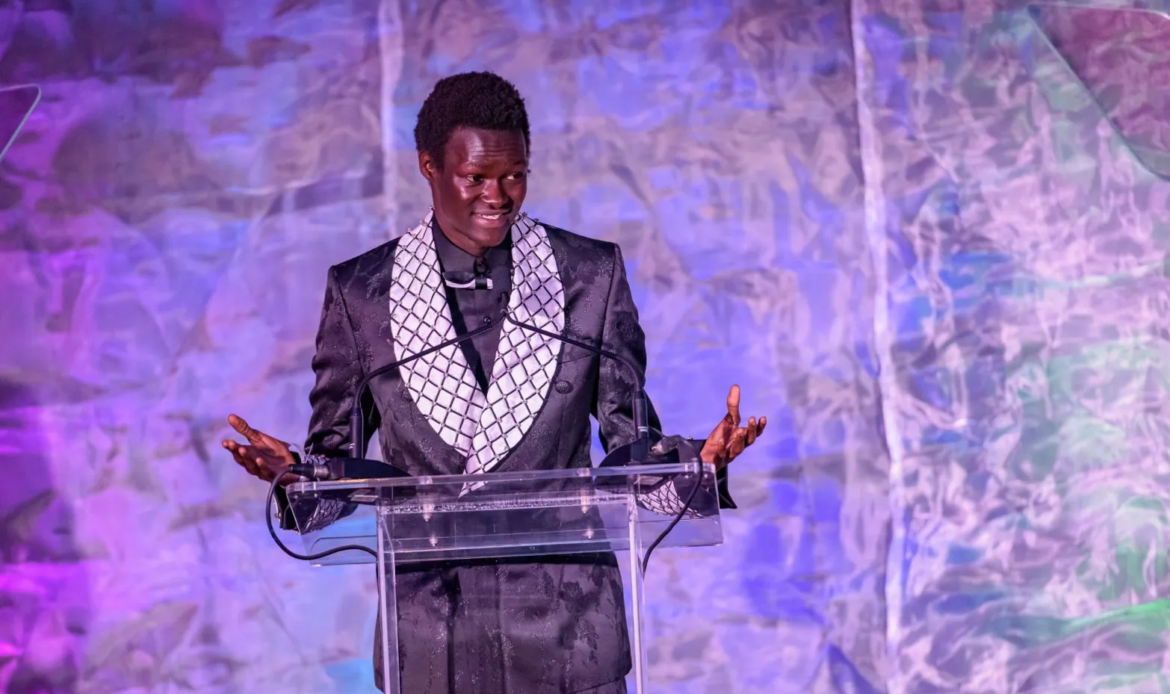
His achievements have also taken him onto the global stage. In 2018, he was recognised as a Global Gaming Citizen at The Game Awards. In 2020, CNN named him a Champion for Change. He has also received the Muhammad Ali Humanitarian Award and a Chanel Next Prize.
But perhaps the most interesting part of Mayen’s story is where it began. The computer his mother struggled to afford did not simply become a personal escape. It became a bridge between his experience and a wider audience.
Lual Mayen’s story is a reminder that African innovation does not always begin with perfect infrastructure, abundant funding or a conventional career path. Sometimes, it begins with a young person seeing a computer for the first time and deciding to learn what it can do.
His games are part of a bigger ambition: to help young Africans see technology as something they can use to build, tell their own stories and imagine different futures.
What African stories would you like to see turned into video games? Share your thoughts, and follow RefinedNG for more stories about Africans building new possibilities from where they are.