
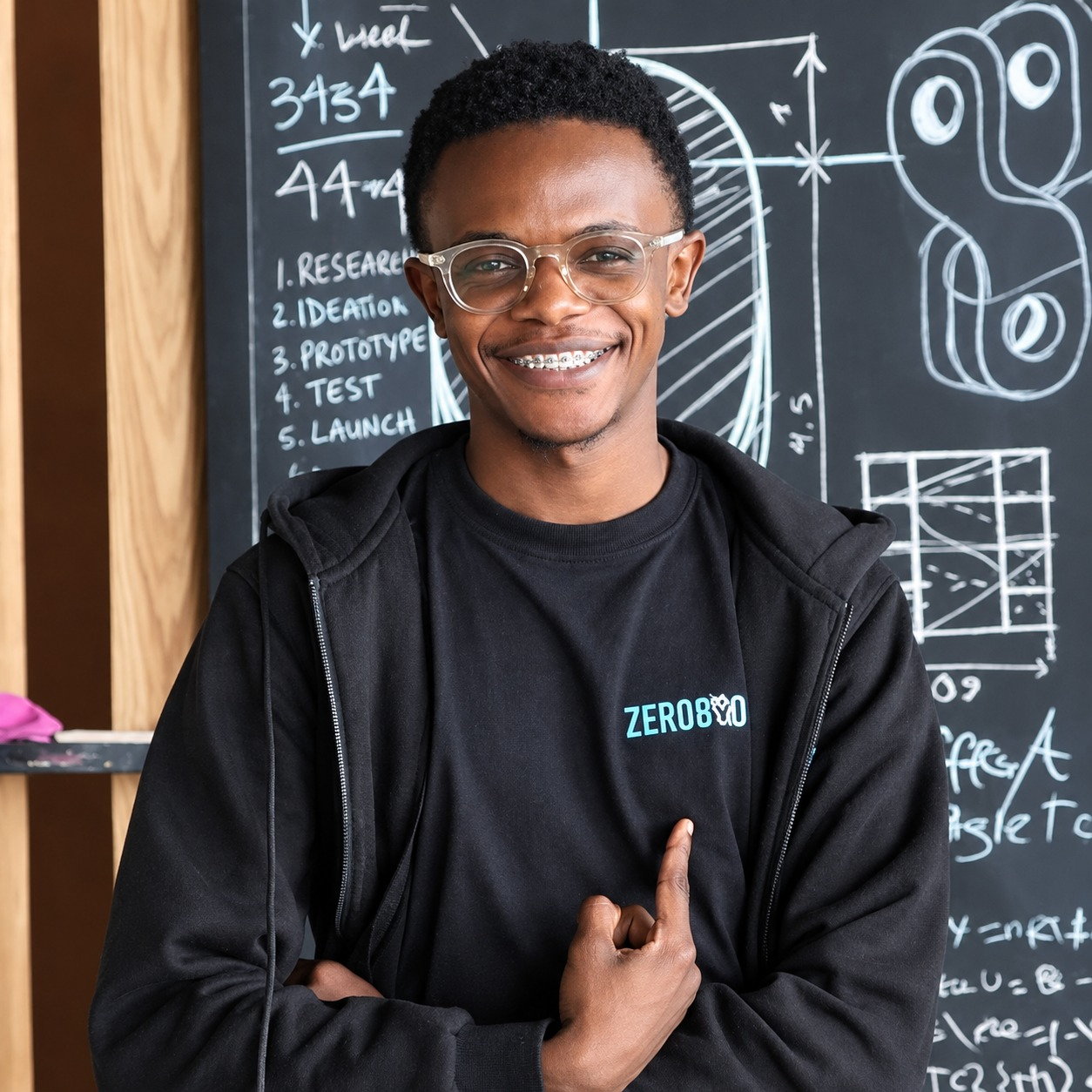
Most 21-year-olds are figuring out internships. Maxwell Opondo is figuring out how to make sure deaf students in Kenya never miss another science lesson.
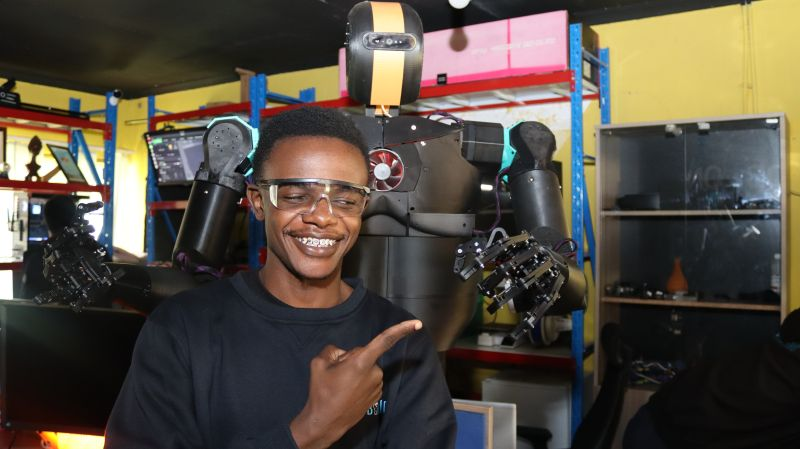
Opondo is the founder and CEO of Zerobionic, a Nairobi-based startup that builds humanoid robots from recycled plastic and 3D-printed parts. These robots sit in classrooms as live interpreters, listening to a teacher’s voice and translating it into sign language in real time, so deaf and hard-of-hearing students can follow STEM lessons that were previously inaccessible to them.
The robots are not a prototype sitting in a lab waiting for a funding round. They have already been piloted in schools across Machakos and Garissa counties, achieving 92 percent translation accuracy. That is not a concept. That is a working product, in classrooms, changing how students learn right now.
Related Story: Stephanie Egharevba on Building Inclusive Tech in Africa
The Problem He Decided to Solve
Deaf students in Kenya and across much of Africa face a specific and overlooked challenge in education. Even when they have access to schools, STEM subjects; mathematics, science, technology, require a level of real-time, complex instruction that most classrooms cannot provide in sign language. There are not enough qualified sign language interpreters, and the ones that exist are rarely in the classrooms that need them most.
Opondo looked at that gap and built something practical. His flagship robot, the Ubuntu-12, uses artificial intelligence and computer vision to pick up spoken language and convert it into sign language gestures instantly. It is built from recycled plastic and 3D-printed components, deliberately, because affordability is part of the point. A solution that only expensive schools can access is not really a solution.
The name Ubuntu is worth pausing on. It means “I am because we are” in several African languages. For a robot designed to make sure no student is left behind in a classroom, that framing was not accidental.
Read Also: Baratang Miya Is Creating Inclusivity for African Women in Tech
From a Secondary School Science Competition to Qualcomm
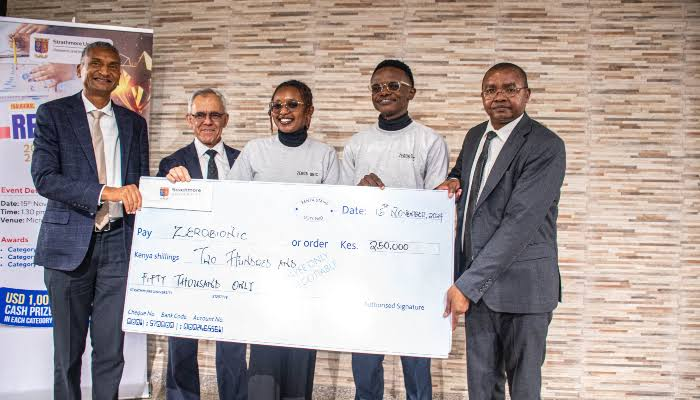
Opondo did not arrive at Zerobionic without a track record. In 2020, while still in secondary school, he won the Young Scientists Kenya Overall Winner award for an IoT security and climate project. He is currently completing his Computer Science undergraduate degree at Strathmore University, and he has been building alongside his studies for years.
The accolades since Zerobionic launched in 2023 have been significant. He won the Africa Tech Summit Young Tech Innovator Award in 2025. He was a Gold Winner at both the QS Quacquarelli Symonds Access, Diversity and Inclusion Awards and the Reimagine Education Awards in 2024. His work has drawn attention from global technology organisations including NVIDIA.
The latest recognition may be the most meaningful in terms of what comes next. Zerobionic was selected as Kenya’s sole representative in Qualcomm’s 2026 Make in Africa Mentorship Program, chosen from over 1,200 applicants across 45 countries. The program brings equity-free support: engineering mentorship from Qualcomm’s teams, intellectual property training, a $5,000 stipend, and a shot at grant funding at the program finale.
For a young founder building hardware in Nairobi, that kind of structured technical support is genuinely valuable, not just the money, but the access to engineering expertise that can help the product scale.
Read Also: How Swim in 1 Day Africa Is Redefining Inclusion
What He Is Building Toward
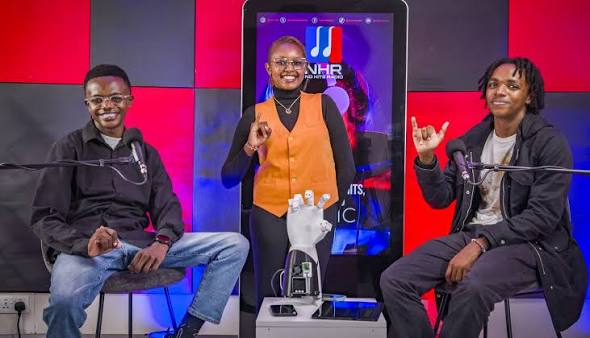
Zerobionic’s ambition extends beyond classrooms in Machakos and Garissa. Opondo has spoken about building technology that represents Kenya and the African continent on the global stage, not as a recipient of innovation, but as a source of it.
His robots are made in Africa, from materials sourced in Africa, solving a problem that affects millions of Africans. That combination of local production, social mission, and technical credibility is what has made the startup stand out in a crowded field of African tech narratives.
He is 21 years old and has not yet finished his undergraduate degree. The scope of what he has already shipped is worth sitting with.
Follow RefinedNG for more stories spotlighting Africa’s next generation of innovators and builders. Visit us at www.refinedng.com or subscribe to our newsletter to stay connected.