
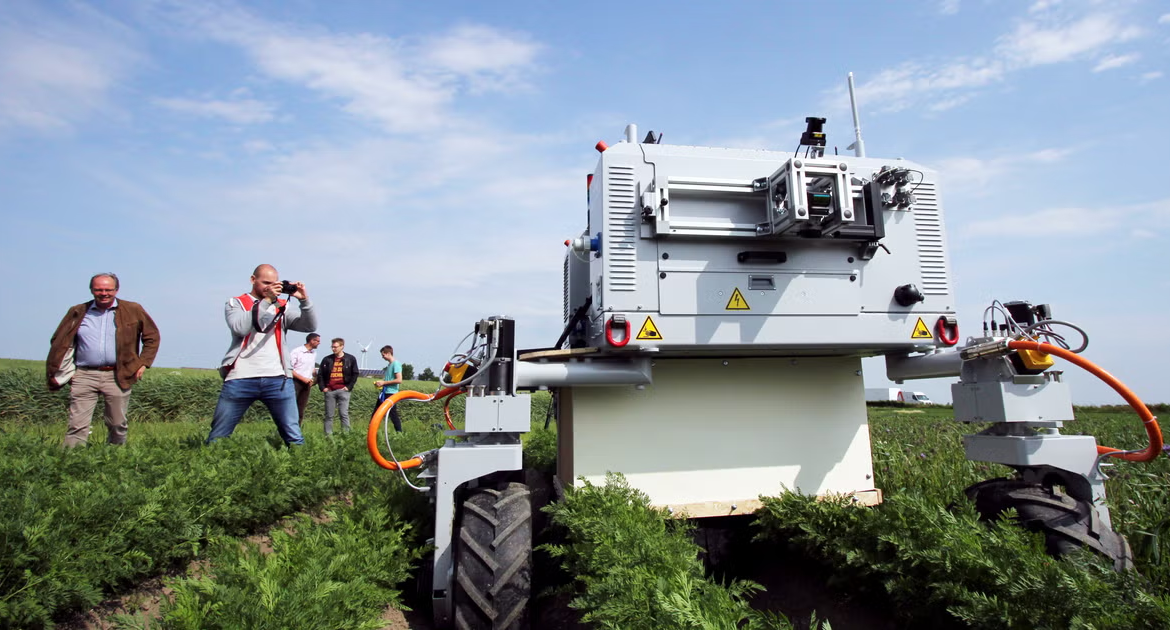
Imagine a machine moving through a farm, identifying ripe crops and harvesting them with robotic arms. It can work for long hours, follow its route across the field and carry out harvesting tasks with limited human intervention. This is the technology developed by Egrobots, an Egyptian robotics startup bringing artificial intelligence into agriculture.
The company’s autonomous harvesting robot can process approximately 160 kilograms of crops per hour and can be fitted with up to four robotic arms. Developed by Egyptian engineers, the machine offers an interesting look at how homegrown technology could help address some of the challenges facing modern farming.
You May Also Like: Nigerian Developers Turn Everyday Lagos Life Into Games
How Does the Harvesting Robot Work?
The robot combines artificial intelligence (AI), computer vision and autonomous navigation to carry out its tasks.
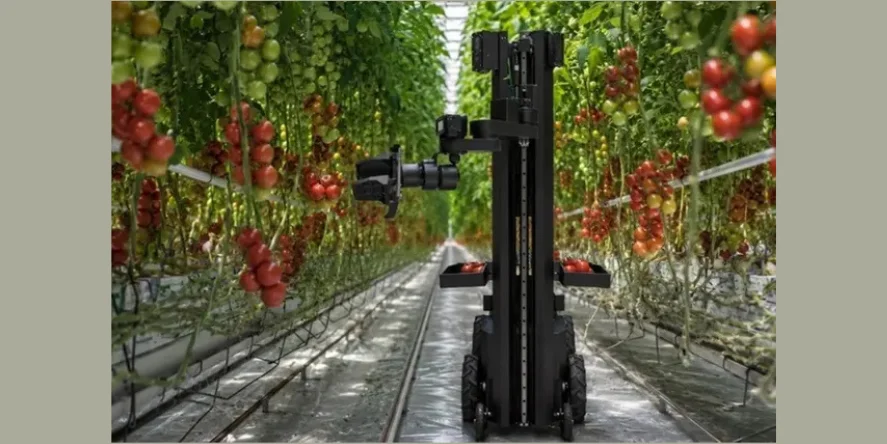
Computer vision allows a machine to interpret visual information from its surroundings. In agriculture, this can help a robot recognise crops and distinguish ripe produce from items that are not ready for harvesting. AI helps the system process information, while autonomous navigation enables it to move through a farm and determine suitable paths for its work.
The robot can operate with as many as four robotic arms working simultaneously. According to reports on its launch, it can achieve a harvesting rate of around 160 kilograms per hour and is designed for continuous operation.
However, actual performance can depend on the crop, farm layout and harvesting conditions. Different fruits and vegetables require different handling methods, so the machine’s effectiveness across various crops will be an important factor in its wider adoption.
Why Could This Matter for Farmers?
Harvesting is a demanding stage of agricultural production. Farmers often need additional workers during short harvesting windows, and delays can leave ripe crops exposed to spoilage or other losses. Labour shortages and rising operating expenses can make the process even more difficult.
An autonomous harvesting system could help farms manage some of these pressures by taking on repetitive tasks and supporting workers during busy periods. If it proves reliable and affordable, the technology could help commercial farms improve efficiency and reduce their dependence on seasonal labour.
There are practical considerations, though. Agricultural robots must operate in changing weather conditions, navigate uneven terrain and handle delicate produce without causing damage. Farmers would also need access to maintenance, spare parts, technical support and financing.
These factors will influence whether the technology becomes a practical option for farms beyond early deployments.
Meet Egrobots, the Egyptian Robotics Startup
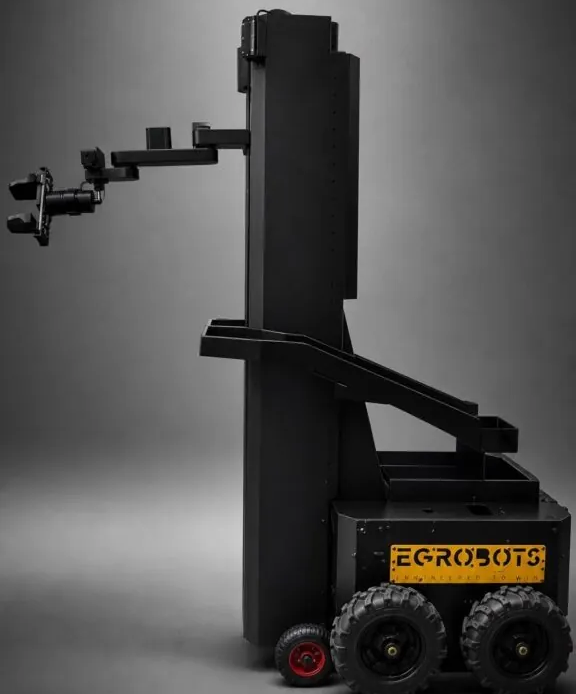
Founded in Egypt in 2023 by Akhlad Alabhar and Amr Saleh, Egrobots develops robotics and autonomous systems for agriculture, industry and public services. Its work focuses on what is known as physical AI, which refers to intelligent systems that interact with and perform tasks in the physical world.
The company has also developed a traffic robot in collaboration with Egypt’s Ministry of Interior. It is working on additional robotics applications, including humanoid systems and solutions for manufacturing.
Egrobots is part of the Google for Startups programme and NVIDIA Inception, initiatives that support startups and technology developers. Its agricultural robot reflects a broader ambition to build advanced technology using local engineering expertise.
Trending Story: Lagos Life Raises $500,000 After 4.7 Million Players
What This Means for African Innovation
Much of the public conversation about artificial intelligence centres on chatbots, writing assistants and digital tools. Egrobots offers another perspective: AI can also control machines that perform physical work in farms, factories and public spaces.
Developing this kind of technology locally can create opportunities for engineers, robotics specialists, technicians and manufacturers. It can also help build expertise that may be applied to other industries.
For African agriculture, the long-term opportunity lies in developing solutions suited to local farming conditions and making them accessible to the people who need them. The next important step for Egrobots will be demonstrating how effectively its robot performs in commercial farming environments and whether farmers can adopt it at a sustainable cost.
Did you know Egyptian engineers had developed an autonomous agricultural harvesting robot? Follow RefinedNG for more stories about African innovation, technology and achievements.