
Nigeria has recorded a major milestone in healthcare technology after doctors successfully performed the country’s first tele-robotic surgery, allowing a patient in Abuja to undergo a complex kidney cancer operation while the surgeon operated remotely from Ogun State.
The procedure took place in real time on Saturday, connecting Nisa Premier Hospital in Abuja with the surgical team at Redeemer’s Health Village (RHV) in Ogun State. The collaboration involved RHV, RoboMed Global and Nisa Premier Hospital, bringing together medical expertise and robotic technology across two locations.
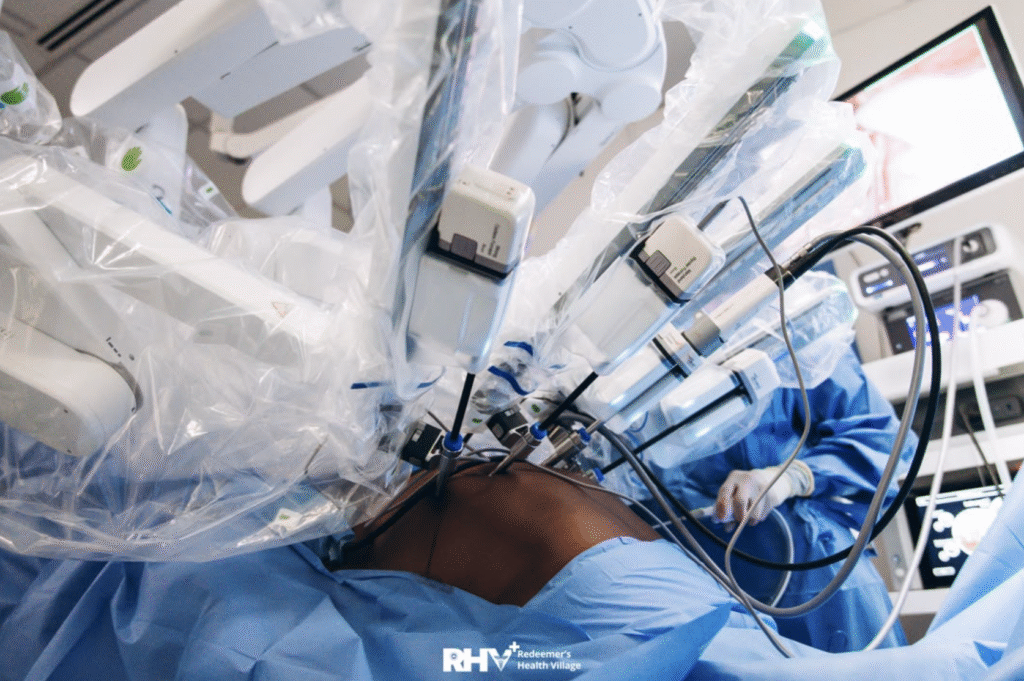
The operation was a telesurgery-assisted, robot-assisted right radical nephrectomy, a procedure involving the removal of a kidney affected by a cancerous tumour. The development has been described as the first telesurgery procedure in West Africa.
Read: HelpMum Africa Wins Grand Prize for AI for Social Impact
Nigeria Records First Tele-Robotic Surgery
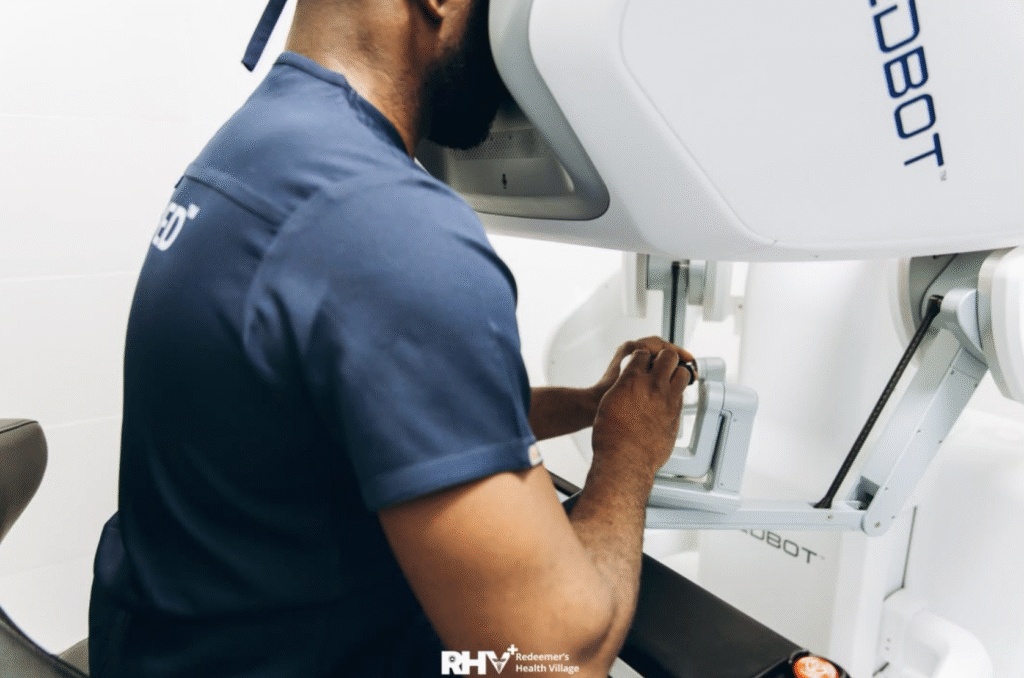
The surgery was led by Professor Obi Ekwenna-Davis, Professor of Urology and Transplantation, who operated from a Toumai robotic surgery console at RHV while the patient remained in Abuja.
Tele-robotic surgery allows a surgeon to control specialised robotic equipment from another location, making it possible to provide surgical expertise without requiring the patient and surgeon to be in the same hospital.
According to Ekwenna-Davis, the approximately three-hour operation was completed successfully, with brief pauses taken to confirm that the equipment and supporting systems were functioning properly. The patient was reported to be in good condition and expected to leave the hospital within 24 hours.
The achievement also demonstrated the potential for hospitals in different parts of Nigeria to collaborate when delivering specialised medical care. Instead of moving patients long distances to access a particular surgeon, telesurgery can create a direct connection between specialist expertise and the patient.
Ekwenna-Davis said the milestone showed that telesurgery could be safely used to provide surgical care across different locations in Nigeria and potentially beyond.
Bringing Specialist Healthcare Closer to Patients
For Nigeria, the significance of the procedure extends beyond the technology used in the operating room. Access to highly specialised healthcare has often required patients to travel to major cities or outside the country, particularly when certain procedures or specialist expertise are unavailable locally.
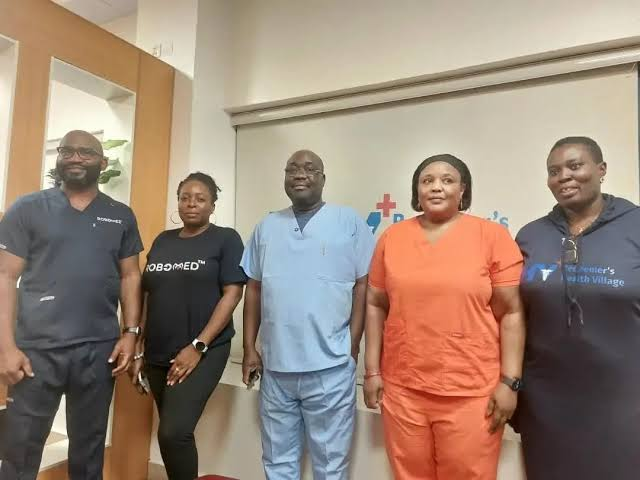
Dr Adedamola Dada, Chief Executive Officer of Redeemer’s Health Village, said the development demonstrated that Nigerians could access advanced medical care without travelling abroad.
RHV, a faith-based 300-bed multispecialty hospital established by the Redeemed Christian Church of God, has positioned healthcare innovation and access among its priorities. The hospital said robotic and telesurgery could help expand access to complex procedures while reducing the need for patients to seek specialist treatment overseas.
The technology could also allow specialist skills to reach patients in different parts of Nigeria. However, reliable connectivity, quality equipment and trained personnel remain important requirements for successful remote surgery.
The teams involved said measures had been put in place to reduce the impact of connectivity challenges, while acknowledging that factors such as weather conditions could affect network reliability.
Read: Did You Know Rwanda Has Created a Kinyarwanda Dictionary for Technology?
Training the Next Generation of Robotic Surgeons
Beyond completing the procedure, the healthcare institutions involved are looking to build the skills and infrastructure needed to make robotic surgery more widely available in Nigeria.
Ekwenna-Davis said a robotic academy is expected to be established to train surgeons and other healthcare professionals, with a target of training at least 150 surgeons within two years.
The proposed training will extend beyond doctors. RHV and RoboMed Global also plan to develop expertise among nurses, biomedical engineers and product specialists who will be needed to support robotic surgery programmes.
Dr Ibrahim Wada, founder and CEO of Nisa Premier Hospital, noted that his hospital has operated as a centre for robotic surgery in West Africa since November 2025. He described the latest procedure as an example of what Nigerian institutions can achieve by working together.
For Nigeria’s healthcare system, the next challenge will be turning this milestone into sustainable access. Continued investment in equipment, specialist training, connectivity and collaboration could determine how widely tele-robotic surgery can eventually be used.
Support the Future of Healthcare in Nigeria
Nigeria’s first tele-robotic surgery shows how technology can connect specialist expertise with patients across geographical boundaries. As the country develops its capacity for robotic surgery, the focus will now shift towards training more professionals and making these advanced procedures accessible to more Nigerians.
What role do you think technology should play in improving access to specialised healthcare in Nigeria? Share your thoughts and follow RefinedNG for more stories highlighting progress and innovation across Africa.