

Looking into Nigeria’s music industry, there are OGs before OGs — trailblazers whose influence stretches across generations. And what a few mention without saying eLDee?
Long before Afrobeats became the global phenomenon it is today, there were pioneers laying down the groundwork, fusing culture, rhythm, and innovation. Among them stands Lanre Dabiri, famously known as eLDee the Don — a name that echoes through the corridors of Nigerian music history as both architect and artist.
This spotlight takes a look at the journey of the Trybesman turned industry transformer — the man who didn’t just chase sound, but helped define it.
READ: Before the Queens of Now, There Was Sasha P
Early Beginning With Trybesmen

Born in Kaduna in 1977 and raised between the north and Lagos, eLDee’s early environment was a fusion of cultures, rhythms, and languages — perfect ingredients for a future tastemaker. Armed with a degree in architecture from UNILAG, he was already building frameworks — he had chosen beats over buildings.
In 1998, he co-founded Trybesmen with rappers KB and Freestyle. Their sound? A vibrant cocktail of hip-hop, highlife, Afrobeat, and streetwise Lagos flair. Tracks like “Trybal Marks” and “Shake Bodi” didn’t just bang in clubs — they cemented Trybesmen as one of Nigeria’s first authentic hip-hop groups, ushering in a new sonic identity.
But eLDee wasn’t just content being part of a trio. With a clear vision, he established Trybe Records, recruited a collective of 16 artists under Da Trybe, and released influential anthems like “Work It Out” and “Oya.” His eye for talent and drive to elevate the ecosystem positioned him early as a cultural curator.
The Solo Success Story

After relocating to the U.S. in 2002, many would’ve expected eLDee to blend into the diaspora, but he instead used the move as a launchpad. His first solo album, Long Time Coming (2004), announced a bold new phase. Two years later, Return of the King dropped — an iconic project that didn’t just dominate charts but also won “Best International Album” at the 2007 Nigeria Entertainment Awards.
The title was no bluff — eLDee was back, and this time in full command of his artistry.
The following years saw a string of high-quality projects: Big Boy (2008), Is It Your Money (2010), and Undeniable (2012). Whether he was flexing lyrical dexterity or switching into smooth melodies, each album showcased eLDee’s range and reinvention. Singles like “Big Boy” became generational soundtracks, blending swagger with social commentary.
More than just music, these projects became statements of identity, ambition, and legacy.
A Visionary Beyond Music

While many knew him for his bars and hooks, eLDee was equally at home behind the scenes. As a producer, director, and interactive media consultant, he constantly sought to innovate how Nigerian music was created, packaged, and consumed.
In 2015, he co-founded Playdata, Nigeria’s first official airplay tracking platform. This was game-changing for an industry long plagued by murky metrics and opaque radio play systems. Playdata brought data and transparency—tools essential for modern music markets.
From building a label to building tech, eLDee proved that his ambition was always larger than the charts. He was here to shift systems.
READ: Tunde Onakoya Sets New Guinness World Record With 64-Hour Chess Marathon in New York
Life After Music
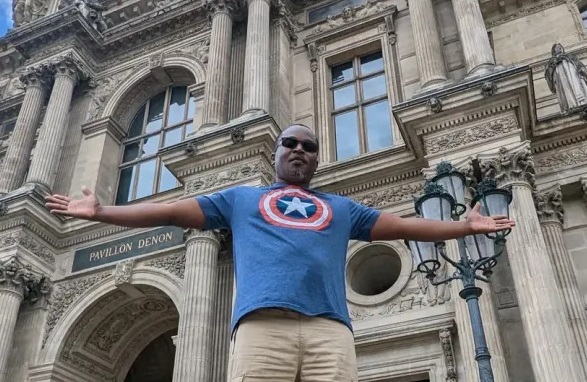
For someone who had become a cornerstone of Nigerian music, eLDee’s decision to retire in 2019 surprised many. But for him, it was a conscious and courageous pivot — one rooted in clarity and purpose. “The path my career was going would not make me have time for my family,” he shared candidly, a reflection of his evolving priorities.
Since stepping away from the spotlight, eLDee has embraced a quieter, more intentional life in Atlanta, USA, where he’s resided since 2002. Far from idle, he’s continued to thrive as a tech entrepreneur, digital strategist, and creative consultant, applying his talents to new industries while staying grounded in the values that shaped his musical journey.
Fatherhood and family remain central pillars of his life. His marriage to longtime partner Dolapo Latinwo-Bello and their two daughters, Temi and Toke, are constants in his world — a reminder that while his public persona may have changed, the core of who he is remains steady.
What’s most inspiring about eLDee’s retirement is that it wasn’t an end. It was a recalibration—a shift from being the voice in the room to being the architect of what’s next—whether in tech, media, or mentorship. He may no longer be on stage, but his influence continues to echo.