

Nearly three decades after his death, Fela Anikulapo-Kuti is about to receive one of global music’s highest honours. The Afrobeat pioneer has been named a recipient of the Grammy Lifetime Achievement Award, making him the first African musician to ever receive the distinction.
The announcement was made on the 19th of December 2025, with the Recording Academy confirming that Fela will be honoured during the Special Merit Awards ceremony on January 31, 2026, held during Grammy Week, one day before the main awards night. He will be celebrated alongside global icons including Whitney Houston, Cher, Chaka Khan, and Paul Simon.
For many, the recognition feels long overdue. Fela was never nominated for a Grammy during his lifetime, despite fundamentally reshaping modern music and culture. Yet in death, his influence has only expanded; crossing borders, generations, and genres.
Why Fela’s Grammy Moment Matters Now
Fela Anikulapo-Kuti was never just a musician. He was a political force, a cultural agitator, and a sonic revolutionary. In the late 1960s, he created Afrobeat, a genre that fused jazz, funk, highlife, traditional Yoruba rhythms, and radical political messaging into long, hypnotic compositions that challenged both musical convention and state power.
Read: Fela Kuti Honoured with 2025 Grammy Hall of Fame Award
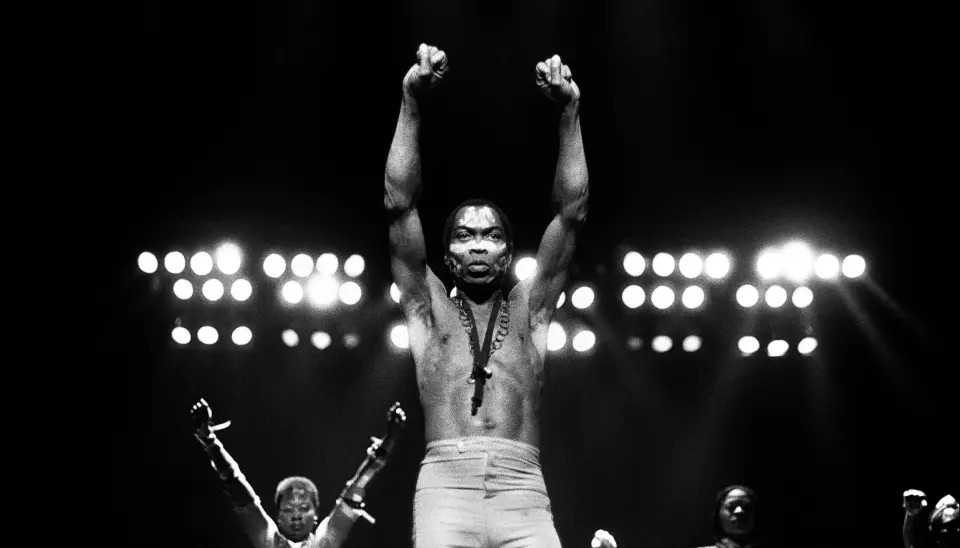
Singing largely in Nigerian Pidgin English, Fela made his music accessible across Africa and the diaspora. His sound was intentionally massive; bands of over 30 musicians, extended instrumental sections, layered horns, and polyrhythms that refused Western pop constraints. He rejected love songs, avoided radio-friendly formats, and released albums at a relentless pace.
But Fela’s art came at a cost. His outspoken opposition to Nigeria’s military governments led to repeated arrests, violent raids, and imprisonment. After the release of his 1976 album Zombie, which mocked the military, Nigerian soldiers famously burned his Kalakuta Republic compound. Fela was beaten unconscious, and his mother, Funmilayo Ransome-Kuti, later died from injuries sustained during the attack.
Despite this, his work endured. In 2025, Zombie was inducted into the Grammy Hall of Fame, accepted by his sons Femi and Seun Kuti, a symbolic passing of the torch. Today, Afrobeat’s DNA runs through modern Afrobeats, jazz, hip-hop, rock, and global pop. Artists from Beyoncé to Paul McCartney, Questlove, Thom Yorke, and Jay-Z have acknowledged his influence.
The Recording Academy itself described Fela as “an architect of Afrobeat, honoured for a lifetime of influence”, noting that his legacy continues through his family, the New Afrika Shrine, and the Kalakuta Museum.
A Global Legacy That Refuses to Fade

Fela’s impact did not end in 1997. His funeral reportedly drew over one million mourners, and his death helped spark wider public conversations around AIDS awareness in Nigeria. In 2002, his music powered the tribute album Red Hot + Riot, featuring Sade, D’Angelo, and Nile Rodgers. In 2009, his life inspired the Broadway musical Fela!, which earned 11 Tony Award nominations.
Now, as the Grammys prepare to honour him, Nigerian music is once again front and centre. Burna Boy is nominated for Best African Music Performance and Best Global Music Album, while Davido, Ayra Starr, and Wizkid also appear on the 2026 nominations list—artists whose careers exist in the world Fela helped build.
Read: Funmilayo Ransome-Kuti: The Fearless Nigerian Woman Who Drove Change
Why This Recognition Hits Home
Fela’s Grammy moment is not just about awards, it’s about acknowledgment. It’s a global institution finally recognizing an African artist who never waited for validation, yet shaped the very sound of global music.
For more stories on African icons, culture, and moments that shape global history, follow RefinedNG.