
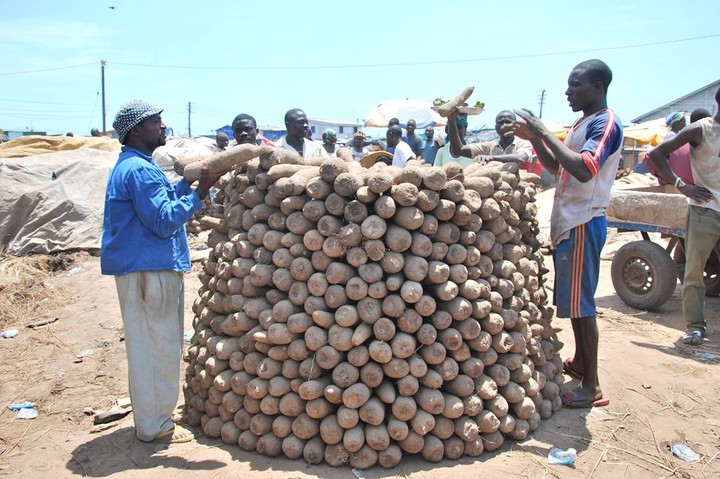
Benue State is often called the “food basket of the nation,” and for good reason. Its fertile soil produces yams, grains, and fruits that feed millions across Nigeria. Among the many farming communities that make this possible, the Igede people stand out with a proud tradition that ties food directly to culture. Every September, they gather to celebrate Igede Agba — a festival that marks the new yam harvest. On the surface, it looks like another harvest celebration, but it is more than that.
For the Igede, yam is not just a crop; it is the foundation of identity, unity, and thanksgiving. The festival is where history, spirituality, and community life come together. To understand Igede Agba is to see how food becomes more than survival — it becomes a story of who a people are and what they value.
Roots of the Celebration – The Ancestral Father Called Agba
Every tradition has an origin story, and for the Igede people, it begins with a man named Agba. Oral history remembers him as their ancestral father, the one who led the community through migration and settlement. His name lives on in the annual festival — Igede Agba — a way of honoring both ancestry and survival.
The timing of the celebration is just as symbolic. It happens in September, which the Igede count as the seventh moon, called Oya. In their calendar, this period carries spiritual weight, marking a season of renewal and thanksgiving. At the center of it all is yam, revered as the “king of crops.”
For the Igede, yam represents wealth, strength, and life itself. By celebrating its harvest, they are not only thanking the earth but also affirming their identity — a reminder that their culture, like yam, remains deeply rooted and sustaining.
Read: Why Benue is Nigeria’s Food Basket
The Forbidden Yam – Taboos, Rituals, and Thanksgiving

In Igede land, yam is never just food. It is sacred, and that sacredness comes with rules. Before the Igede Agba festival, no one dares to harvest or taste the new yam. Doing so would be a direct violation of tradition, one believed to anger the spirits and invite misfortune. At the heart of this taboo is Akpang, a revered deity whose role is to guard against premature harvesting. The community trusts Akpang to keep order until the appointed time.
When the festival finally comes, the mood shifts from restraint to thanksgiving. The people offer the first fruits of yam to Ohe Oluhye, the Sky-God, and Ohe Oleji, the Earth-God. This act is more than ritual — it is a public acknowledgment that survival depends on both heaven and earth.
There is also a rule of authenticity: the yam you present must come from your own farm. No shortcuts, no market purchases, no borrowed harvests. The festival teaches responsibility and honesty, reminding each family that gratitude must flow from their own sweat. In celebrating yam, the Igede reaffirm the values of patience, integrity, and deep respect for the unseen forces that sustain life.
Gathering at the Ugara – Families, Food, and Unwritten Covenants
The Igede Agba festival is not only about rituals in the open square — it also comes alive in the intimacy of family compounds. Every household observes a gathering at the Ugara, the father’s hut, where men assemble, while women meet in the senior wife’s hut. This separation is not division; it is structure, a way to honor tradition while keeping bonds intact.
A ritual handwashing sets the rhythm of the day: the father dips first, then the eldest son, followed by the rest of the family. The single basin of water is more than a vessel. It represents an unspoken covenant — unity, reconciliation, and peace within the household.
Only one meal is allowed for this sacred moment: pounded yam, smooth and heavy, served with meat portions carefully shared. As bowls are passed around, stories flow too. Elders recount migrations, youths listen, and laughter bridges generations. Within the Ugara, family is renewed, and every festival becomes a rehearsal of Igede identity.
From Drums to Dance – The Festival in Full Color

If the Ugara is quiet and sacred, the public square is its opposite — loud, colorful, and full of movement. Drums echo across villages, calling people out to dance. Masquerades arrive, their masks carrying ancestral energy, while young women showcase grace and culture in the Adiya beauty contest.
No festival is complete without drinks. Locally brewed Apio, Oburukutu, and Ogene flow freely, fueling conversations as neighbors and visitors mingle. Farmers, the backbone of Igede life, are honored too. Special recognition goes to those with the largest yam barns — proof of resilience, sweat, and abundance.
Hospitality runs deep. Families clear footpaths for neighbors, exchange gifts, and send food across compounds. The celebration is not confined to individuals; it spills into the entire community, stitching together kinship and pride. In the music, the dance, and the taste of yam, Igede Agba becomes a shared memory that binds the people long after the drums fall silent.
Read: Did You Know Nigeria Once Had Its Own Writing System?
Igede Agba Today – Tradition in a Modern World
Igede Agba has survived generations, and it continues to thrive in both local villages and diaspora communities across Nigeria and beyond. What once might have been misunderstood as a fetish practice is today embraced as a cultural thanksgiving. Even Christians in Igede land actively take part, seeing it as a way to honor God for the gift of harvest rather than a conflict with faith.
The festival has also evolved into a forum for progress. Communities use the period to plan collective projects, reconcile lingering disputes, and strengthen bonds before the next planting season. For many, it is both a spiritual reset and a civic duty rolled into one. In this way, Igede Agba proves that tradition does not fade when society modernizes; instead, it adapts, carrying its wisdom into every new era.
Why Igede Agba Matters
Igede Agba is more than a harvest ritual. It is a reminder of peace, unity, and renewal — values as important today as they were centuries ago. In celebrating yam, the “king of crops,” the Igede people reaffirm Benue’s proud place as Nigeria’s food basket. The festival itself becomes living proof of how culture keeps communities grounded while feeding the nation.
Festivals like Igede Agba remind us that food is not just eaten; it is shared, remembered, and celebrated as heritage. Every pounding of yam, every drumbeat, and every handshake at the Ugara is a thread in Nigeria’s cultural fabric.
Follow RefinedNG for more stories that reveal the richness of African heritage — from food and fashion to history and innovation.