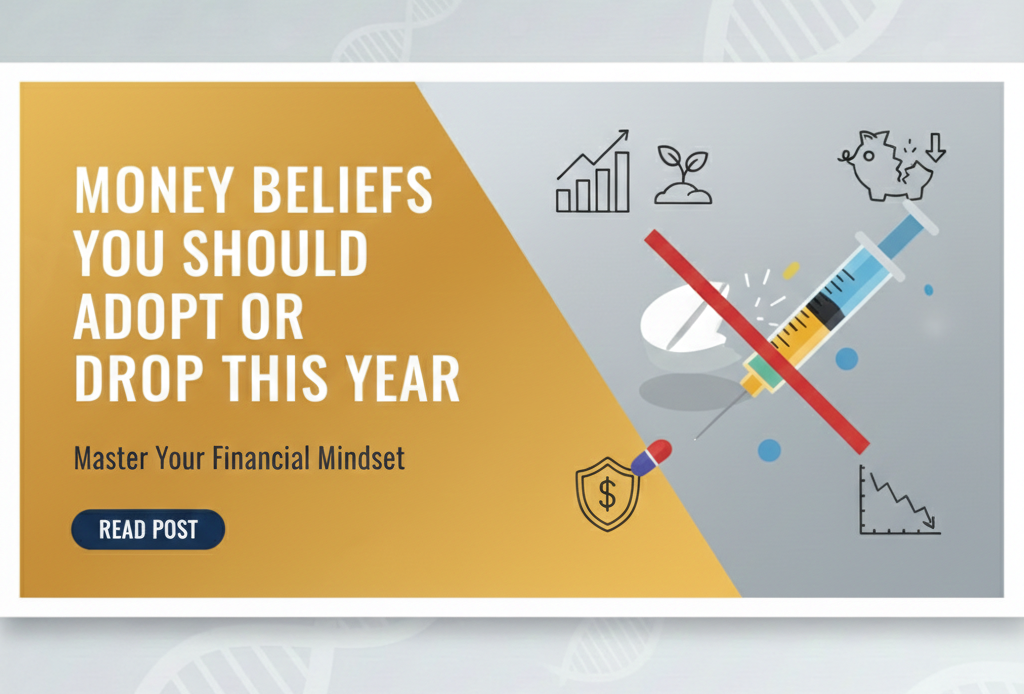
2026 is not the year to be casual about money. The cost of living remains high, interest rates are unforgiving, and small financial mistakes now carry bigger consequences. More importantly, many people are not struggling because they don’t work hard, but because they are operating with beliefs about money that no longer serve them.
Money decisions are shaped less by income and more by mindset. What you believe about saving, debt, investing, budgeting, and money conversations quietly influences how stable or stressed your life becomes. This year is not about perfection or sudden wealth. It is about clarity, intention, and replacing habits that drain you with beliefs that protect and grow you. The smartest financial move in 2026 is not earning more, but thinking better.
1. ADOPT: Start Saving Now, Regardless of Income
Waiting until your income increases before you start saving is one of the most common financial traps. The truth is, expenses grow alongside income. There is always another bill, another responsibility, another reason to delay. Saving is not something you graduate into; it is a habit you build where you are.
Even ₦1,000 a week matters. Not because it will make you rich overnight, but because it builds discipline, consistency, and awareness. Saving teaches you to live slightly below your means and prepares you for emergencies before they arrive. This year, saving is not about the size of your income. It is about starting now and proving to yourself that you can be consistent.
Read: Why You Should Take Financial Literacy Seriously in 2026
2. DROP: Treating Debt as a Lifestyle
Debt has become too normal. Many people borrow casually, assuming they will “figure it out later”. High-interest loans, however, are not neutral. They quietly compound stress, reduce flexibility, and keep people running in circles financially.
This does not mean all debt is bad. Borrowing can be useful when it is intentional, calculated, and tied to clear value. In 2026, the goal is not to borrow freely, but to borrow wisely or not at all when unnecessary. Before taking any loan, understand the interest, the timeline, and the real cost. Debt should support progress, not replace planning or fund convenience.
3. DROP: Investing Is Only for the Rich
Investing is often misunderstood as something reserved for people with millions. That belief keeps many people stuck in saving alone, missing the power of growth. The reality is that investing today is more accessible than ever.
Stocks, treasury bills, mutual funds, and digital savings platforms allow you to start small and learn as you go. What matters most is time and consistency, not the amount you begin with. Starting early gives your money room to grow and protects you from inflation slowly eroding your savings. In 2026, investing is not about showing wealth. It is about building it patiently.
4. ADOPT: Budgeting as a Financial Superpower
Spending as money comes in feels easy, but it quietly kills financial freedom. Without a budget, money disappears without explanation, and saving feels impossible. Budgeting is not punishment. It is awareness.
A simple structure works: essentials, savings, and fun money. When every naira has a job, spending becomes intentional instead of emotional. You stop guessing and start deciding. Budgeting helps you see leaks, adjust priorities, and plan ahead. In 2026, budgeting is not about restriction. It is about control. When you know where your money goes, you stop wondering where it went.
5. ADOPT: Open Conversations About Finances
In many Nigerian homes, money is not discussed openly. People struggle in silence, repeat mistakes, and avoid asking questions. This silence is expensive. It limits learning, accountability, and growth.
Talking about money does not mean oversharing or comparing yourself to others. It means having honest conversations with trusted people about goals, challenges, and progress. These conversations create accountability, expose better ideas, and open unexpected opportunities. This year, silence is no longer protection. Knowledge shared responsibly builds confidence, clarity, and smarter decisions.
Read: 7 Financial Mistakes to Avoid Early in the Year (And What to Do Instead)
Transforming Beliefs for a Stronger Financial Future
Money in 2026 will reward intention and punish guesswork. The beliefs you adopt and the ones you drop will quietly shape your stability, peace of mind, and future options. Financial growth does not start with income increases; it starts with mindset shifts repeated daily.
You do not need to change everything at once. One new belief practiced consistently can change your financial direction. As this year unfolds, ask yourself honestly: which money belief is holding you back, and which one are you ready to adopt? The answer may be the most important financial decision you make in 2026.
At RefinedNG, we believe financial knowledge should be simple, practical, and rooted in real life. That’s why we break down money topics without the complexities and tell stories that help you make better decisions every day.
If you’re already following RefinedNG, congratulations, you’re growing daily. If you’re not, you’re probably not going to see us again. Follow RefinedNG for thoughtful conversations on money, business, and everyday life, because in 2026, staying informed is your strongest advantage.