

AFCON has always moved like a rhythm. Every two years, new heroes emerge, old faces disappear, and fresh stories take over the continent. Jerseys change. Stadiums change. Even the tournament itself keeps evolving. But every now and then, there is a name that refuses to fade with time. A player you don’t just remember for a goal or a headline, but for being there again and again.
Rigobert Song was that presence. Not a figure fans read about in history books, but one they grew up watching. From grainy television broadcasts in the 90s to packed stadiums in the 2000s, he kept returning, carrying Cameroon’s colours with quiet authority.
Eight Africa Cup of Nations appearances. More than anyone else. But this story is not about counting tournaments. It’s about endurance. About staying relevant in a competition that chews up careers and moves on without apology. Song didn’t chase moments. He stayed long enough to become one.
Eight AFCONs, One Constant Presence
Appearing at eight Africa Cup of Nations tournaments is not just rare, it is almost unimaginable in African football. AFCON is unforgiving. It demands physical durability, tactical discipline, and the mental strength to return every two years knowing nothing is guaranteed. Yet from the mid-1990s to 2010, Rigobert Song kept showing up, wearing Cameroon’s colours as the game around him changed.
Read: AFCON 2025: The 5 Countries That Have Won the Most Titles

He played alongside different generations of teammates and under multiple coaches, each with their own ideas and expectations. Systems shifted. Defenders became more technical. Football grew faster and more scrutinised. Through it all, Song adapted without reinventing himself. He remained the same direct, disciplined defender, focused on positioning, timing, and responsibility. That consistency made him reliable in a tournament that punishes uncertainty.
His record of 35 consecutive AFCON matches underlines that trust. Modern international football rarely allows such continuity. Injuries, form, politics, and selection battles usually intervene. Song avoided all of that not through noise or controversy, but through availability and performance. Coaches knew what they were getting when they selected him.
Leadership followed naturally. Song captained Cameroon in five AFCON tournaments, a reflection of belief rather than status. He did not lead through speeches or gestures. He led by staying fit, by playing through pressure, and by being present when it mattered most. In a competition where careers rise and fall quickly, his longevity raises a simple question: how does a player remain relevant for that long in African football?
Leadership Without Noise: How Song Became “Big Chief”
Rigobert Song never fit the image of a theatrical leader. He did not dominate headlines or rely on charisma. His authority came from something simpler and harder to sustain: presence. On the pitch, he played with calm aggression, committed to every duel but rarely distracted by the moment around him. Teammates responded to that steadiness, especially in a tournament as volatile as AFCON.
The nickname “Big Chief” was not a personal brand or media invention. It emerged organically, tied to how he carried himself across matches and seasons. Even when circumstances shifted, including periods where he lost the captain’s armband, Song remained central. He played through criticism, absorbed responsibility during difficult campaigns, and stayed available when Cameroon needed stability rather than spark.
That approach paid off over time. Cameroon’s AFCON triumphs in 2000 and 2002 did not mark sudden peaks in Song’s career; they rewarded years of consistency. He was not the face of those tournaments, but he was part of their backbone. While others enjoyed bursts of attention, Song offered continuity, helping hold teams together across long competitions.
His leadership was not about control or spectacle. It was about reliability under pressure, about showing up regardless of mood or momentum. As AFCON cycles turned and new stars emerged, Song remained. That endurance invites a deeper look beyond leadership, into how his body, discipline, and mindset lasted in a competition that routinely wears players down.
Growing Up on the Continental Stage
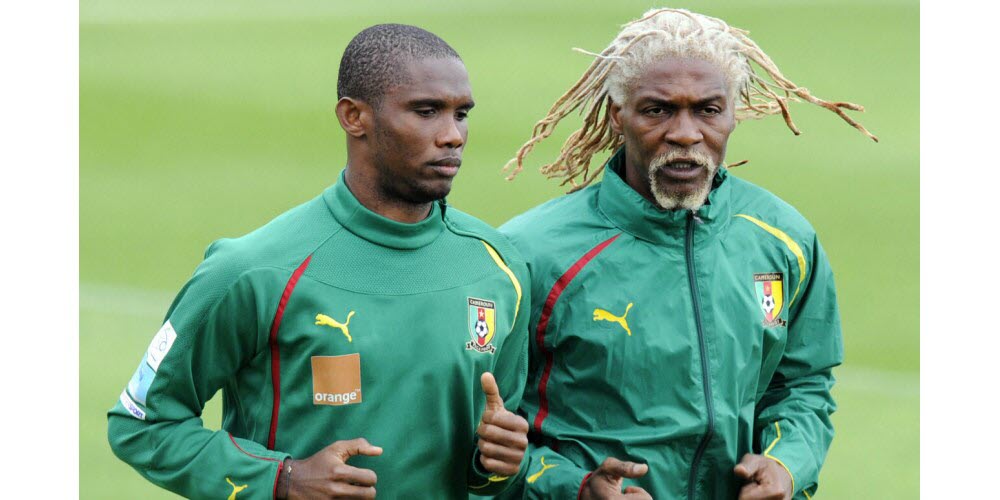
Rigobert Song’s AFCON story began unusually early. He made his debut as a teenager, stepping into a tournament that rarely waits for players to find themselves. For African fans, that meant watching him grow up in real time. Each AFCON cycle did not just bring a new Cameroon squad; it brought a slightly different version of Song.
Those early years were not spotless. He collected red cards, made positional errors, and occasionally let emotion overtake judgment. But those moments were never hidden or softened. AFCON is a public stage, and Song learned there, under continental scrutiny. Rather than define him, those mistakes shaped him. With each tournament, his game slowed, his reading of danger improved, and his reactions became measured.
Over time, the raw defender gave way to an organiser. He began directing lines, managing space, and absorbing pressure so others could play. That evolution allowed him to bridge generations seamlessly. He shared the pitch with icons like Roger Milla and later anchored teams built around Samuel Eto’o, remaining relevant as Cameroon’s football culture shifted.
By the time his AFCON journey reached its later chapters, Song was no longer learning on the job. He had become part of the tournament’s memory itself. And that role extends beyond AFCON, shaping how his career is remembered across African football.
Beyond the Numbers: What His Record Really Means
Eight AFCON tournaments read like a statistic, but in African football, the number only tells a fraction of the story. Each edition comes with its own demands: long travel routes, shifting climates, intense scrutiny from fans, and the weight of national expectation. Teams change, federations change, coaches rotate, and football politics evolve. Staying present through all of that is never accidental.
For Song, selection across eight AFCONs meant more than fitness. It meant trust. Coaches kept calling his name because he understood tournament football, handled pressure without unraveling, and adapted as the game around him changed. Younger players arrived with speed and flair, systems became more tactical, and expectations grew louder. Song adjusted without forcing reinvention.
In African football culture, longevity carries its own respect. It signals reliability, sacrifice, and an ability to endure conditions that shorten many careers. Few players remain relevant long enough to serve as reference points for multiple generations.
That is why Song’s record matters. Not as a badge of accumulation, but as proof of durability in a game that rarely allows it. And when AFCON memories resurface, his name appears not as a moment, but as a constant.
Read: Davido Headlines AFCON 2025 Opening Ceremony in Morocco
Why Rigobert Song Still Matters Today

Rigobert Song’s legacy isn’t measured in flashy moments or viral highlights, it’s in consistency. For today’s players and fans, his career offers a lesson that durability and reliability are as valuable as talent. Appearing in eight AFCONs, captaining Cameroon multiple times, and maintaining form across generations wasn’t about headlines; it was about trust earned day after day on the pitch.
Even after retiring, Song continues to shape African football, now as a coach and mentor. He guides new talents, passing on the lessons learned from decades of tournament battles. His presence off the field mirrors the steadiness he displayed on it: calm, committed, and impactful without needing the spotlight.
Some players define a single tournament; Song defined eras. That’s why his name will always appear in AFCON conversations; not because he shouted the loudest, but because he stayed the longest. In a continent where football is woven into memory and identity, his story remains a benchmark for professionalism, resilience, and the quiet power of enduring presence.
Stay ahead of Africa’s football stories with RefinedNG. From AFCON insights and player spotlights to cultural context behind the game, we bring you the full picture, beyond the scores. Follow us for in-depth features, expert breakdowns, and stories that celebrate the heart of African football.