
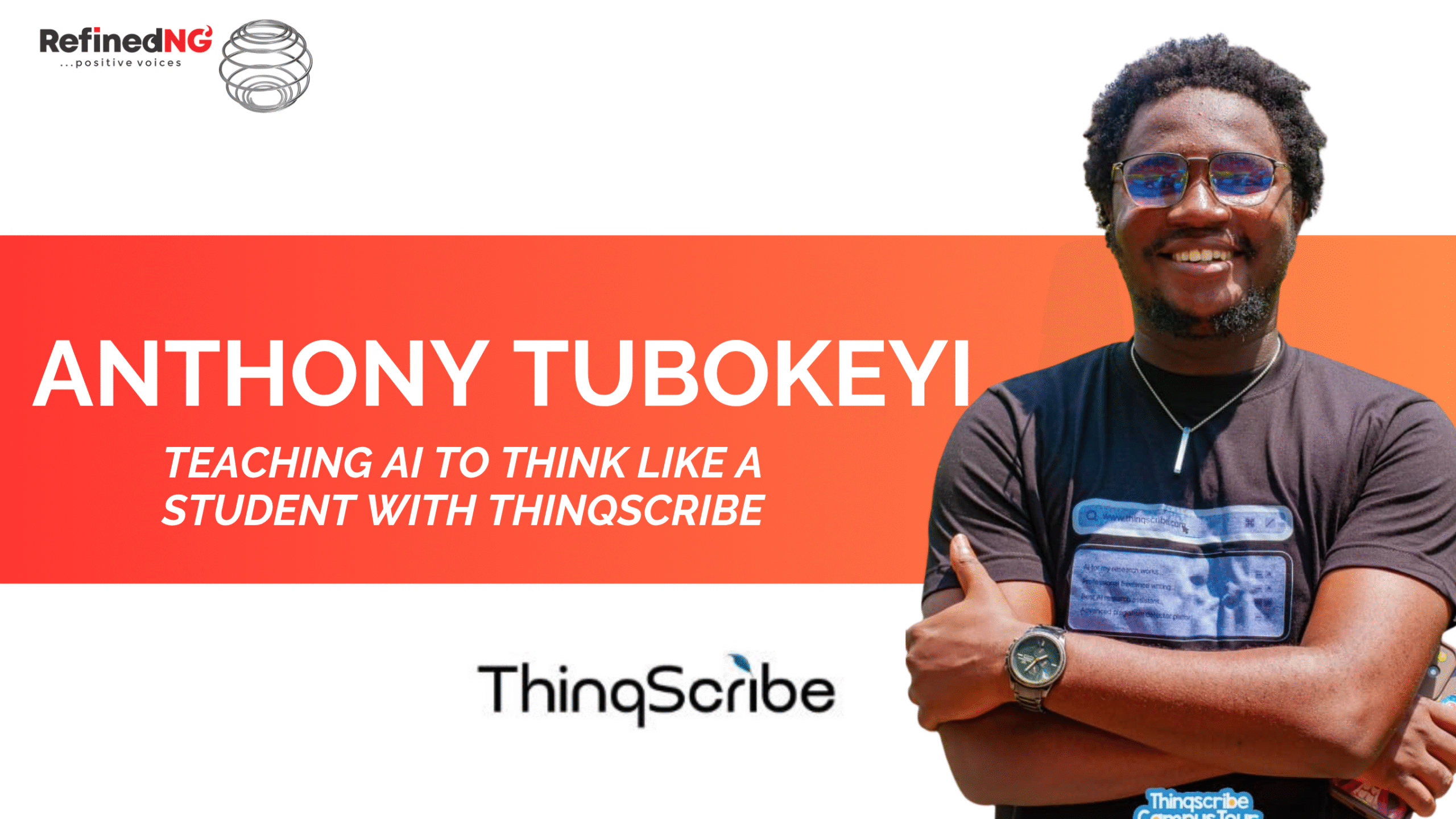
Last month, we brought you stories of individuals creating magic in small spaces, from classrooms to boardrooms, from Lagos to the world. This month, we’re not slowing down. We’re still spotlighting the doers, dreamers, and thinkers who remind us that impact doesn’t always come with noise; sometimes, it begins with a single, quiet idea.
Currently, we live in a world obsessed with speed, fast answers, instant results, quick clicks, a few minds are daring to ask better questions. And that’s where ThinqScribe comes in.
We’ve seen how creativity fuels innovation, but curiosity? That’s what builds understanding. ThinqScribe sits right in that sweet spot between both; a space where people are encouraged to think deeply, connect ideas meaningfully, and build smarter habits for learning and writing.
If you’ve ever stared at a blank page or struggled to make sense of scattered notes, you’ll understand exactly why ThinqScribe exists. Born out of frustration with mechanical learning and shallow comprehension, it’s a digital workspace built to help you think better, not faster. It’s not about shortcuts or letting AI do the work for you; it’s about slowing down to speed up, turning thought into clarity, and questions into insight.
And like every good story, this one started with a spark. Anthony Tubokeyi saw a pattern too many of us know well: bright minds losing depth in a noisy, shortcut-driven world. From Lagos to lecture halls around the globe, that observation became the seed for a tool now helping people think more clearly, write with intention, and learn with depth.
What began as a simple idea has grown into a quiet revolution, proof that innovation doesn’t have to shout to make a difference. Sometimes, it’s a whisper that travels far, one keystroke, one idea, one brave question at a time.

Before we get into ThinqScribe, let’s start with you. What shaped your curiosity about learning, writing, or technology? Were there early experiences, mentors, or challenges that made you see education differently?
Anthony: I’ve always been the kind of person who believes there has to be an easier, smarter way to learn and to do things. Not in the sense of cutting corners, but in maximizing learning without wasting unnecessary time. For me, every task starts with a question: “How can I get this done faster while still keeping the quality high?”
That mindset shaped my curiosity about both learning and writing. When I write, I think about how to quickly absorb the material, synthesize it, and produce something meaningful without losing depth. What really made me see education differently was my final-year project. The struggle and lack of proper guidance showed me that learning doesn’t have to be this unnecessarily hard or lonely, and that realization stayed with me.
Read: Peter Ogundairo: From Paychecks to Portfolios at Techwriteable
That experience clearly planted the first seed. Was there a specific moment that made you realize helping people learn how to write better, not just get work done, was the problem worth solving?
Anthony: The turning point came during my final-year project. Honestly, I didn’t know what I was doing, and I didn’t get the mentorship I really needed. That’s not just my story, many students in Nigerian universities face the same thing. Supervisors often don’t have the time to guide you step by step.
That confusion, frustration, and sense of being on my own made me realize this wasn’t just my problem. Students everywhere need better tools to learn research, writing, and critical thinking, not just to produce finished assignments. That’s why I decided to focus on helping people actually learn how to write better, rather than just “get the work done.”
Fast forward to ThinqScribe, a tool designed to help humans think better, not just write faster. With AI capable of doing so much, how do you draw the line between assistance and automation, and what philosophy guides that product design?

Anthony: Our philosophy at ThinqScribe is simple: AI is an assistant, not a replacement. The real line between assistance and automation is the when.
AI should be used when you need more ideas, new perspectives, or help exploring possibilities. It shouldn’t be used as a crutch just because you “don’t know how.” At the end of the day, the human, the student, the writer, the thinker, must approve, refine, and own the work.
That’s the philosophy guiding our design: teaching people not just how to use AI, but when to use it responsibly.
That’s a refreshing take. But beyond skills and technology, learning often comes with fear and self-doubt. How does ThinqScribe address the emotional side of learning?
Anthony: From my experience, the biggest barrier for most students isn’t lack of skill, it’s self-doubt. Many don’t start their projects or assignments because they feel like they can’t do it, or they’re not “good enough.”
ThinqScribe addresses that by first affirming: you can do it. Once you learn how, the steps, the process, the thinking behind it, the fear fades. Everyone can learn the “how.” We don’t just give tools; we give confidence.
The words “academic help” and “AI” can raise eyebrows. How do you convince both students and educators that ThinqScribe is a partner in learning, not a shortcut?
Anthony: When people hear “academic help” and “AI” in the same sentence, the assumption is often shortcuts or cheating. But that’s not our mission at all.Our goal is to show students they don’t have to be alone in the learning process. Many are left stranded when writing theses or projects. We step in as a partner, not a substitute.
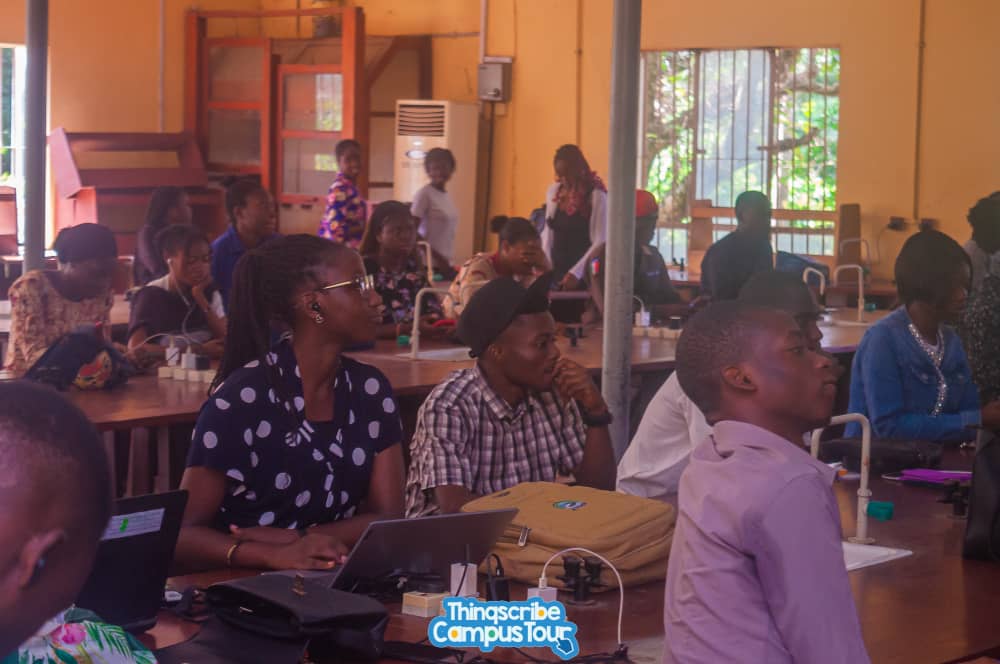
And with AI, we emphasize ethical use. It’s not about hiding it or misusing it, it’s about learning how to use it with integrity. Used the right way, AI enhances learning instead of replacing it. That’s the culture we’re building with ThinqScribe.
Let’s talk more about that “ethical AI”. What does that mean to you personally, and how does it influence how your team builds and trains ThinqScribe tools?
Anthony: For me, ethical AI means understanding that AI is there to make your work faster and easier, not to do it for you.
I like to think of AI as a personal assistant: the ideas and direction must always come from you. The assistant can help you refine, structure, and speed up the process, but it can never replace the thinking itself.
That belief influences how we build ThinqScribe. Every feature we design is about reinforcing student ownership of the learning process, with AI as a supportive partner, never the main actor.
You’re building a globally relevant edtech product from Africa. What has that journey revealed about innovation, resourcefulness, or the creative energy of African builders?
Anthony: Building ThinqScribe from Africa has been both inspiring and humbling. Africa teaches you resourcefulness. We don’t always have access to the same infrastructure, funding, or support systems that startups in other regions enjoy, so you learn to innovate with what you have.
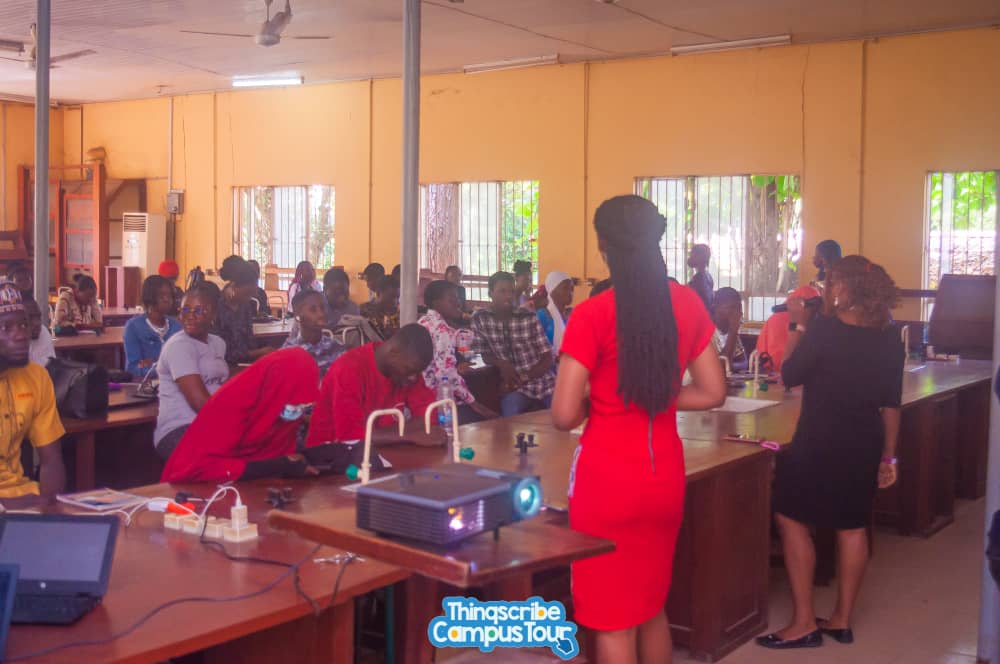
But that’s also the strength: African builders are some of the most creative, resilient, and adaptive people you’ll meet. We don’t wait for perfect conditions, we create solutions in the middle of constraints. That energy has shaped ThinqScribe into a product that’s not only relevant for Africa, but for the world. Because if it works here, in such a challenging environment, it can work anywhere.
Every founder has that one message that keeps them going. Was there a moment or story from a student that reminded you why ThinqScribe exists?
Anthony: One story that has stayed with me came from a lady about to begin her master’s thesis. We had just launched the ScribeAI model and were offering it free for testing. She reached out after trying it and said:
“This is so good. I just dropped off a course less than five minutes ago and was telling my friend I don’t know where to start with my thesis. I wanted to do something that could bring together different areas in the finance field. So, I asked ScribeAI one question about how to go about my thesis, based on my course, university, and location, and instantly, I had clarity on my direction. God’s breath is really on this venture. More than you can imagine. God bless you.”.
That message still gives me perspective. On tough days, it reminds me that ThinqScribe isn’t just software, it’s a lifeline for people who feel lost and need clarity to move forward.
Read: “Where Curiosity Meets Content” — A Conversation with Paula Nwadiaro
Running a company that teaches others requires constant learning yourself. What’s one belief or approach you’ve had to unlearn as a founder?

Anthony: As a founder, one belief I’ve had to unlearn is the idea that you can always “jump the process” in the name of speed. I’ve always been drawn to efficiency and doing things faster, but leadership has taught me that skipping steps often weakens the outcome.
When you actually engage with the process, you not only get better results but you also strengthen your own capacity. Each stage of the process exercises your mind and builds skills that prepare you for the next challenge. I’ve learned that patience with the process is not wasted time, it’s where growth happens.
Where do you think the relationship between humans, writing, and AI is heading, and how does ThinqScribe fit into that future?
Anthony: The truth is, AI is advancing at a very rapid, and sometimes scary, pace. There’s a real risk that if unchecked, AI could take over parts of human life in ways we don’t want.
That’s why the future of learning and writing must be about constant reminders: AI is here to assist, not to replace. It should make learning faster and life easier, but it must never take away human thought, creativity, and ownership.
ThinqScribe fits into that future as a guidepost. We stand for ethical, responsible, and empowering use of AI, always keeping humans at the center. Our mission is to help people think better, write better, and learn with confidence, with AI as a supportive partner along the way.
From One Student’s Struggle to a Global Solution
From a student once lost in the maze of final-year confusion to the founder of an AI-powered learning platform, Anthony’s story is a reminder that innovation often begins with frustration and empathy.
Through ThinqScribe, he isn’t just building software; he’s rewriting how students approach learning itself. It’s proof that when technology meets purpose, education can become simpler, smarter, and more empowering. And in a world where shortcuts are everywhere, ThinqScribe stands out for teaching something timeless: that thinking is still the real superpower.
At RefinedNG, we spotlight the thinkers, doers, and dreamers redefining what it means to create from Africa, the innovators turning challenges into systems, and ideas into movements.
Every week, we bring you real stories of progress, from tech founders building from scratch, to creatives rewriting what success looks like on their own terms. Because we believe innovation doesn’t wait for perfect conditions; it starts where you are, with what you have.
Follow RefinedNG for stories that remind you the continent’s narrative is changing. We’re your number one stop for all things positive.