
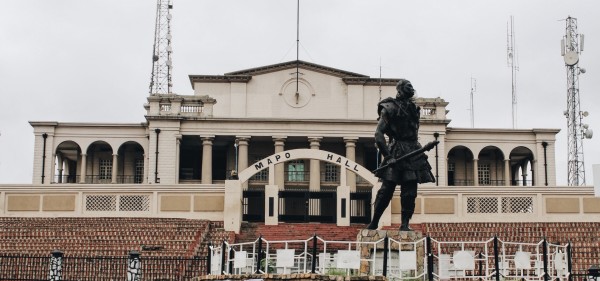
If you’ve ever climbed the sweeping steps of Mapo Hall in Ibadan, you’ve probably noticed the towering statue standing guard over the city. His sword is raised, his eyes fixed on the horizon, as though he’s still ready for battle. But do you know who he is?
Mapo Hall itself is no ordinary structure. Perched on the crest of Oke Mapo, the colonial-era building has been the backdrop for fiery political speeches, historic declarations, and royal ceremonies. It is Ibadan’s civic crown — a place where history is staged in real time. And just outside, the warrior cast in bronze serves as a permanent reminder that this city was forged in fire, defended by men whose courage shaped its destiny.
Mapo Hall: Ibadan’s Civic Crown
When Mapo Hall was commissioned between 1925 and 1929, it wasn’t just another colonial building project, it was a statement. Designed in the Neoclassical style, its tall columns and sweeping façade gave Ibadan a landmark that could rival anything in Lagos at the time. Sitting high on Oke Mapo, the hall can be seen from nearly every one of the city’s seven hills, a constant reminder of Ibadan’s stature.
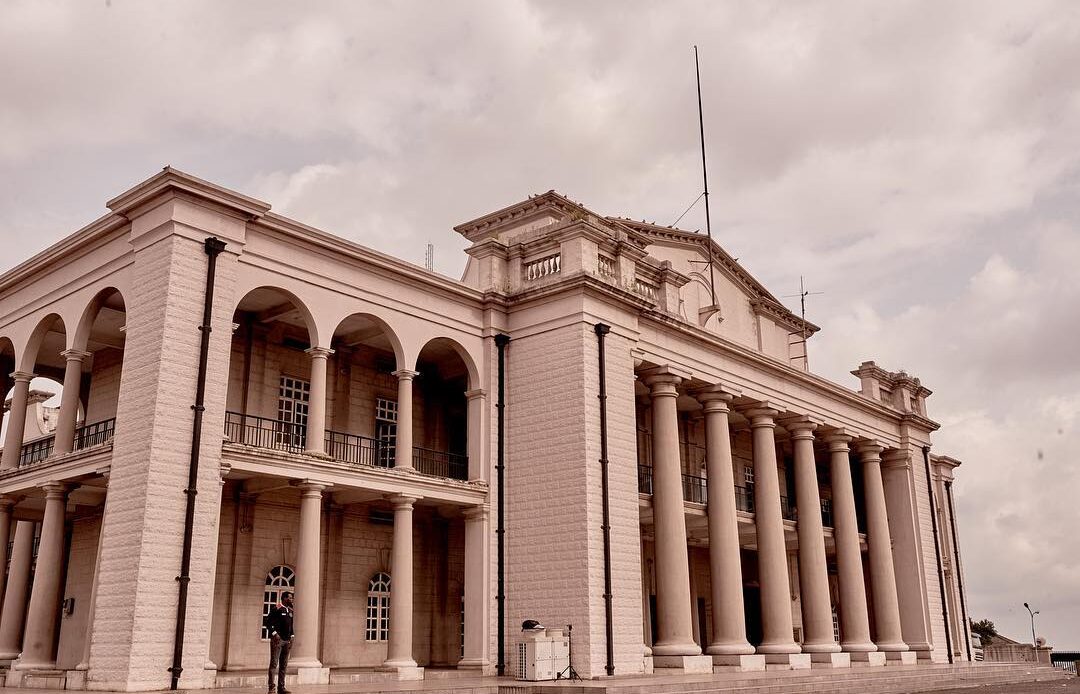
But Mapo Hall is more than its architecture. Over the decades, it has been the stage where politics, tradition, and power collided. Chief Obafemi Awolowo delivered rousing speeches here that shaped Nigeria’s political consciousness. Decades later, Olusegun Obasanjo and other leaders used it for national ceremonies. And, of course, the Olubadan and Ibadan chiefs continue to gather here, making it a living center of tradition.
To Ibadan people, Mapo Hall is a civic crown — a symbol of pride, resilience, and identity. And just outside, watching over it all, stands a warrior in bronze, a reminder that behind the grandeur lies the spirit of those who fought to secure the city’s future.
Read: 22 Interesting Facts About Ibadan
The Warrior Before the Crown – Balogun Oderinlo
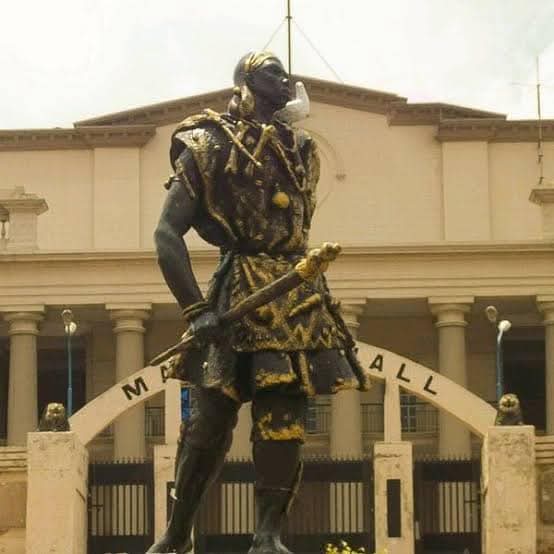
Long before Mapo Hall was crowned as Ibadan’s civic pride, one man carried the city’s destiny on his shoulders — Balogun Oderinlo.
In the 1800s, he was no ordinary soldier; he was Ibadan’s Balogun, the highest-ranking war general, and the man whose name still echoes in Yoruba history.His defining moment came in 1840, at the famous Osogbo War. At the time, Fulani jihadists were pushing southward, threatening to overrun Yorubaland. Oderinlo and his army met them head-on. The battle was fierce, but his leadership delivered victory. That single war didn’t just save Ibadan, it stopped the advance of jihadists into much of Yorubaland, a turning point that still shapes the region’s story.
Oderinlo wasn’t a one-battle wonder. He led campaigns across Osu, Ara, and Igbo-Ora, stamping Ibadan’s military might on the map. Those who fought beside him called him fierce, yet level-headed. He knew when to fight with fire and when to pull back, earning respect not just as a warrior, but as a leader with rare judgment.
Yet his story ends with mystery. Just when he seemed destined to become Baale of Ibadan, Oderinlo died suddenly. Some whispered of poisoning, others of betrayal. Whatever the cause, his death froze him in history as both a hero and a tragedy — a man who gave Ibadan victory but never lived to wear the crown.
Today, his bronze statue beside Mapo Hall ensures that Ibadan never forgets the warrior before the crown.
From Battlefield to Bronze – The Statue
Just outside Mapo Hall, looking down toward Oritamerin, stands the bronze figure of Balogun Oderinlo. His posture is commanding. Sword in hand, chest out, gaze fixed forward as though still surveying a battlefield. It is not a decorative piece; it is a presence.
For Ibadan, the statue is more than metal cast in form. It is a reminder that the city was not founded on comfort or inheritance, but on courage. Ibadan began as a war camp, a gathering place for displaced warriors who carved out a home through strategy and sacrifice. Oderinlo embodies that spirit.
Children passing on their way to school, traders heading to the market, and visitors climbing the wide steps of Mapo Hall all meet his gaze. Without a word, the statue teaches: this city you call home was defended by men who laid down their lives so it could thrive.
The statue’s placement beside Ibadan’s most iconic civic building is no accident. Together, they tell a story; the warriors who fought for Ibadan, and the citizens who built upon their legacy. Oderinlo’s bronze figure ensures that the city never forgets its roots.
Read: 5 Things You Should Know About the 44th Olubadan of Ibadan
The Olubadan Connection
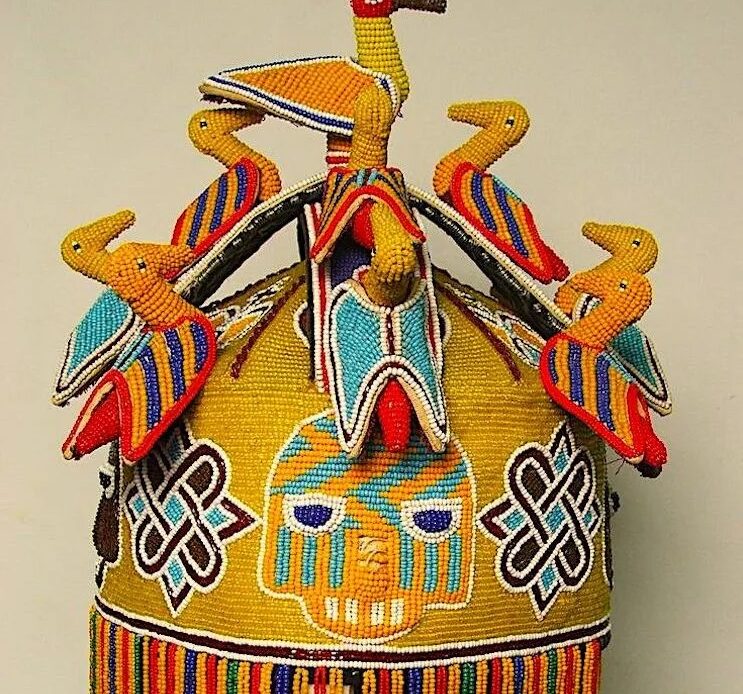
Ibadan’s monarchy is unlike any other in Yorubaland. Instead of princes inheriting thrones, chiefs rise step by step through a ladder of titles until one emerges as Olubadan. It is a system built on patience, resilience, and the recognition that leadership must be earned, not gifted.
Balogun Oderinlo’s story fits neatly into this tradition. Though he never became Baale — the precursor to the Olubadan — his role as a warrior-chieftain showed how closely military leaders once shaped Ibadan’s destiny. His sudden death before ascending the stool left behind a legend that still shadows the city’s memory.
Fast forward to today, and the same tradition continues. On September 26th, 2025, Rashidi Adewolu Ladoja was crowned the 44th Olubadan of Ibadanland, proving that this system of gradual ascension still thrives nearly two centuries after Oderinlo’s campaigns.
It is no coincidence that Mapo Hall, where Ladoja’s coronation was held, stands only a few steps from Oderinlo’s bronze figure. Together, the statue, the hall, and the monarchy form a living narrative: the warrior spirit that built Ibadan, the civic crown that represents its pride, and the monarchy that binds its people to history.
Memory, Culture & Identity
Statues like Oderinlo’s aren’t just decorative. They are open-air history books, preserving stories in public spaces where anyone — young or old, scholar or trader — can see and learn. Unlike textbooks that stay tucked away, this monument stands in the heart of the city, reminding Ibadan daily of the men who shaped its destiny.
For Ibadan, Oderinlo’s bronze figure is more than a likeness of a warrior. It is a mirror of the city’s spirit: resilience in the face of trials, independence in its politics, and pride in its culture. Each glance at the statue connects the struggles of the 1800s to the celebrations of today — from battlefield victories to Olubadan coronations.In that sense, the warrior at Mapo Hall doesn’t just look over Ibadan; he anchors its identity.
Mapo Hall and the statue of Balogun Oderinlo are more than stone and bronze, they are storytellers. Together, they remind Ibadan that its history is not confined to archives or dusty books. It lives in the open air, in ceremonies, in traditions that continue to shape the city.
So next time you climb the steps of Mapo Hall, pause before Oderinlo’s figure. Remember that Ibadan was built by warriors, sustained by tradition, and is still writing its story today.Follow us for more spotlights on African history, culture, and heritage — because the past is never far away when we choose to see it.