
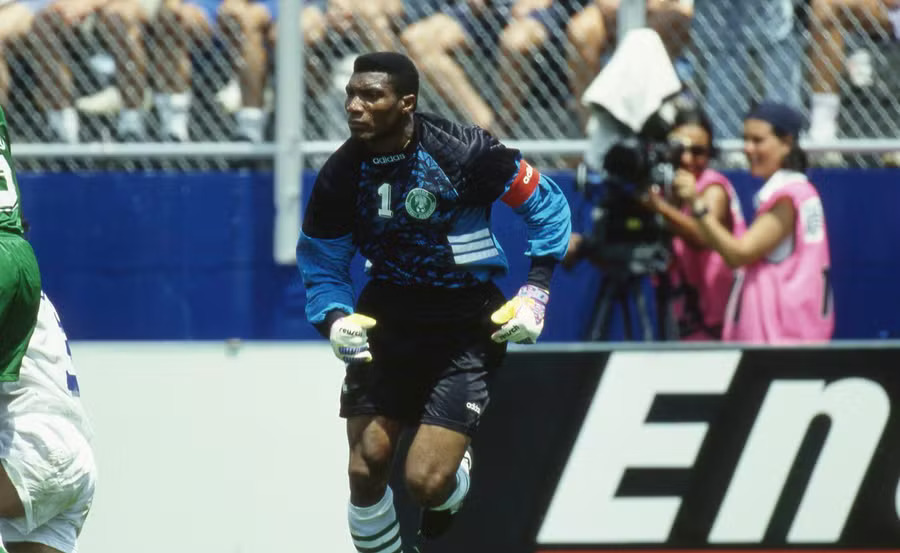
Peter Rufai once had the option to inherit a royal throne, but instead, he chose to chase football glory. Born into nobility in Lagos, Rufai rejected tradition and picked gloves over a crown, charting a different kind of reign. Rather than rule from a palace, he stood guard inside a goalpost, commanding, fearless, and full of flair. To millions, he wasn’t just a footballer; he was a symbol of possibility, pride, and professionalism in African sport.
Now, as Nigeria mourns, we celebrate Rufai not in sadness, but in awe of the kingdom he built for himself.
Read: Nora Awolowo, at 26, Becomes Youngest Producer to Break ₦100M
His Throne Was the Goalpost
Rufai didn’t just play in goal; he ruled it. His style blended confidence, agility, and composure — all wrapped in royalty. Nicknamed “Dodo Mayana,” he earned the title through acrobatic saves, fierce presence, and a charisma that inspired fans and teammates alike.
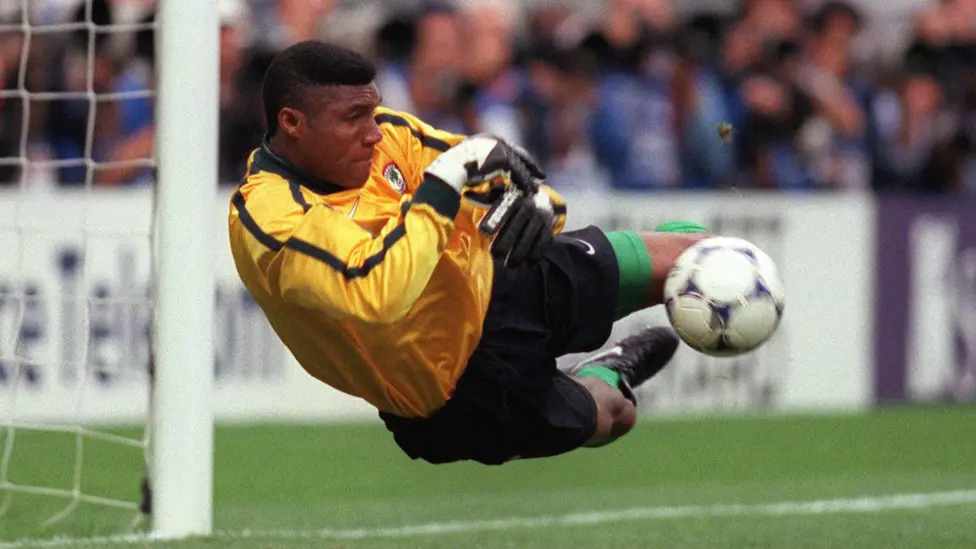
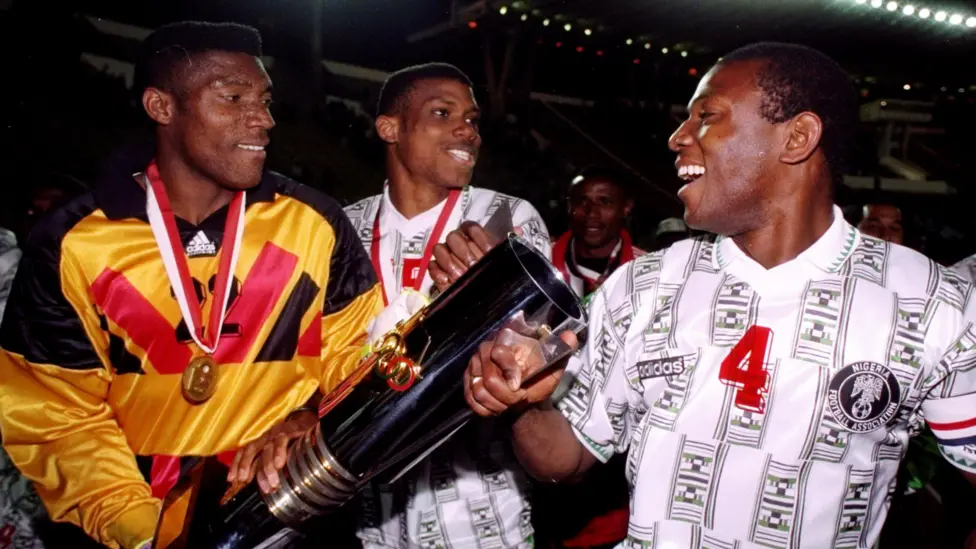
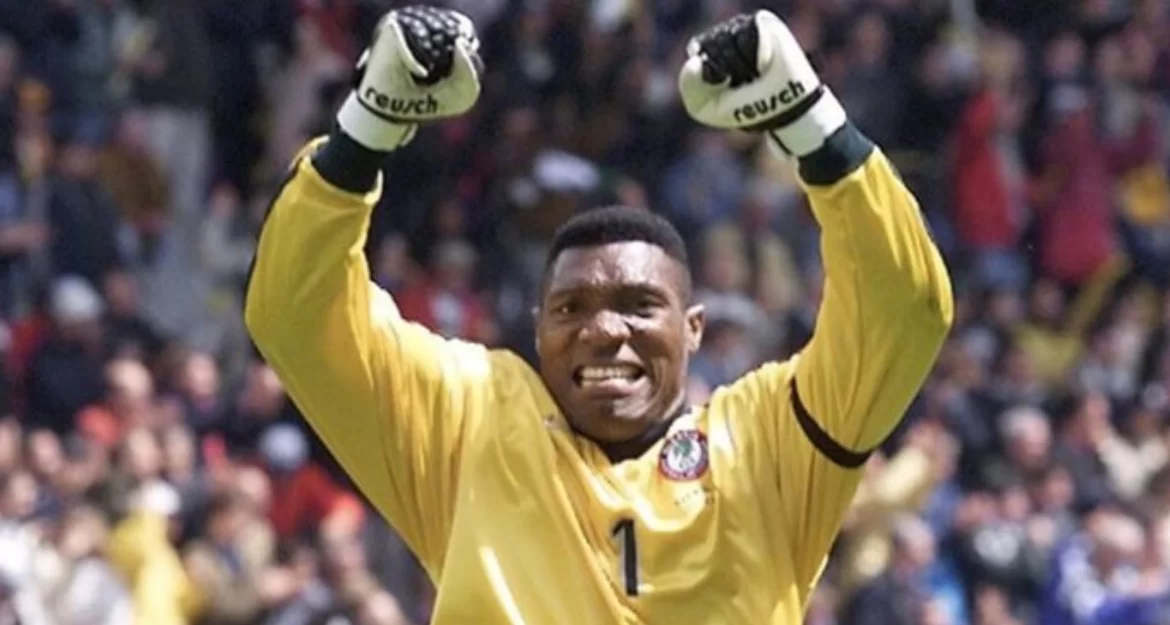
From Lagos to La Liga, he brought flair to every touch, often celebrating routine catches like a striker celebrates a hat trick. In 1994, he stood tall as Nigeria’s first-choice keeper at the Africa Cup of Nations, helping deliver a long-awaited second continental title. Later that year, he made history as Nigeria’s first World Cup goalkeeper, leading the Super Eagles to the knockout rounds.
He wasn’t loud, but his quiet leadership carried weight. Teammates described him as a calming force when chaos crept in. When Rufai wore the gloves, Nigeria didn’t just have a goalkeeper — it had a monarch between the sticks.
A Global Goalkeeping Odyssey
Peter Rufai’s career was a passport stamped with ambition, resilience, and trailblazing moves across Europe’s elite football leagues. He began humbly with Stationery Stores and Femo Scorpions in Lagos, but it didn’t take long for scouts to spot his brilliance.
His first international stop was AS Dragons in Benin Republic — a small leap that opened doors to greater European adventures. In Belgium, he suited up for K.S.C. Lokeren and K.S.K. Beveren, learning structure, discipline, and the grind of professional football abroad. He later joined Go Ahead Eagles in the Netherlands, adding Eredivisie experience before embarking on his most iconic club stints.
Portugal’s S.C. Farense saw the best of Rufai: in 1994–95, he helped them qualify for the UEFA Cup — a historic feat. Then came Spain’s La Liga with Hércules and Deportivo La Coruña. At Depor, he famously kept a clean sheet against Tenerife.
He was often a backup, but never a benchwarmer in spirit. His professionalism set an example wherever he played. Every city — from Lagos to La Coruña — remembers Rufai not just as a player, but as a presence.
He didn’t just travel — he transformed goalposts into stages for courage and excellence.
Peter Rufai: The Goalkeeper Who Scored
On July 24, 1993, Peter Rufai etched his name into Super Eagles folklore—not with a save, but with a goal. In a 6–0 thrashing of Ethiopia during the 1994 AFCON qualifiers, Rufai stepped up to take a penalty and calmly converted it.
It was Nigeria’s fifth goal that day, but it meant the world to fans watching a goalkeeper break tradition in style. For most keepers, goals are fantasy. For Rufai, it was a moment of joy, confidence, and audacity that fans still recall fondly.
That penalty became one of his most iconic moments, proving he wasn’t just guarding posts—he was rewriting scripts. It wasn’t luck. It was leadership, presence, and nerve under pressure—the same qualities that made him a first-choice at two World Cups.
That goal wasn’t just a stat; it was a symbol of a player who defied limits, both with gloves and goals.
Read: Tems Opens Applications for Leading Vibe Initiative in Nigeria
Beyond the Net: Youth, Legacy, and Learning
After retirement, Peter Rufai didn’t vanish from the game—he simply changed positions, moving from guardian of the net to guardian of futures. In 2010, he founded the Staruf Football Academy in Lagos, dedicated to developing young footballers with discipline, vision, and academic balance.
Peter Rufai believed a player’s greatness must extend beyond talent; he emphasized education, character, and long-term thinking on and off the pitch. This wasn’t lip service. Rufai enrolled at the National Institute for Sports in Lagos in 2023 to earn formal coaching credentials.
At 60, he proved that learning never stops, reinforcing his belief that knowledge and mentorship fuel lasting impact. Earlier, in 2003, he had established a goalkeeping school in Spain, helping young goalies across continents find confidence between the posts. He didn’t hoard his experience; he exported it, turning his journey into a blueprint for others, especially African goalkeepers seeking European success.
His influence can be seen in the emergence of disciplined, fearless Nigerian goalkeepers like Vincent Enyeama and Carl Ikeme, who followed in his footsteps. Even after hanging his gloves, he wore purpose like a second skin—mentoring, teaching, building futures brick by brick.
Rufai’s post-football path affirmed that legacy isn’t in trophies alone, but in the lives you shape and elevate beyond the stadium. His story reminds us: some heroes defend goals. The greatest defend dreams. Peter Rufai did both—with elegance, purpose, and an enduring smile.