
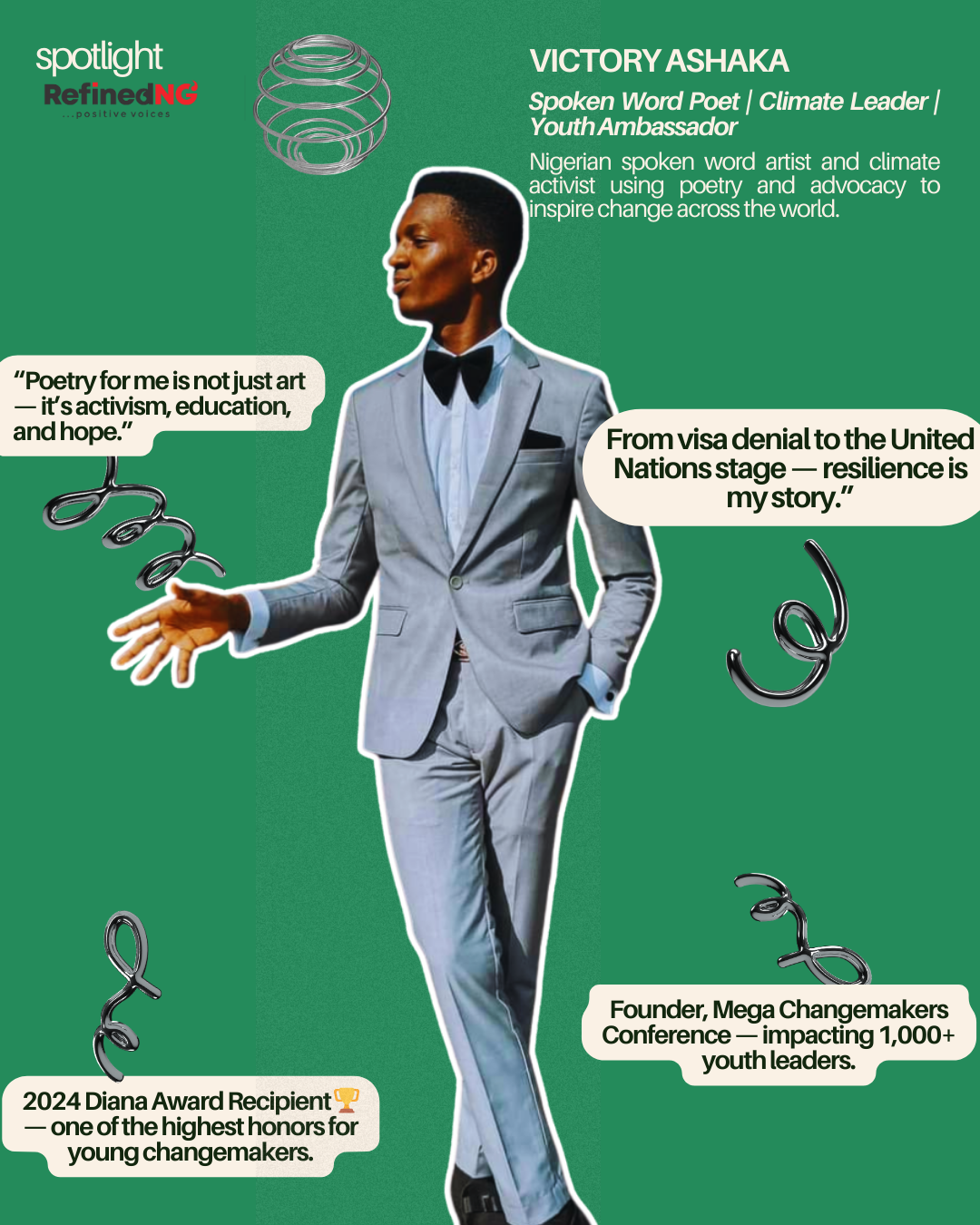
A few years back, a young Nigerian named Victory Ashaka walked out of an embassy after being denied a visa. He recorded himself, visibly pained but unshaken, declaring: “As a global personality, I believe this is painful, but I’ll be great someday.” It was the kind of moment that could have silenced dreams. Instead, it became the spark that defined his resilience.
Fast forward to today, and Ashaka is no longer the boy seeking permission to dream globally. He is an award-winning spoken word poet, a climate activist shaping policy conversations, and a global youth leader whose voice has echoed on stages from Rome to New York.
This spotlight isn’t just about poetry or climate advocacy. It’s about a young Nigerian who turned words into weapons of hope—and in the process, reminded the world that resilience, discipline, and imagination can rewrite destinies.
The Making of Victory – Roots and First Sparks
Victory Ashaka’s story began far from the global stages he commands today. Born in Namibia and raised in Nigeria, his childhood was marked not by privilege, but by a restless curiosity and a deep love for words. From a young age, he gravitated toward literature and performance, often scribbling poems and finding joy in the rhythm of language.

At just 12 years old, his life took a defining turn. He entered a literary arts competition—and won. That single victory was more than a medal; it was a moment of awakening. For Ashaka, the stage was no longer just a place to perform, but a platform to influence. That early success gave him the courage to believe in his voice and the confidence to see poetry not as pastime, but as a tool for social impact.
What began as a boy’s fascination with art grew into a calling: to use poetry as a doorway into activism, leadership, and a relentless pursuit of change.
Read: How Temilade Salami is Making Climate Education a Human Right
Art Meets Activism – Finding His Voice in Climate Change
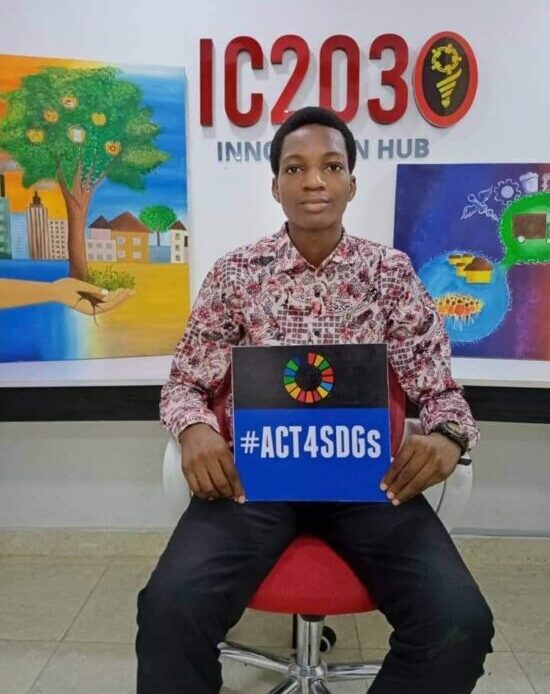
In 2020, while the world grappled with COVID-19, Victory Ashaka found himself confronting another looming crisis. “As deadly as the pandemic was,” he reflected, “the effects of climate change could be worse.” That realization became the spark for his first major climate project. Working with peers, he created artworks and performed a poem on climate change—an effort so impactful that the UN Deputy Secretary-General joined the initiative.
For Ashaka, this was more than activism; it was the merging of two worlds. His spoken word became a vehicle for environmental advocacy, blending education with performance in what he calls “edutainment.” It was a style uniquely his—serious enough to raise awareness, yet creative enough to captivate audiences.
His guiding belief remains simple but powerful: “Art is life, and all of life is artistic.” Through his words, he seeks not just to inform, but to inspire hope and drive action.
Platforms and Performances – The World as His Stage
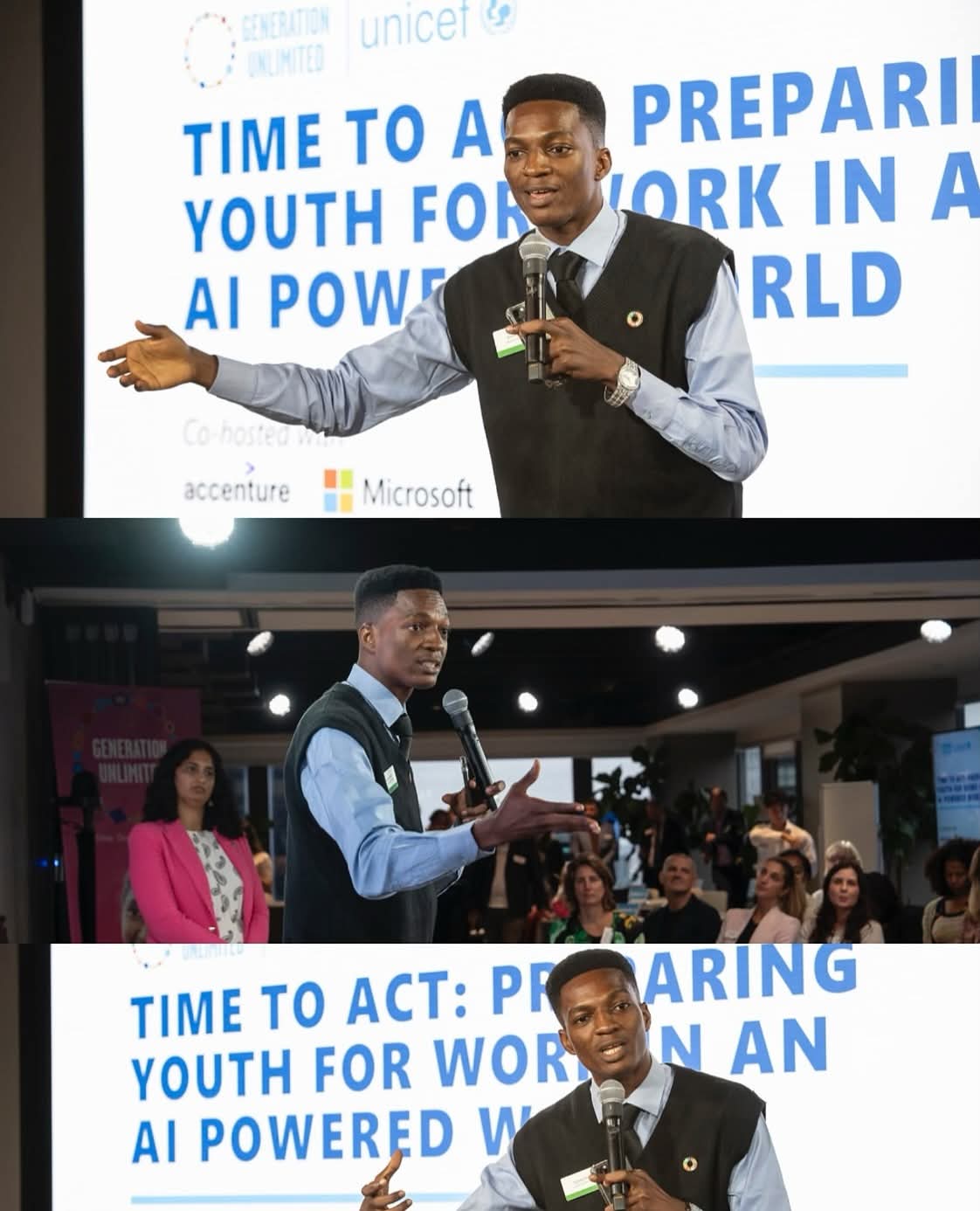
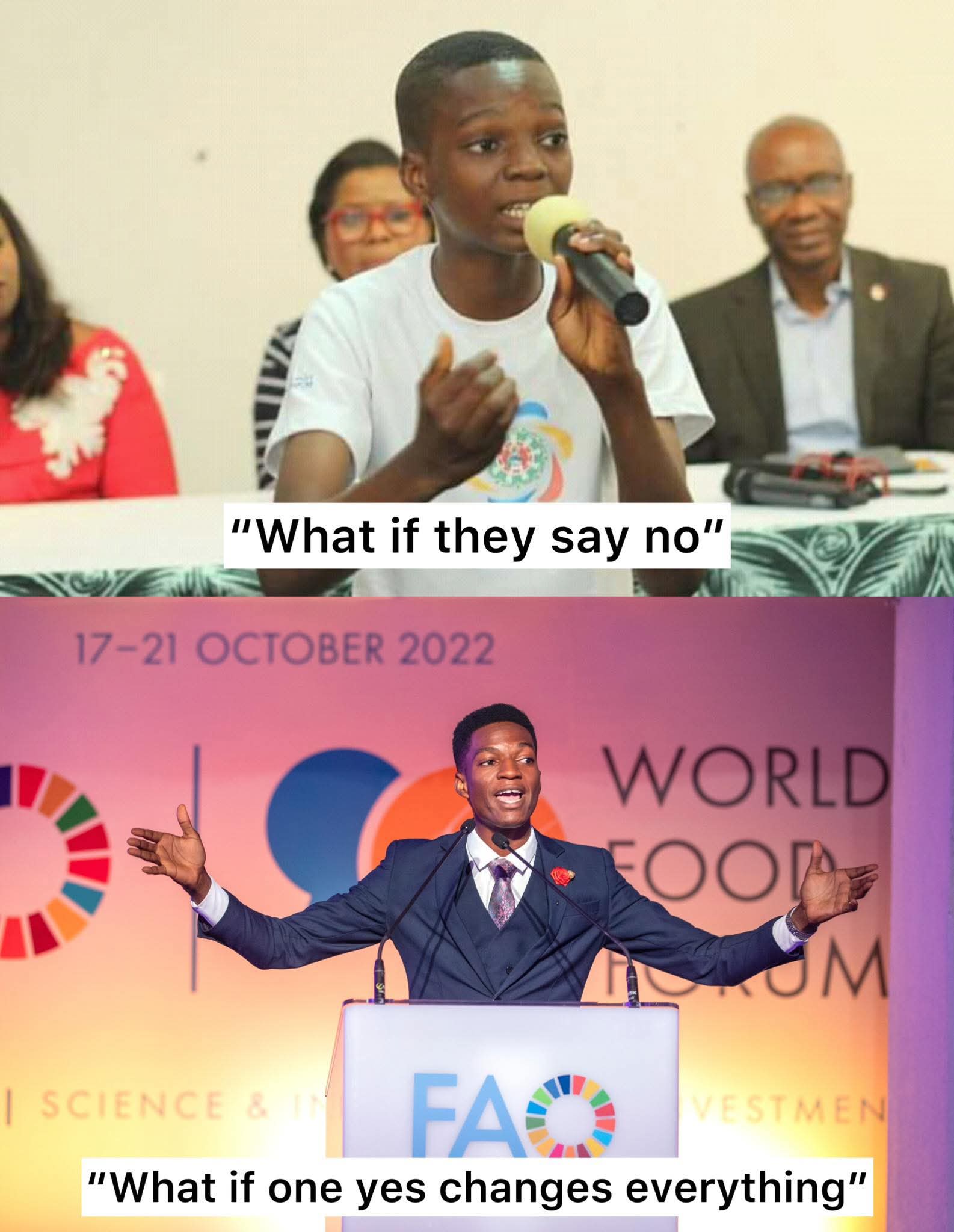
From Lagos classrooms to global assemblies, Victory Ashaka has carried his words across borders. In 2022, he took the stage at the FAO World Food Forum in Italy, performing on the theme “Healthy Diet, Healthy Planet, Heal the World.” Two years later, he stood at the United Nations General Assembly in New York, serving as poet laureate for UNICEF Generation Unlimited’s Global Leadership Council. Along the way, his voice has echoed through TEDx platforms, UN events, the Italian Consulate, and countless youth conferences.
For Ashaka, spoken word is no longer confined to open mics—it’s becoming a mainstream tool for global conversations. Audiences have been “quite receptive,” not because of theatrics, but because he makes urgent issues—climate change, youth empowerment, social impact—relatable and human. Each performance is a reminder: poetry isn’t just art; in the right hands, it can be diplomacy, activism, and education rolled into one.
Building Impact – Beyond Words
For Victory Ashaka, the stage is only the beginning. As a Lagos State Youth Ambassador, he has spearheaded 17 impactful projects, directly reaching more than 20,000 young people across the state. His initiatives are not just about inspiration but about tangible change.
One standout effort is the “Plant a Tree for Life” campaign, where Ashaka and his team carried climate education into schools and local government areas across Lagos. They didn’t just talk about sustainability—they planted it, leaving behind saplings that symbolize hope and resilience. To date, more than 7,200 students have been empowered with practical knowledge on climate action through his projects.
He convenes the Mega Changemakers Conference, supported by the Lagos State Government, which has impacted over 1,000 young leaders. The gathering fosters a pipeline of changemakers who will advance his vision of art, activism, and environmental stewardship.
Ashaka’s story underscores a simple truth: he doesn’t just perform—he builds movements, nurtures leaders, and leaves roots that grow long after the applause fades.
Recognition and Awards – The World Takes Note
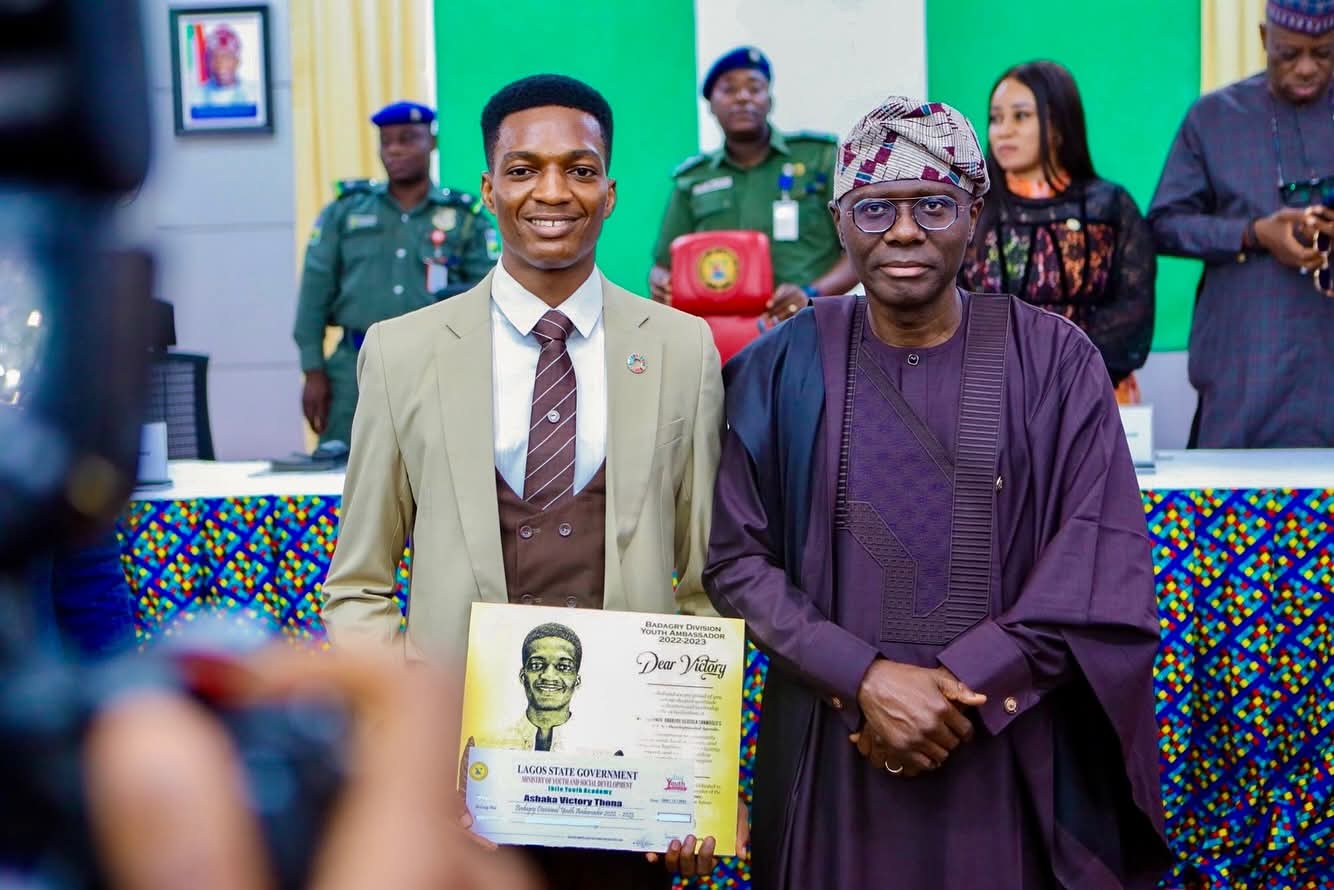
The world has not only listened to Victory Ashaka—it has applauded. In 2024, he received the prestigious Diana Award, one of the highest global honors for young changemakers. He was also nominated for The Future Awards Africa (Young Person of the Year), a recognition that places him among the continent’s brightest rising leaders.
Ashaka has earned numerous accolades, including SME100 Africa 25under25, GenZ Innovator of the Year, induction into the LASU Hall of Fame, and a national championship title in public speaking. His creativity and advocacy have also earned him victories in the Prince Ned Nwoko Antarctica Challenge for Malaria Eradication, the Wikipedia Creative Challenge, and the Lifetime Carbon Offset Award by The Climate Trust.
These recognitions aren’t just trophies. They signal something bigger: that Victory’s message—rooted in poetry, activism, and hope—resonates far beyond borders.
Read: Dr Temidayo Oniosun: The Man Who Sent Egusi to Space
What Drives Him – Philosophy, Discipline, and Joy
For Victory Ashaka, art is not a hobby—it is a discipline and a way of life. His mantra is simple but demanding: “Excellence should always be a lifestyle.” That belief shapes his creative process, which is grounded in practice, writing, and constant rehearsal. He insists that his best works are still ahead of him, a conviction that keeps him consistent and hungry to grow.
But beyond craft, Ashaka draws his deepest fulfillment from impact. Performing isn’t just entertainment; it is education and upliftment. His spoken word seeks to spark change, turning stages into classrooms of hope. Even in his much-praised ode to Lagos, he chose to highlight possibility rather than criticism, a reflection of his rare optimism.
As he puts it, “The art doesn’t leave the artist until the artist departs—I am only a vessel.” His words, then, are not just poetry. They are purpose.
Looking Ahead – The Bigger Picture
When Victory Ashaka speaks of the future, he sees cities powered by clean transport, homes lit by solar energy, and communities practicing eco-friendly habits as second nature. For him, the next decade must be about sustainable living and collective responsibility. His advice to young people is direct: “Be the change you want to see.”
Ashaka envisions himself not only as a poet or climate activist but as a bridge between imagination and action, where words become blueprints for real solutions.
From a visa denial to performing at the United Nations stage in New York, his story is proof that greatness is not about geography or privilege—it’s about vision, discipline, and the courage to speak for tomorrow.