Artificial intelligence has become remarkably good at working with words, pictures and voices. But ask it to understand a signed conversation and the technology quickly runs into a problem that has received far less attention: there simply is not enough good data.
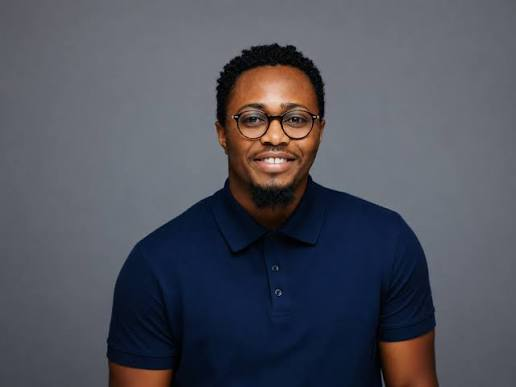
Nigerian entrepreneur Edidiong Ekong is building around that gap with Talksign, an AI company developing technology for real-time communication between Deaf and hearing people. But the more interesting part of the story is what happened after he started building the models. Ekong discovered that making sign language accessible to AI required more than another clever model. It required building the data infrastructure the models depend on.
A Childhood Friendship Started the Journey
Ekong’s interest in sign language started when he was nine. Growing up in Nigeria, he had three close friends who were Deaf. He wanted to communicate with them, so he learned American Sign Language (ASL).
By the time he was older, that childhood experience had become a lasting understanding of the barriers Deaf people face when technology and everyday systems are designed around spoken communication.
That eventually led him to co-found Talksign with AI engineer Kazi Mahathir Rahman in November 2025.
The company’s goal is straightforward: make communication work in both directions, allowing sign language to be translated into speech or text and spoken or written language to be translated into sign language.
Teaching AI to Understand a Conversation
Related Story: Talksign Launches AI Model Translating ASL to Speech in 100ms
Talksign started with Talksign-1, a model capable of recognising individual American Sign Language signs. But Ekong and his team soon had to deal with a bigger challenge.
People do not communicate by producing isolated signs one after another. Sign language has grammar, context and movement involving the hands, face, body and space. A useful system therefore needs to understand what someone is communicating, rather than simply identify what their hands are doing.
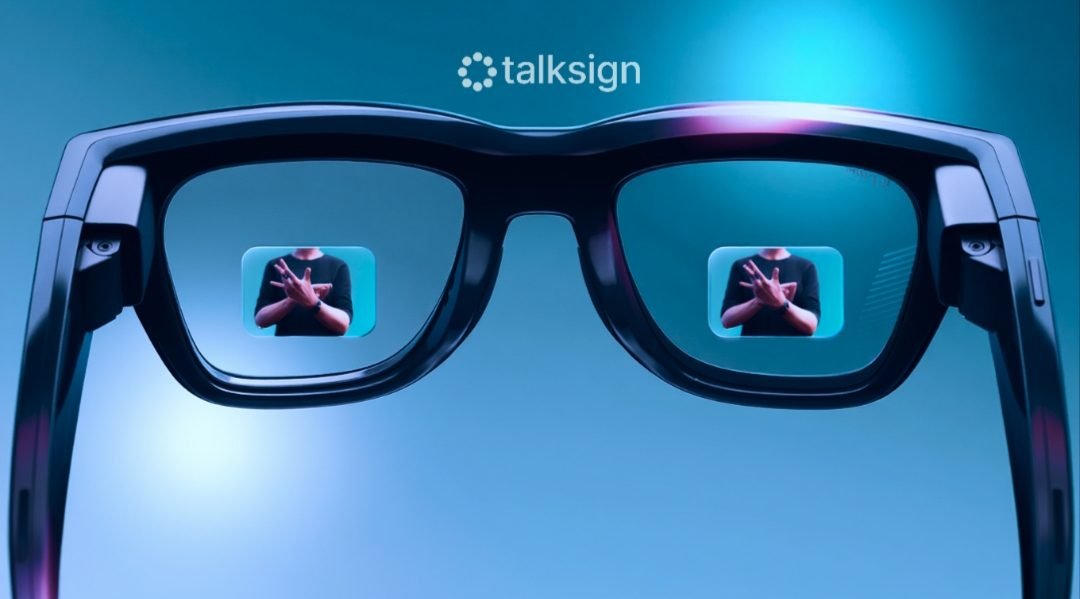
That led to Palm 1.0 and Echo 1.0.
Palm translates continuous ASL signing into speech or text, while Echo converts spoken or written English into ASL video using photorealistic avatars. Talksign says Palm 1.0 achieved 84.2% semantic accuracy, while Echo 1.0 produces 30 frames per second with translation latency below 30 milliseconds.
The technology is being developed for practical environments including phones, smart glasses, healthcare, education and workplaces.
Then They Hit the Data Problem
The biggest lesson from building these systems was not about model architecture. It was about data.
There are more than 300 sign languages worldwide, and many remain poorly represented in datasets used to train AI. Even when data exists, developers can face limitations around quality, language coverage, licensing and representation.
Ekong says Talksign experienced this first-hand. The team spent months working with Deaf contributors, linguists and researchers to collect and build the data needed for its models. Each time the company wanted to expand into another sign language, it faced the same challenge again.
That changed the direction of the company.
Read Also: Charles Ayere is Giving Independence Back to the Visually Impaired
Building the Missing Layer for Sign-Language AI
In August 2026, Talksign launched its Dataset Marketplace, creating a platform where signers, Deaf communities, researchers and organisations can contribute, annotate, verify and license sign-language datasets.
The idea gives the people with the relevant language knowledge a role in creating the technology, while giving AI developers a clearer route to finding and licensing specialised data. Talksign currently lists opportunities for sign-language data collectors, annotators, quality reviewers, interpreters and dataset curators.

That may become one of the most important parts of Ekong’s work.
Talksign is building an AI product, but it is also trying to solve a problem other developers will face: how do you build useful AI for a language when the training data barely exists?
For Ekong, the answer goes back to the reason he learned sign language as a child. He wanted to communicate with his friends. Years later, he is building technology around that same desire, while helping create the infrastructure that could make communication more accessible for millions of other people.
Read more stories of African innovation and excellence on RefinedNG.