
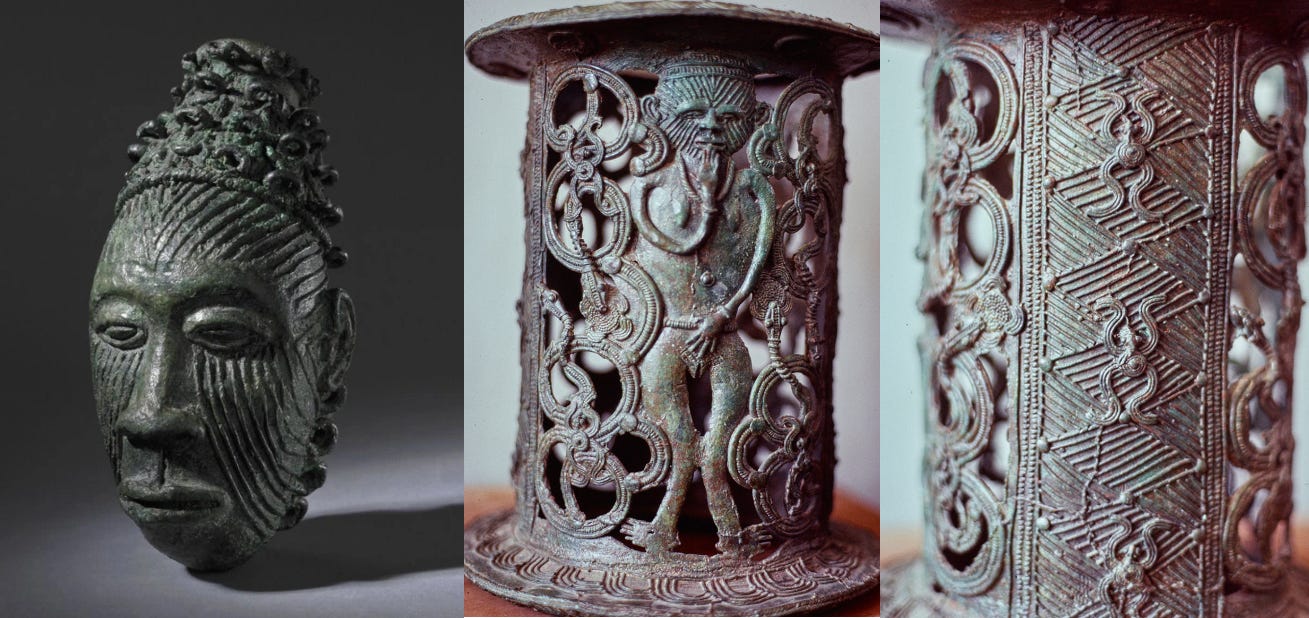
In 1938, a Nigerian farmer named Isaiah Anozie was simply digging a cistern in his compound in Igbo-Ukwu, Anambra State. What he found buried beneath the soil was no ordinary discovery — it was a collection of intricately cast bronze objects, unlike anything his village had ever seen.
At first glance, it may have seemed like an accident, a lucky stumble into the past. But in reality, Anozie’s shovel had struck one of the most important archaeological finds in African history. Beneath his farmland lay the remains of an advanced society that had thrived over a thousand years earlier.
The bronzes he unearthed later dated back to the 9th century CE—centuries before the famous Benin Bronzes were created. This discovery served as living proof that African civilizations mastered metallurgy and artistry long before colonial narratives acknowledged it.
The Igbo-Ukwu Predates the Benin Bronzes
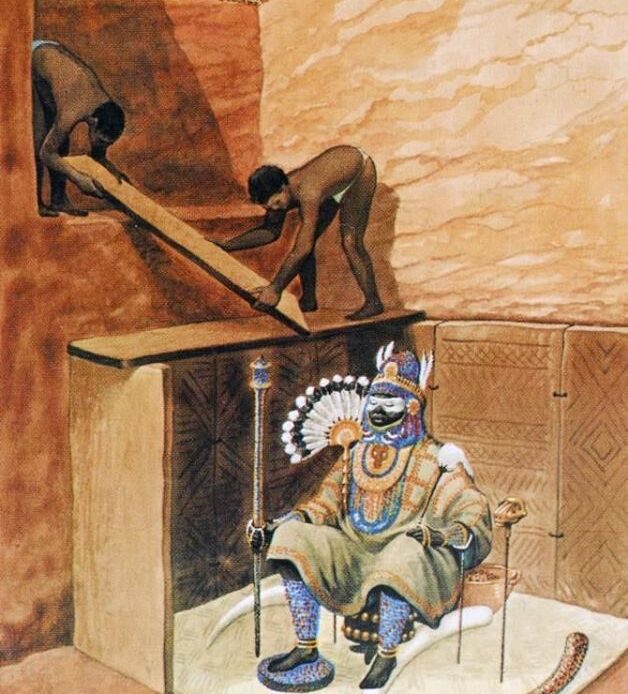
When people talk about African bronzes, the Benin Bronzes usually steal the spotlight. But here’s the twist: the Igbo-Ukwu bronzes are centuries older. Archaeological studies date them back to the 9th century CE, while the renowned Benin pieces only emerged several hundred years later.
This groundbreaking revelation changed everything. When they discovered it, many colonial scholars had long promoted the narrative that African societies were “primitive” and incapable of producing advanced art or technology. The Igbo-Ukwu bronzes completely shattered that myth.
Think about it: in a period when much of Europe was still crawling out of the so-called “Dark Ages,” artists in present-day Anambra were already mastering lost-wax casting, producing objects so intricate that even today’s metallurgists marvel at their sophistication. These weren’t rough, rudimentary artifacts — they were masterpieces of engineering and imagination.
In other words, Igbo-Ukwu didn’t just predate Benin. It rewrote the timeline of African civilization and forced the world to rethink the brilliance that existed in West Africa long before colonial intrusion.
Read: 5 Things You Didn’t Know About Pottery in Nigeria
Did You Know These Artworks Were Masterpieces of Technology?
The Igbo-Ukwu bronzes weren’t just beautiful — they were technological marvels. Crafted using the lost-wax casting technique, these works reveal a level of precision and artistry that still puzzles metallurgists today. Some scholars even suggest that Igbo-Ukwu artists used a unique variation of the method, possibly substituting latex for beeswax to achieve the impossibly fine details that characterize their art.
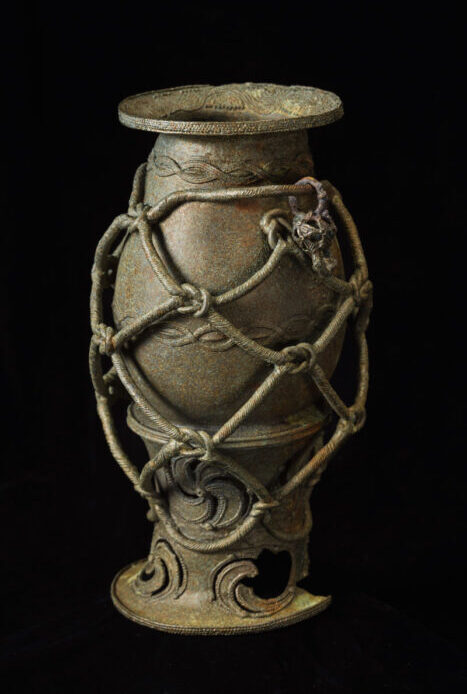
Take the Vase with Rope: at first glance, it looks like a delicate ceramic wrapped in knotted string, but it’s entirely bronze. The artist cleverly combined multiple castings so seamlessly you’d think it was woven by hand.
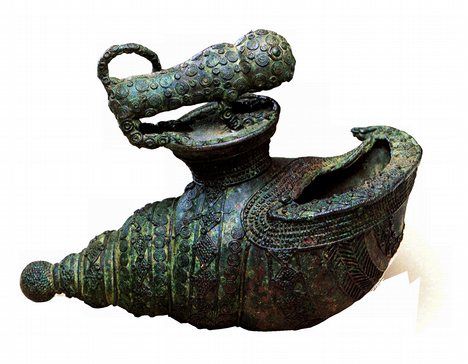
Or the Shell Vessel with Leopard — a swirling conch shell crowned with a regal leopard, its surface covered in microscopic concentric circles and geometric patterns. Every curve and texture feels alive.
Then there’s the Double Egg Pendant, a piece so intricate it features tiny insects crawling across its surface — all frozen in bronze more than a thousand years ago.
These weren’t just ornaments. They were symbols of power, ritual, and identity. And when you realize they were created in the 9th century, the only word that comes to mind is: genius.
They Reveal a Rich Igbo Civilization
The Igbo-Ukwu bronzes weren’t just art pieces — they were windows into a thriving society. Each object carries clues about religion, politics, and power. Leopards, for instance, appear often in the bronzes and are still known today as symbols of authority among the Igbo and their Nri descendants. Birds perched on pendants and vessels hint at spiritual beliefs tied to fertility, protection, and kingship.
But beyond symbolism, the finds at Igbo-Ukwu point to a wealthy and connected people. Archaeologists uncovered more than 100,000 glass beads alongside the bronzes, some traced back to Egypt and even India. That means this society was plugged into global trade networks centuries before colonial contact.
Archaeologists found the burial chamber at “Igbo Richard” especially telling, as it contained regalia, elephant tusks, textiles, and bronzes fit for an elite leader, likely one who combined political and spiritual authority.
Far from being “primitive,” Igbo-Ukwu shows us that as early as the 9th century, the Igbo were already running a sophisticated, cosmopolitan society — one that rivaled many contemporaries across the world.
Did You Know Igbo-Ukwu Is Still Overlooked Today?
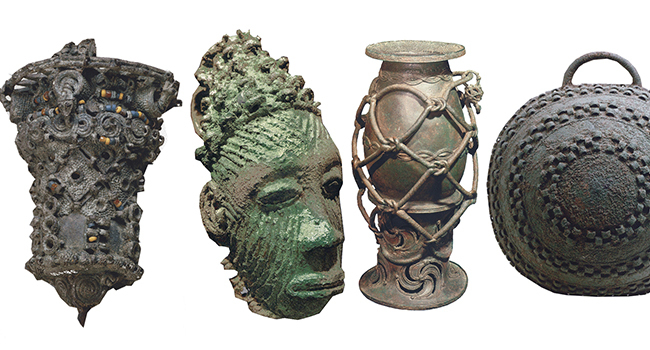
For all their brilliance, the Igbo-Ukwu bronzes remain largely absent from global conversations about African art. While the Benin Bronzes dominate debates on restitution and museum displays, Igbo-Ukwu’s treasures sit quietly in Lagos and a few European archives, barely recognized for their world-shaking significance.
Part of the reason lies in history: colonial-era scholars spotlighted Benin as the “acceptable face” of African civilization, while sidelining Igbo-Ukwu as a curiosity. Museum politics and the lack of loud advocacy have kept these bronzes in the shadows, despite being centuries older than Benin’s works.
And so, a society that proved Africa’s genius as early as the 9th century is still waiting for its story to be fully told. The real question is — if we don’t amplify Igbo-Ukwu ourselves, who will?
Read: Bronze Heads of Ife
They’re Finally Being Preserved
In 2022, the Igbo-Ukwu bronzes finally received the attention they deserved. The National Museum Lagos was selected as one of the global beneficiaries of the Bank of America Art Conservation Project, which funded the restoration of 350 Igbo-Ukwu objects. For the first time, conservators provided proper care to these treasures, many of which were corroded and fragile.
But preservation is more than science. It’s about protecting identity, inspiring pride, and unlocking potential. Imagine schoolchildren seeing these bronzes in their true glory, learning that Nigeria pioneered advanced metallurgy long before many parts of Europe. Imagine the tourism value of showcasing them as the jewels they are.
Igbo-Ukwu isn’t just history—it’s living proof of what Nigerians have always been capable of. Protecting these works means reclaiming a heritage too precious to forget.
This Might Only Be the Beginning
The Igbo-Ukwu discovery reminds us that countless treasures may still be buried beneath Nigerian soil, waiting to be uncovered. Each artifact holds not just beauty, but the power to rewrite our understanding of history and identity.
As Nigerians, valuing these stories means valuing ourselves—our creativity, resilience, and brilliance that predate colonial narratives.
Igbo-Ukwu isn’t just bronze — it’s a reminder of who we are.