
What do you really know about Nigeria’s banking sector? Most of us interact with banks every day – we transfer money, save for the future, or take loans to grow our businesses. But behind those services is a history that shaped how we bank today. Nigeria’s first-ever bank wasn’t just a place to keep money; it was the beginning of an industry that would power trade, business, and development for over a century.
That story begins in 1894, when First Bank of Nigeria – then called the Bank of British West Africa (BBWA) – opened its doors in Lagos.
A Bank That Started It All
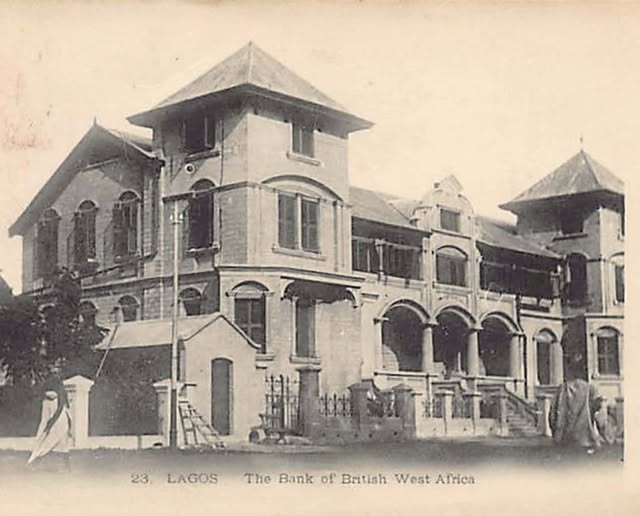
First Bank is widely regarded as Nigeria’s oldest and most influential bank. It was founded by Sir Alfred Jones, a shipping magnate from Liverpool who saw the need for a formal banking system to support trade between Britain and West Africa. At the time, the region relied heavily on barter and inconsistent mediums of exchange, making trade difficult and risky.
The bank began on a modest scale in Lagos, serving as a safe home for deposits and a reliable way to conduct business in an economy that was rapidly opening to global trade. Its early mission was clear: provide structure, security, and trust for businesses and individuals navigating a new financial era.
Over time, First Bank didn’t just serve British traders – it became a pillar for local businesses, helping to finance economic activities that would shape Nigeria’s growth. It was the bank that supported trade, helped governments expand infrastructure, and became the go-to financial institution for millions of Nigerians as the country’s economy evolved.
But beyond its rich history, First Bank’s journey teaches powerful lessons about adaptability, vision, and resilience – lessons every business today can learn from.
Read: Temidayo Oniosun Sends Egusi Seeds to the International Space Station
From Liverpool to Lagos: How It Began
The story of First Bank starts with Sir Alfred Jones, a visionary shipping magnate from Liverpool. At the time, West Africa was buzzing with trade – palm oil, cocoa, cotton, and other goods were in high demand in Europe. But there was one big problem: there was no structured banking system to handle money securely.
Traders relied on barter or carried bulky silver coins shipped from Europe. This made transactions slow, risky, and unorganized. Sir Alfred Jones saw an opportunity. If West Africa had a proper bank, trade would be easier, safer, and more profitable for both local and foreign businesses.
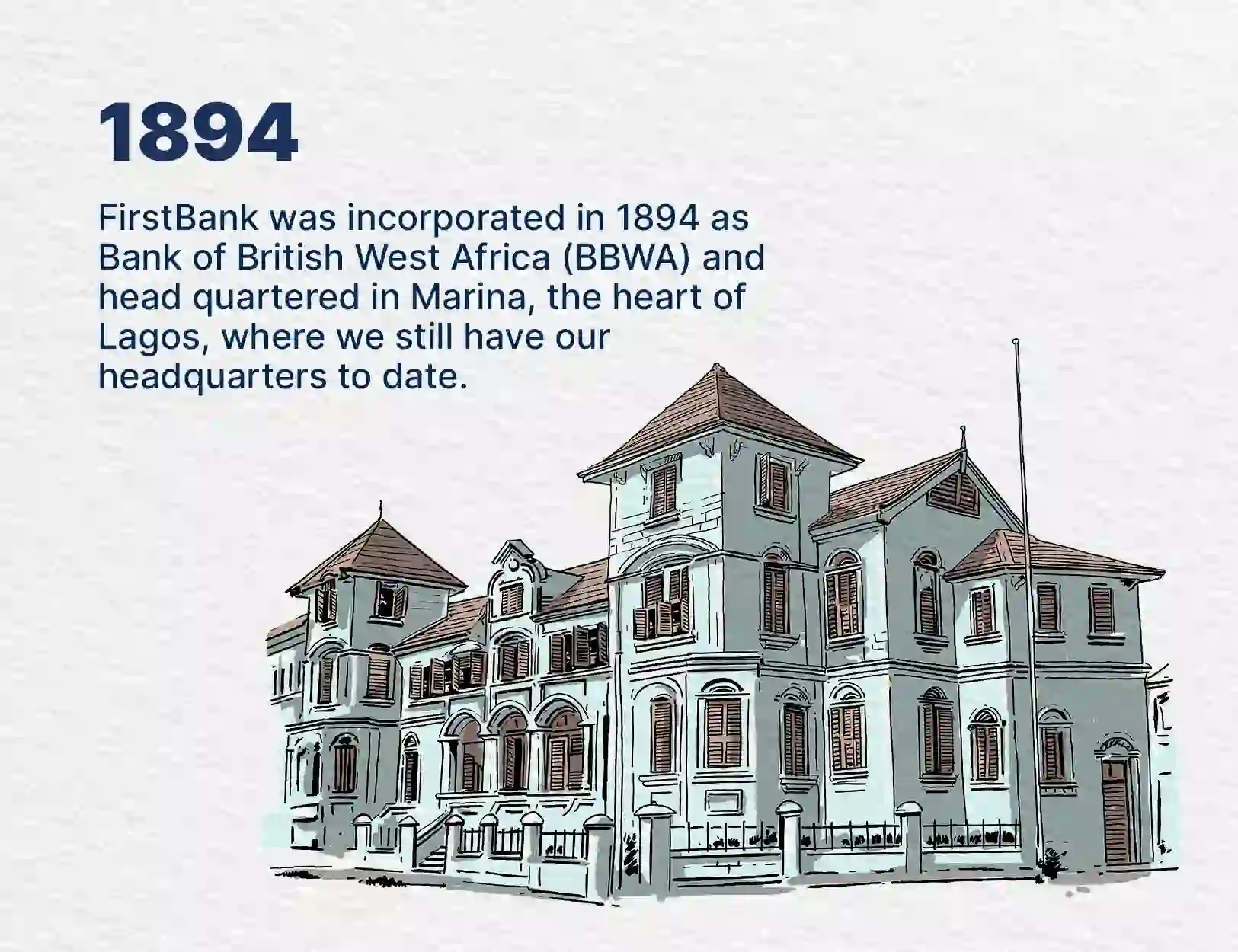
In 1894, he launched the Bank of British West Africa (BBWA) in Lagos. Its main goal was simple but powerful – provide a trusted place for deposits, make payments smoother, and give businesses access to credit. It was the first time people in the region could truly rely on a financial institution instead of risky informal systems.
For merchants and traders, this bank changed everything. It became the bridge between Africa and Europe’s growing trade network. More importantly, it laid the foundation for what would later become a financial system that powered Nigeria’s economy for generations.
The Growth Years – Mergers, Name Changes, and Expansion
As Nigeria’s economy grew, the bank also evolved to meet new demands. What started as the Bank of British West Africa (BBWA) didn’t stay the same for long. In 1912, the bank took a big step by acquiring the Bank of Nigeria, its first major competitor. This helped it strengthen its position as the country’s leading financial institution.
By the mid-20th century, Nigeria was changing fast, and so was the bank. In 1957, it became the Bank of West Africa (BWA). Less than a decade later, in 1966, it merged with Standard Bank (UK), taking on the new name Standard Bank of West Africa Limited.
When Nigeria introduced new corporate laws, the bank was incorporated locally in 1969 as Standard Bank of Nigeria Limited. This local incorporation showed that the bank was no longer just a foreign institution – it was becoming part of Nigeria’s own financial story.
More milestones followed. In 1971, the bank was listed on the Nigerian Stock Exchange (NSE), opening the door for Nigerians to own shares in their oldest bank. In 1979, the bank embraced a more Nigerian identity by officially changing its name to First Bank of Nigeria Limited, later becoming First Bank of Nigeria Plc in 1991.
A major restructuring came in 2012, when First Bank created a holding company, FBN Holdings Plc, to separate its commercial banking operations from other businesses like insurance and asset management. This move strengthened its ability to diversify and expand globally.
Over more than a century, these changes weren’t just about new names – they showed the bank’s ability to adapt, grow, and stay relevant in a fast-changing world.
Taking Banking Beyond Borders
First Bank didn’t stop at being Nigeria’s biggest bank – it set its sights on the world.
In 1982, the bank opened its first branch in London, which later became a full subsidiary known as FBN Bank (UK). It also expanded to Paris, giving it a foothold in Europe.
Across Africa, First Bank grew its presence by acquiring leading banks. Between 2011 and 2014, it added operations in Ghana, Guinea, Gambia, Sierra Leone, and Senegal, strengthening its footprint in West Africa. It also acquired Banque International de Crédit (BIC) in the Democratic Republic of Congo.
Today, the bank operates in over 10 countries and has representative offices in Johannesburg, Beijing, and Abu Dhabi, connecting businesses and customers across continents. First Bank also stayed ahead with innovations in banking. It was one of the first in Nigeria to launch ATMs, electronic banking, and international money transfer services, making banking faster and easier for millions of customers.
With over 42 million customers, 233,500 agent banking locations, and almost 800 branches, First Bank has become a bridge between Nigeria and the global financial system.
Read: How Case Radar is Rewiring Access to Justice in Nigeria
What Businesses Can Learn from This 130-Year Journey

- Lesson 1: Adapt to change.
From mergers and rebranding to adopting digital banking early, First Bank never stayed static. It responded to shifts in customer needs, government regulations, and global opportunities. Businesses that fail to evolve risk becoming irrelevant – adaptability is survival. - Lesson 2: Diversify smartly.
The bank didn’t just expand for the sake of it. Each move – whether opening in London or acquiring banks in West Africa – aligned with its long-term vision. True growth happens when expansion is strategic, not impulsive. - Lesson 3: Build trust for the long term.
First Bank’s greatest strength is its reputation. For over a century, it has served generations of Nigerians, proving that reliability and customer loyalty are priceless assets for any business.
What First Bank’s Journey Reminds Us
The story of First Bank is also the story of Nigeria’s banking sector. It reflects how vision, resilience, and innovation can shape industries and economies. From a small bank for British traders to a financial giant serving over 42 million customers, First Bank shows that businesses that adapt, diversify, and earn trust can thrive for generations.
Its 130-year journey is a reminder that no matter the industry, success takes patience, smart decisions, and the courage to grow beyond comfort zones.